THE 110-FOOT BREAKTHROUGH: Billy Gerhardt’s “Marker” Unlocks $250M Spanish Treasure Vault

For more than two centuries, Oak Island has been shrouded in legend, mystery, and relentless speculation. The infamous Money Pit has long symbolized the ultimate treasure hunt, claiming both fortunes and lives in pursuit of its elusive secrets. Yet, in an astonishing turn of events, the narrative of the world’s most enduring treasure hunt has been rewritten—not by academic experts, but by Billy Gerhardt, a skilled heavy equipment operator who trusted his instincts and went against conventional wisdom.
Gerhardt, using $60,000 of his own savings, spearheaded a high-risk excavation that culminated in the discovery of a secondary chamber at a depth of 142 feet. This man-made stone chamber contained a remarkable cache of Spanish Colonial gold, silver, and Jesuit artifacts, with an estimated value of $250 million. The breakthrough validates a bold theory long proposed by Gerhardt: that the Money Pit itself was not the true repository of treasure, but rather a decoy designed to mislead explorers while the real trove was hidden elsewhere.
The pivotal discovery came at 108 feet with the unearthing of an 8-inch lead cross, which Gerhardt dubbed the “Marker.” Metallurgical analysis confirmed the artifact originated from 17th-century Spanish mines in Peru and Bolivia. Traces of gold and silver on the cross suggest it once marked a larger treasure. Acting as a navigational guide, its orientation pointed northeast toward a void detected via Ground Penetrating Radar (GPR), signaling the existence of a deeper chamber. This finding suggests a level of sophistication in treasure concealment far beyond what Oak Island enthusiasts had previously imagined.
From an analytical standpoint, the implications are profound. The presence of mercury, traditionally used in silver refining, and Jesuit symbols within the chamber indicates that the treasure was likely moved from South America in the late 1600s, possibly to shield it from colonial powers or the Catholic Inquisition. This discovery lends credibility to long-held suspicions that Oak Island’s system was not only designed for concealment but also incorporated advanced European knowledge of mining, engineering, and navigation.
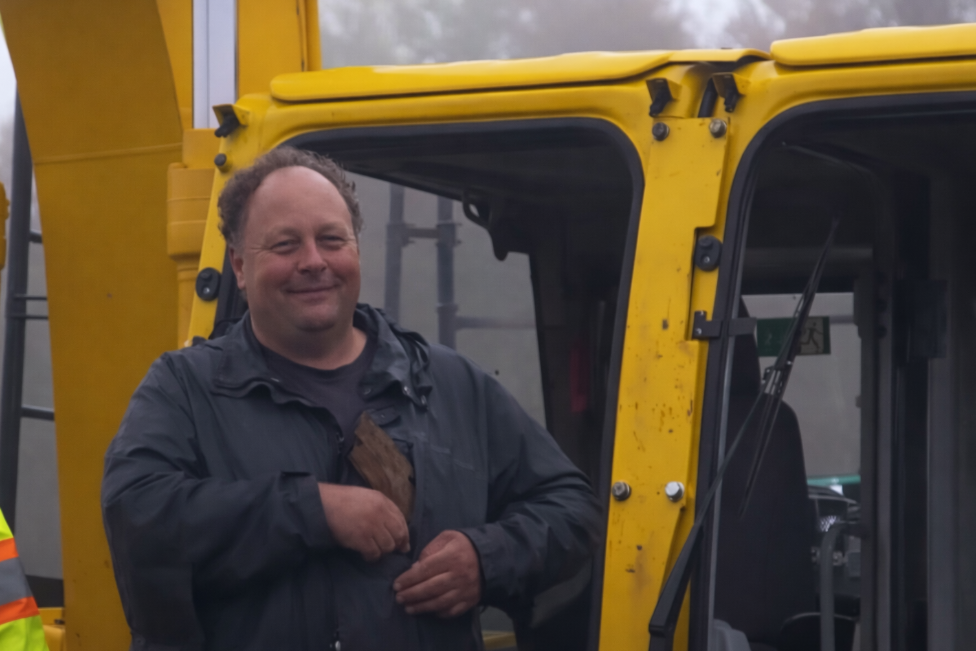
The operational challenges faced by Gerhardt and the Lagina brothers cannot be overstated. Reaching 142 feet required driving a steel caisson through unstable soil and a previously undiscovered bedrock layer, at a cost of $5 million. Multiple floods and a partial shaft collapse at 75 feet threatened to halt progress entirely, while engineers repeatedly warned that attempting to reach these depths was futile. Yet Gerhardt’s unwavering determination and willingness to risk personal funds ultimately turned the venture into a historic success.
As an analyst, the discovery raises crucial questions about prior excavation strategies and the potential for additional hidden chambers. The fact that the Money Pit may have been a decoy reshapes our understanding of Oak Island’s original design. It suggests that previous searchers, focusing solely on the prominent shaft, may have missed other significant caches. Future expeditions will likely prioritize areas indicated by structural markers, GPR data, and historical patterns, rather than relying on conventional assumptions about the Money Pit’s primacy.
Furthermore, the find repositions the narrative around Billy Gerhardt. Traditionally seen as a technical operator rather than a lead strategist, he has now demonstrated that intuition combined with careful observation can surpass decades of conventional planning. Analysts predict that this will encourage more independent investigation and strategic risk-taking within the Oak Island team, potentially accelerating new discoveries in previously unexplored areas.
Looking ahead, the recovery and study of the chamber’s contents will be essential. Historians and archaeologists anticipate that lead containers within the vault could contain documents or artifacts shedding light on who orchestrated this European operation, and why such elaborate hydraulic traps were engineered. If these items include maps, transaction records, or coded symbols, they could finally answer longstanding questions about Oak Island’s builders and the motivations behind its complex underground systems.
From a predictive standpoint, this breakthrough suggests several likely developments. First, the Oak Island team may expand their focus beyond the Money Pit entirely, analyzing structural patterns and marker placements to uncover other hidden chambers. Second, the success of a non-traditional approach led by Gerhardt may inspire a greater division of responsibilities within the team, blending field intuition with technical analysis more closely. Third, the sheer scale and value of the Spanish Colonial treasure may attract heightened media attention, increasing both public interest and potential investment in excavation technology for future seasons.

Finally, this discovery may recalibrate the mythology of Oak Island. For decades, legends have centered around pirates, Knights Templar, and colonial conspiracies, with the Money Pit as the focal point. With the 110-foot breakthrough and the treasure vault revealed by Gerhardt, historians now have physical evidence to connect the island with Spanish Colonial activity and Jesuit influence. This shift could lead to a reinterpretation of the island’s history, bridging the gap between legend and documented European operations in the North Atlantic.
In conclusion, Billy Gerhardt’s “Marker” and the discovery of the $250 million treasure vault represents a defining moment in the modern saga of Oak Island. By challenging conventional wisdom, risking personal investment, and pursuing innovative excavation strategies, Gerhardt has unlocked both material riches and historical insight. Analysts predict that the full implications of this find will resonate for years, influencing excavation priorities, historical research, and the ongoing narrative of the world’s most famous treasure hunt. Oak Island, once shrouded in mystery and myth, has entered a new era—one where evidence, strategy, and bold action may finally uncover the secrets that have eluded explorers for over two centuries.