The most compelling clue ever found on Oak Island: Could the money pit really contain ancient treasure?
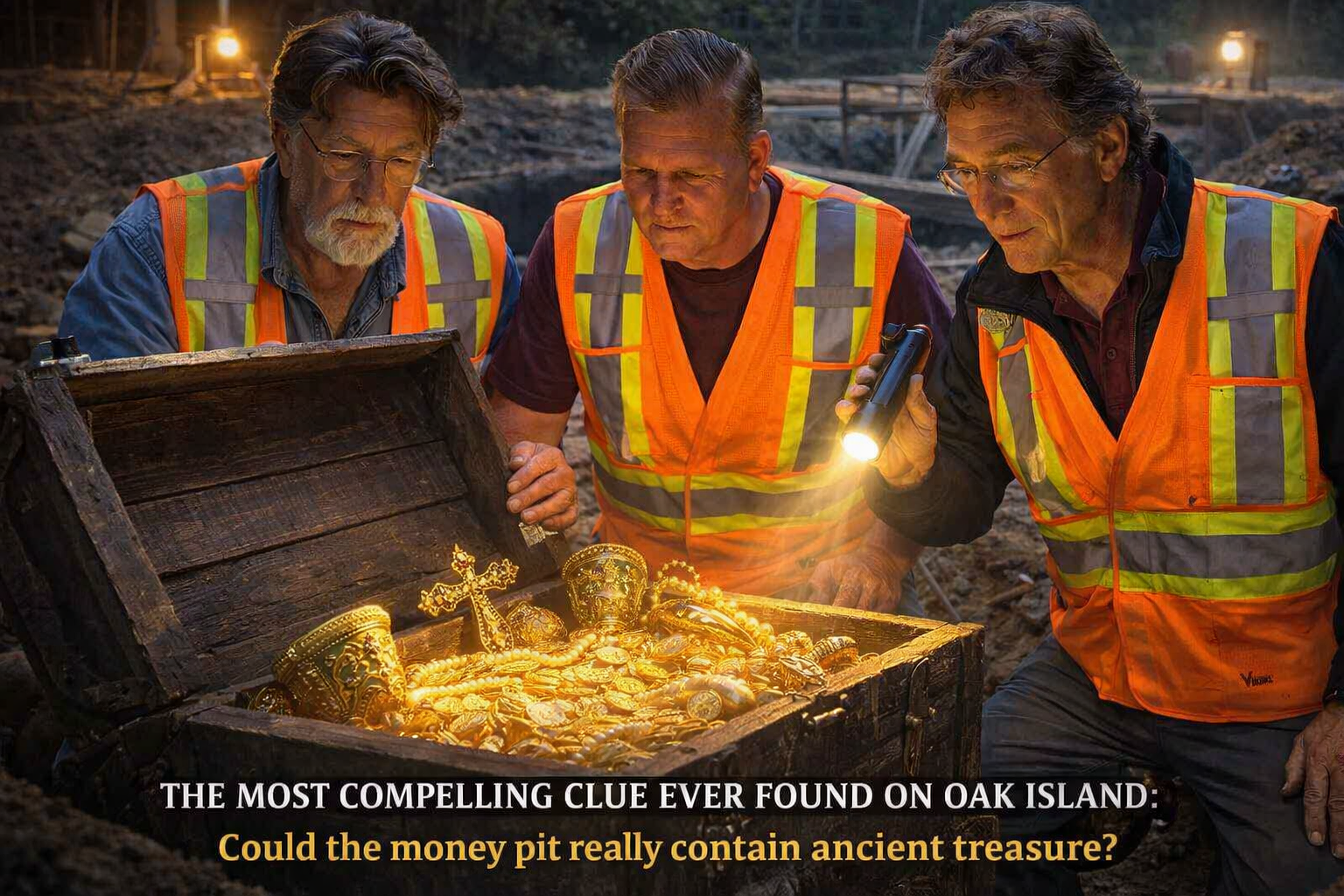
For more than two centuries, Oak Island has been defined by one question: what lies beneath the surface? But the latest turn in The Curse of Oak Island suggests that question may no longer be enough. The search is no longer simply about buried wealth, old legends, or a long-lost vault. It has become a wider investigation into who built the underground system, why it was protected so carefully, and whether the island itself was designed to mislead every generation that came after.
The newest focus centres on the area near the Garden Shaft, where testing has reportedly pointed toward unusually strong evidence of gold nearby. For Rick and Marty Lagina, such readings are not just another hopeful sign. After years of drilling, scanning, mapping, and disappointment, the data appears to strengthen one of the team’s most important theories: that a hidden tunnel system could connect the Garden Shaft to a larger underground chamber near the Money Pit.
That possibility became more compelling when drilling reached a depth of roughly 90 to 97 feet and appeared to encounter a hidden void. The reaction from the team was immediate. A sudden drop in the drill rods suggested open space below the surface, while core samples brought back more than ordinary soil and stone. Pieces of old, waterlogged wood emerged from deep underground, followed by more unusual material that appeared to resemble leather and parchment.
For a programme built around careful interpretation of small clues, the discovery was significant. Preserved wood at that depth suggests the possibility of a constructed underground feature. If the void is man-made, it would point to engineering far more advanced than a simple hole dug by opportunists. A stable tunnel surviving under pressure from earth, water, and time would require planning, skill, and a clear purpose.
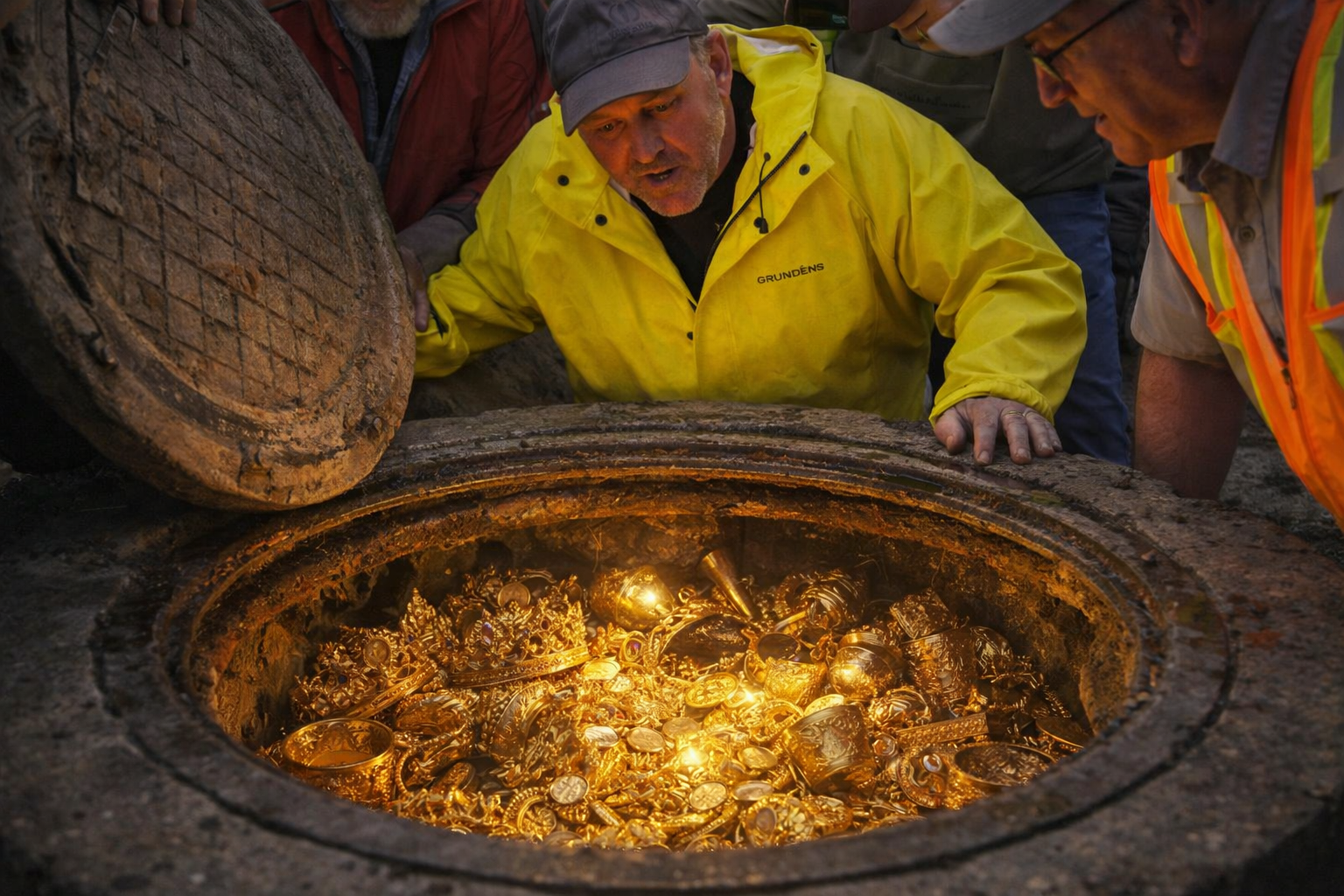
That is where the Oak Island story becomes more complex. The possible parchment fragment, if authentic and properly verified, could shift attention away from gold alone and toward records, relics, or symbolic material. In the show’s wider narrative, this matters because Oak Island has never survived on treasure alone. Its real power comes from the idea that every object could be part of a coded system.
Back at the research centre, the testing of recovered samples reportedly added another layer to the mystery. Analysis suggested unusually high gold readings in the wood, raising the possibility that the material may have been close to a substantial gold source for a long period. Even more intriguing were the markings said to have appeared on the fragile parchment. According to the programme’s speculative line of inquiry, those symbols may connect to European religious orders and the movement of powerful groups across the Atlantic.
This is where the theory reaches its most ambitious point. The suggested link to the Order of Christ, often discussed as a successor to the Knights Templar in Portugal, would radically reshape the island’s backstory. Instead of pirates hiding stolen cargo or treasure hunters concealing a prize, the theory imagines Oak Island as part of a deliberate, long-term operation. In that version, the Money Pit would not merely be a vault. It would be one part of a larger protected repository.
Several existing Oak Island features are then reinterpreted through this lens. Nolan’s Cross, long studied as one of the island’s most puzzling surface formations, becomes more than a marker. The stone road beneath the swamp is viewed not simply as a path, but as a possible transport route. The swamp itself is reconsidered as an artificial disguise, while old walls, wells, and underground water systems take on new meaning as parts of a planned settlement or defensive structure.
Such claims remain highly speculative, and that is important. The Curse of Oak Island often operates in the space between physical evidence and historical possibility. The programme builds suspense by connecting clues, but connection is not the same as proof. Still, the strength of this latest storyline lies in how it changes the scale of the question. The team is no longer asking whether something valuable was hidden. They are asking whether Oak Island was engineered as a protective system.
The idea of flood tunnels is central to that argument. Traditionally, they have been described as traps designed to prevent recovery. But the new theory suggests they may have served a more sophisticated purpose: controlling underground conditions to preserve whatever was placed inside. If true, that would make the Money Pit less like a treasure hole and more like a preservation chamber, designed with long-term protection in mind.
The challenge now is practical as much as historical. Even if the team has found an antechamber or tunnel feature, the main vault may still lie much deeper underground. Reaching it without damaging potential evidence would require extraordinary caution. The operation would need to balance excavation, archaeology, engineering, and preservation, all while dealing with the island’s unstable and water-filled underground environment.
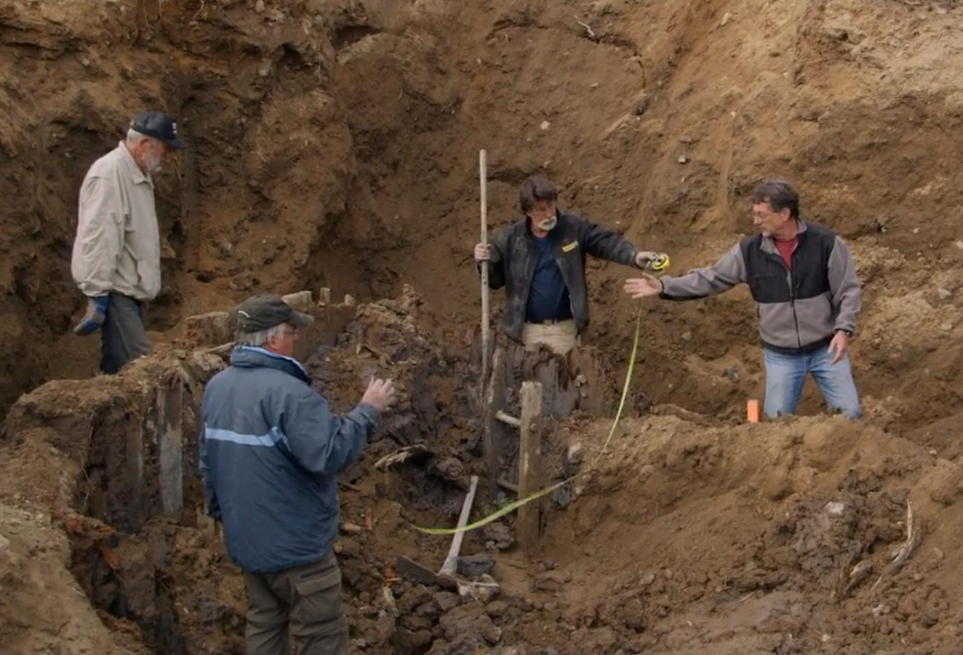
For Rick and Marty Lagina, this may be the most difficult stage of the search. Finding signs of a hidden system is one thing. Proving what it means is another. Recovering what may lie beyond it is harder still. Oak Island has always offered enough evidence to keep hope alive, but never enough certainty to close the case.
That is why this latest chapter feels so important. Whether the Templar theory ultimately stands or falls, the discoveries near the Garden Shaft have pushed the investigation into deeper territory. The island now appears less like a random treasure site and more like a carefully arranged puzzle, one that may have been built to protect its contents from time, water, and human ambition.
For viewers, the appeal is clear. Oak Island is no longer just asking what is buried below. It is asking who had the knowledge to build such a system, what they believed was worth protecting, and whether the Lagina team can finally reach the place that generations before them could not.