Oak Island Team Moves Closer to the Money Pit After Garden Shaft Gold Evidence and Shaft Discoveries
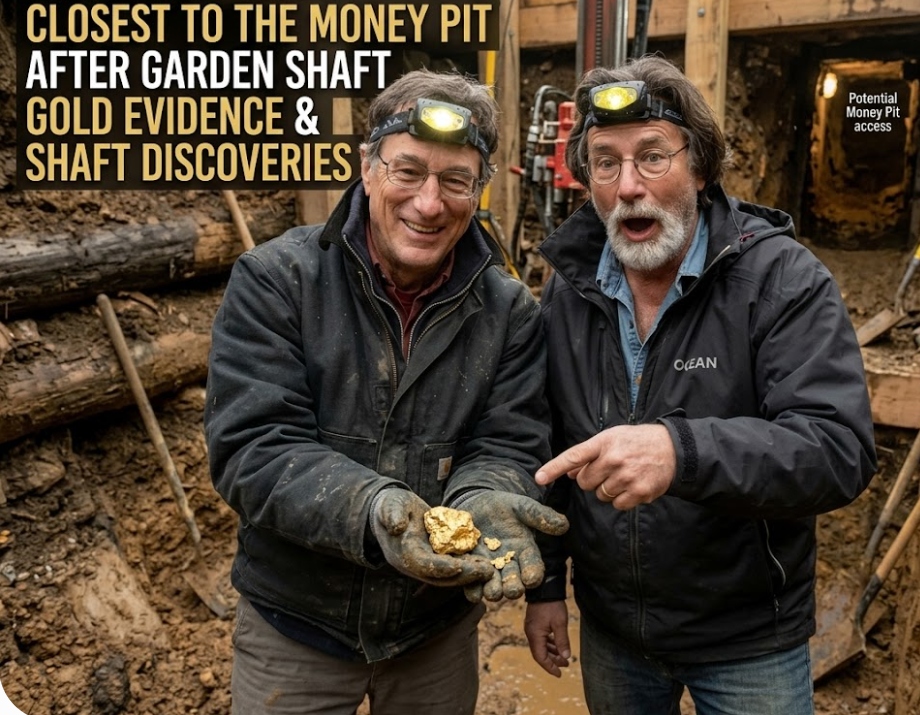
The search for the original Money Pit on Oak Island may have entered one of its most important phases yet, as Rick and Marty Lagina’s team uncovered new evidence from the Garden Shaft and surrounding searcher structures that could narrow the location of the island’s legendary underground target.
In the latest developments from The Curse of Oak Island, attention returns to the Garden Shaft, an 80-foot-deep structure currently being refurbished by Dumas Contracting Limited. The shaft has already attracted major interest because previous water testing in the area revealed high trace evidence of gold. For the Lagina brothers and their partners, that has made the Garden Shaft one of the most promising locations in the long-running search.
The new operation began with probe drilling from inside the shaft. Representatives from Dumas used a hydraulic earth drill to push through clay, sediment, and rock in an attempt to locate a nearby void several feet outside the structure. Earlier drilling had indicated the presence of a 10-foot-high void southwest of the Garden Shaft, a feature Marty Lagina suggested could potentially be an offset chamber connected to the original Money Pit system.
The plan was methodical. The team intended to drill a total of 12 holes, three from each wall of the Garden Shaft, at different angles. The goal was to determine whether the void could be reached from inside the shaft and whether it contained signs of man-made workings or valuable material. Rick Lagina was particularly interested in collecting both soil and wood samples, believing that the shaft’s old wooden lining could have absorbed traces of gold from underground water.
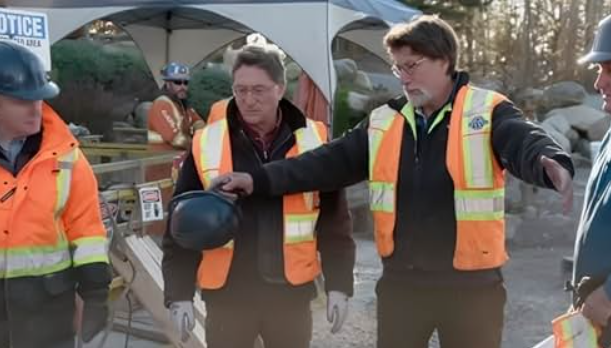
That decision soon delivered one of the most encouraging scientific results of the season. Archaeometallurgist Emma Culligan tested wood samples taken from a depth of around 55 feet inside the Garden Shaft and confirmed the presence of gold. The result prompted visible excitement from the team, with Marty calling the finding significant and Rick describing the scientific analysis as invigorating.
From an analytical point of view, the importance of this discovery is not simply that gold was detected. Oak Island has produced gold trace evidence before, but the fact that it appeared on organic material from inside the Garden Shaft strengthens the idea that gold-bearing water may be moving through the underground system. If the wood acted like a sponge, as Rick suggested, then its chemical signature could be pointing toward a larger source nearby.
However, the team knows that trace evidence alone cannot solve the mystery. The real value of the Garden Shaft operation lies in how it fits with other physical evidence from the Money Pit area. This is where the search for old searcher shafts becomes crucial.
Elsewhere near the Money Pit, the team focused on locating Shaft 2, the oldest known searcher shaft closest to the original Money Pit. During exploratory drilling, they recovered substantial wooden material that appeared to represent more than one wall of a structure. The alignment suggested they may have located the second wall of Shaft 2, a major step because historical accounts place it close to the original Money Pit.
To confirm the structure’s identity, wood samples were sent for dendrochronology testing, a scientific method that studies tree rings to determine when timber was cut. The results came back with a date of 1796. That finding was important because Shaft 2 is historically associated with the early searcher period, around 1805, while the original Money Pit was discovered in 1795. For Marty and the team, the result strongly supported the conclusion that they had indeed found Shaft 2.
That matters because if Shaft 2 can be reliably placed, the team can use historical measurements to project the likely location of the original Money Pit. According to the discussion in the War Room, the Money Pit could now be within a much smaller search radius, possibly around 20 feet or less. For a search that has been complicated by more than two centuries of digging, collapsing shafts, flooding, and conflicting records, that narrowing of the target area is a major development.
The episode also highlighted the importance of Shaft 9, another old searcher structure near the southern shore. Guided in part by information associated with veteran treasure hunter Dan Henskee, the team uncovered what appeared to be a wooden sluiceway connected to the shaft. The discovery of preserved wood, clay, and running water suggested that the old system was still physically intact in places.
Further excavation revealed dimensions consistent with historical accounts of open shafts from the 1850s, including the 6-by-12-foot measurement associated with Shaft 9. When the team uncovered the tunnel connection between the shaft and the sluiceway, they viewed it as confirmation that Shaft 9 had finally been identified.
For viewers, these discoveries may not look as visually dramatic as a chest or a single glittering artifact, but they may be more important to the investigation. Oak Island has always been a puzzle of geography as much as treasure. The team’s biggest obstacle has not only been finding evidence of something underground, but understanding the relationship between shafts, tunnels, voids, and historical searcher activity.
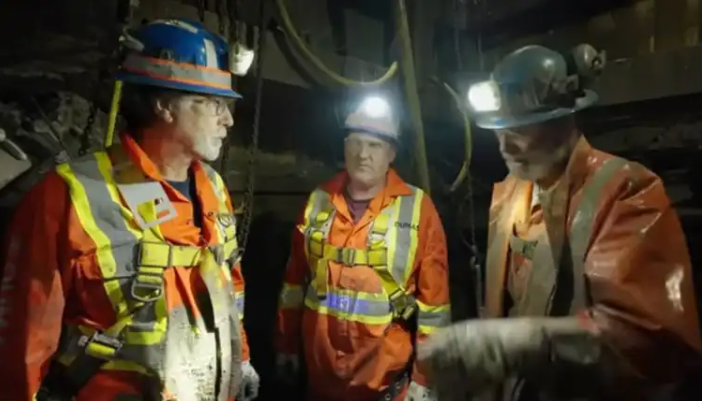
The Garden Shaft gold evidence, the confirmation of Shaft 2, and the discovery of Shaft 9 all point toward the same broader conclusion: the team may be rebuilding the underground map of the Money Pit area with greater precision than ever before. Each verified structure reduces uncertainty. Each old timber, tunnel, and chemical result adds another fixed point to the model.
Still, the biggest question remains unanswered. If the original Money Pit is finally located, what will the team find inside or beneath it? The evidence suggests they may be closer to the historic target, but Oak Island has repeatedly turned promising clues into new layers of mystery.
For Rick and Marty Lagina, that is both the frustration and the appeal of the search. The latest findings do not close the case, but they do make the next step clearer. After years of theories and near misses, the team now appears to have something more valuable than speculation: physical evidence, scientific data, and a narrowing map that could finally guide them toward the place every major searcher on Oak Island has tried to reach.