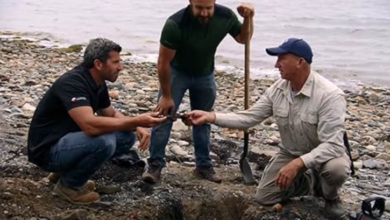
The discovery of a rare iron chain has led to new clues about ancient people on Oak Island.
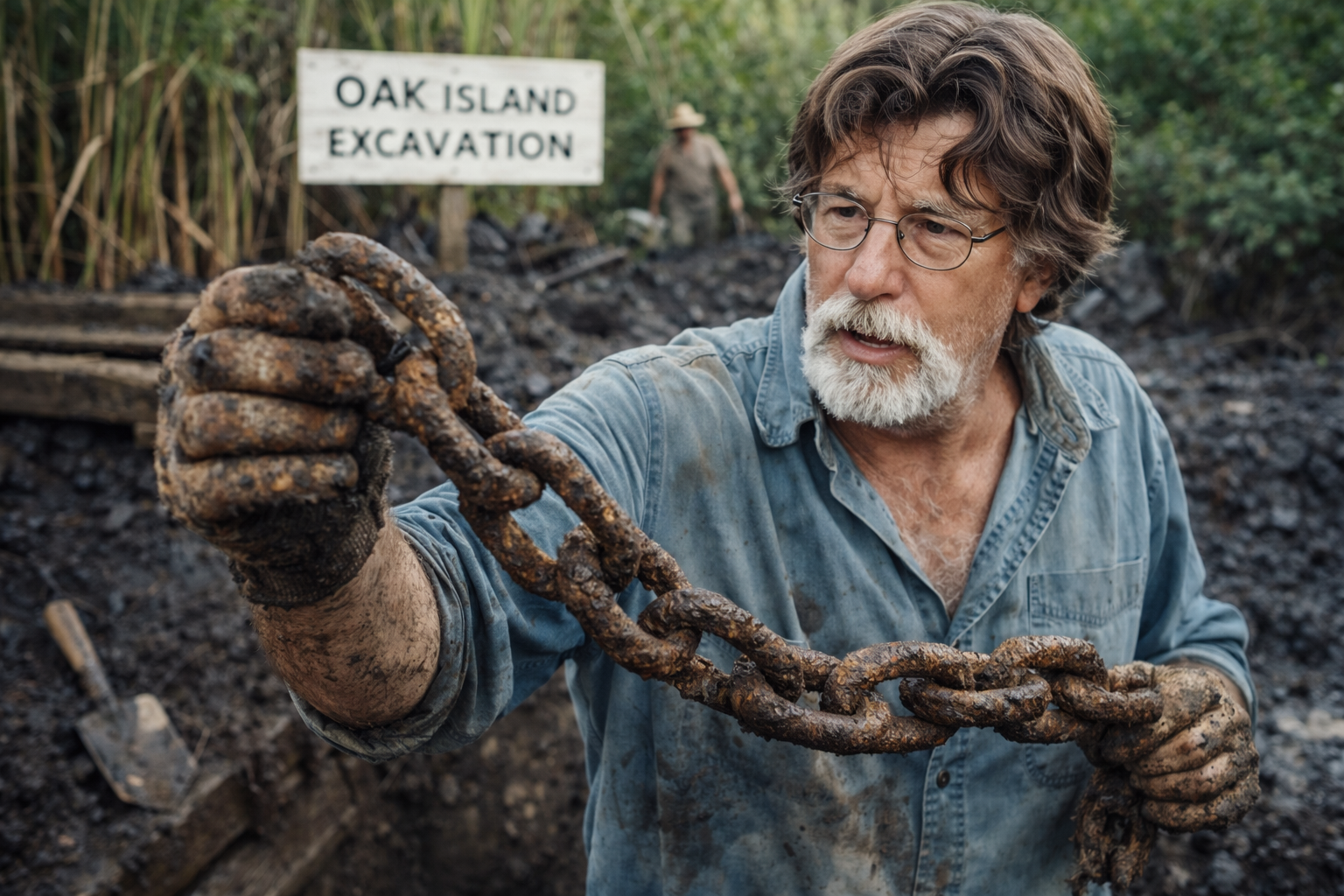
The Curse of Oak Island has always been driven by the power of small discoveries to reopen large questions. A fragment of metal, a piece of old wood, a stone feature, or a trace of unusual material can quickly become more than an object. It becomes a clue, a possible link to a hidden system, and sometimes a reason to reconsider the entire timeline of the island. That is why the discovery of a rare iron chain connected to new clues about ancient people on Oak Island would immediately stand out as one of the more intriguing developments in the search.
From an analyst’s perspective, the importance of an iron chain depends almost entirely on context. A chain found on its own may not prove much. Oak Island has seen centuries of activity, and metal objects can come from many periods: farming, shipping, military use, treasure hunting, construction, or later excavation. But if the chain is found in an undisturbed layer, near older wooden structures, close to the swamp, or connected to an underground feature, then its meaning changes sharply.
The first question the Lagina team would need to answer is simple: where does the chain belong in the island’s timeline?
That question is not easy. Iron corrodes, moves, and can be difficult to date directly. The chain itself may not provide a clear age unless its manufacturing style, metal composition, or corrosion pattern can be matched to a specific period. This is where the scientific side of the show would become essential. The team would likely send the chain for metallurgical testing, compare it with known historical examples, and search the surrounding soil for material that can be dated more reliably.
If the chain was recovered alongside old wood, charcoal, pottery, or bone fragments, the investigation could become much stronger. Those associated materials could help place the chain within a broader archaeological layer. Without that context, the find remains interesting but uncertain. With it, the chain could become a key piece of evidence suggesting organized human activity on Oak Island far earlier than expected.
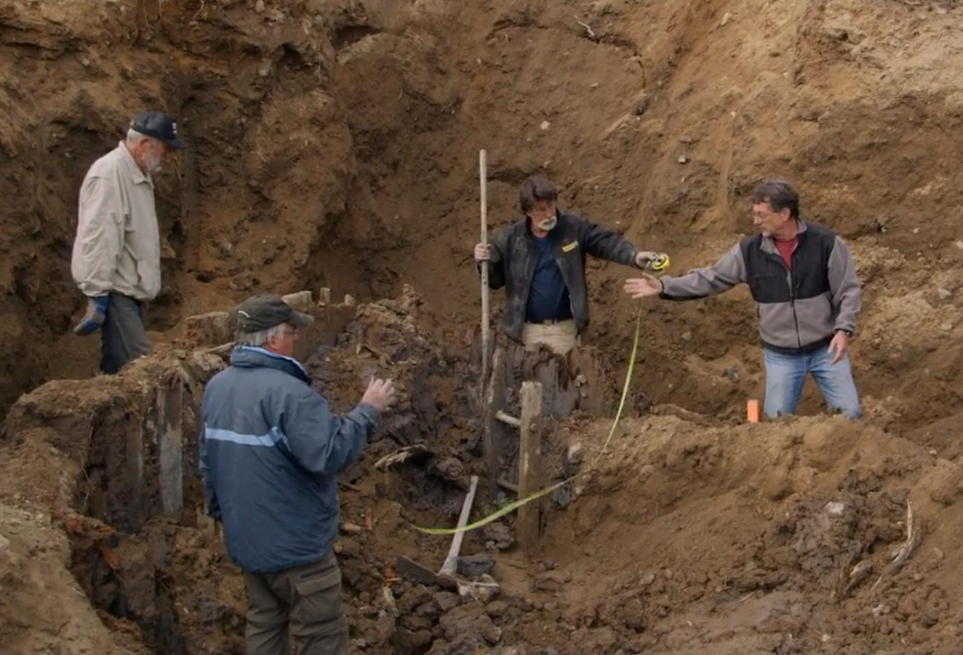
The phrase ancient people is especially powerful for the show, but it must be handled carefully. On Oak Island, the temptation is always to connect a discovery quickly to a major historical theory. Viewers are familiar with speculation involving early European explorers, military groups, privateers, religious orders, or other organized visitors. However, a rare iron chain should not be treated as final proof of any one group. Its value lies in what it can point toward, not what it can prove immediately.
What makes a chain so interesting is its practical nature. A chain is not usually ornamental. It is made for work. It can secure, lift, drag, anchor, bind, or move heavy material. That means the find could suggest purposeful activity. If ancient people or early visitors brought a chain to Oak Island, they likely had a task in mind. The chain may have been used to move cargo, support a structure, secure a vessel, or assist with underground construction.
This is where the discovery could open several possible storylines.
If the chain was found near the swamp, it could strengthen theories that the area was once used as a working zone rather than a natural feature alone. Over the years, the swamp has produced some of the island’s most debated evidence. A rare iron chain in that location might suggest hauling, anchoring, or maritime movement. The team would likely search nearby for hooks, spikes, wooden beams, stone alignments, or other metal fragments that could reveal a larger system.
If the chain was discovered near the Money Pit or Garden Shaft area, the interpretation becomes even more significant. In that context, the chain could be linked to underground engineering. It might suggest that earlier searchers, builders, or depositors used equipment to lower materials, stabilize shafts, or move heavy objects beneath the surface. Such a find would fit directly into one of the show’s central questions: was there a deliberate engineered system beneath Oak Island?
The Garden Shaft would be especially important in this scenario. In recent seasons, the team has placed heavy attention on underground features, wood structures, water behavior, and metallic traces near key search zones. A chain found in this environment could trigger a new round of drilling, scanning, and targeted excavation. The Laginas would likely want to know whether it aligns with known tunnels, voids, or anomalous readings already detected.
Another likely development would involve Lot 5. The area has become increasingly important because of its artifacts and possible links to older activity. If the rare iron chain connects to the same material culture as other finds from that area, the team could begin building a stronger argument that Oak Island had a complex human presence before the well-known treasure hunt began. That would not solve the mystery, but it would expand the historical frame.
From a television perspective, this discovery has strong narrative value because it sits between archaeology and mystery. It is physical enough to feel real, but ambiguous enough to invite debate. The show thrives in exactly that space. The team can examine the chain scientifically while historians and theorists consider what kind of people might have used such an object on the island.
My prediction is that the chain would not produce an immediate answer. Instead, it would become a gateway clue. The Lagina team would likely use it to justify a wider search around the discovery site. Gary Drayton could be brought in to continue metal detecting nearby. Emma Culligan could help analyze the metal composition. Archaeologists could examine the soil layer and compare the artifact with known chain designs from different periods. The team might also return to older maps and previous finds to see whether the chain fits an overlooked pattern.
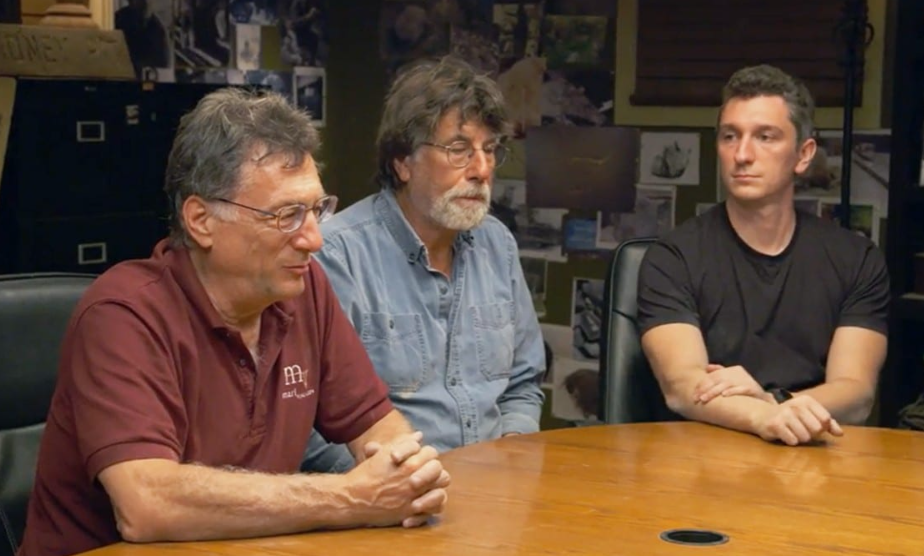
The most important outcome may be a shift in the investigation’s direction. If the chain suggests early organized activity, the team may begin focusing less on one isolated treasure location and more on a broader network of human movement across the island. That could include shoreline access, swamp pathways, underground work zones, and connections between Lots, shafts, and stone features.
This would be a meaningful development for The Curse of Oak Island. The show has gradually moved from a single treasure-hunt premise toward a larger historical investigation. A rare iron chain tied to clues about ancient people would support that evolution. It would suggest that Oak Island’s story may not be limited to one deposit or one moment, but rather a sequence of human activity layered over time.
In the end, the discovery of a rare iron chain may not reveal who came to Oak Island or exactly what they left behind. But it could give the Lagina team something just as valuable: a new direction. If the chain proves old, functional, and connected to other evidence, it may become one of those small objects that forces everyone to look at the island differently. For a mystery built on fragments, that could be enough to open the next major chapter.