SHATTERING THE MAP: Roman Coin and Military Cargo Barrel Fragments Ignite Transatlantic Historical Crisis on Oak Island
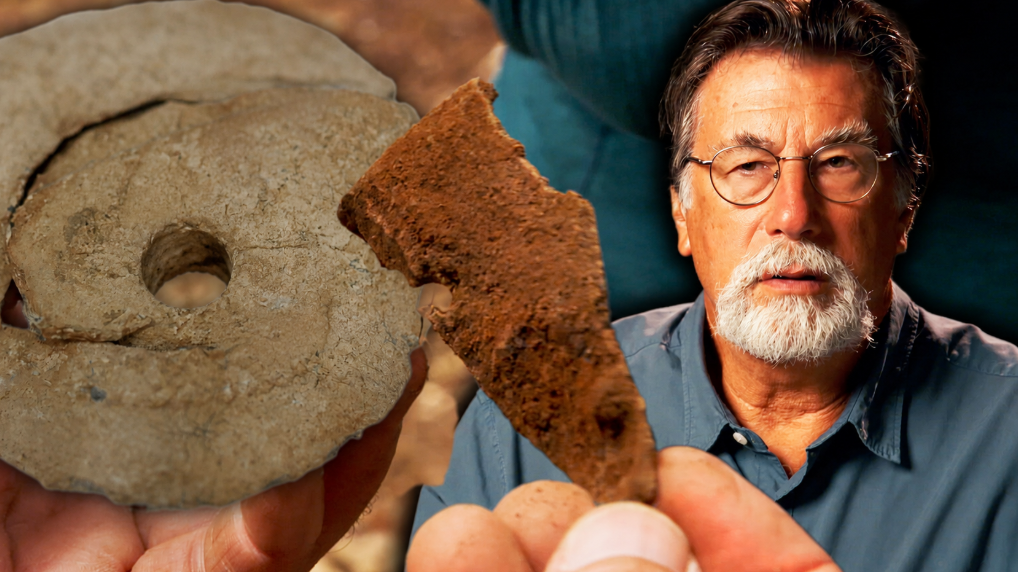
A series of staggering, laboratory-verified discoveries has sent shockwaves through the global archaeological community tonight, completely destabilizing the traditional timeline of North American exploration. Moving far beyond the familiar legend of the 1795 “Money Pit,” the Lagina engineering team has unearthed absolute physical evidence of deep pre-Columbian European contact, anchored by a 2,000-year-old classical coin and mid-18th-century French military logistics.
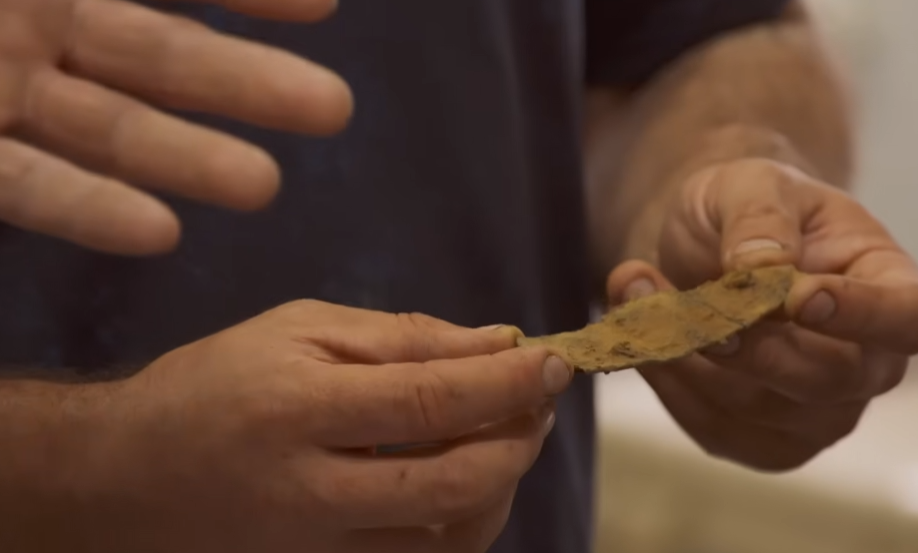
The explosive developments began on the newly acquired Lot 5, an area of the 140-acre drumlin island previously untouched by modern treasure hunters. While executing a rigorous, grid-based metal detection survey, Rick Lagina and veteran recovery specialist Gary Drayton recovered a heavily eroded, cut copper coin fragment.
The 2,000-Year-Old Imperial Fingerprint
The artifact was immediately rushed to the Oak Island Interpretive Center for rigorous scientific testing. Archaeometallurgist Emma Culligan subjected the specimen to advanced X-ray fluorescence (XRF) and CT scanning, revealing a highly unrefined elemental composition consisting of dominant copper, lead, tin, 1.05% silver, and a critical 0.51% trace of arsenic.
“If an artifact contains arsenic, it is pre-1500 metallurgy, without question,” explained visiting numismatist Sandy Campbell during an emergency briefing. Upon examining the physical design, which precisely matches imperial currencies circulating between 300 BC and 600 AD, Campbell delivered a stunning diagnostic verdict: “I am confident this is Roman.”
The staggering announcement immediately prompted questions regarding how a classical Mediterranean relic came to rest in Nova Scotian soil. Senior archaeologist Laird Niven confirmed that while no precedent exists in Canadian history, matching Roman coins have been documented in verified archaeological contexts along the East Coast of the United States.
The team is currently investigating a profound geographic connection to their 2024 expedition to Portugal. There, researchers mapped 2,000-year-old cobblestone roads built during the Roman Empire that feature an identical, stone-for-stone construction layout to the massive submerged road unearthed in the Oak Island swamp in 2020. Local theory suggests the coin may have been part of an ancestral hoard transported across the Atlantic by the Knights Templar between the 12th and 16th centuries.
The War Machines of Lot 32
Simultaneously, a second historical front has opened on the western perimeter of the swamp on Lot 32. Working alongside Jack Begley near the remains of a suspected ancient ship’s wharf, Drayton uncontained a collection of pre-1800 hand-forged ironwork, highlighted by a massive, curved structural strap and a square-shanked chopping implement resembling a ship’s scythe.
Blacksmithing expert Carmen Legge analyzed the heavy iron band at the island’s Research Center, identifying it as a structural reinforcing loop built specifically for an enormous, naval-grade 180-gallon transport barrel. “An average colonial settler would have no operational use for a cask of this magnitude,” Legge stated, confirming the item was strictly designed for high-capacity military or commercial fleet logistics.
Crucially, Legge dated the iron fabrication to approximately 1740—an “aha date” according to a visibly moved Rick Lagina. The timeframe aligns precisely with the ill-fated 1746 Duc d’Anville expedition, a massive, secretive French military armada rumored to have visited Mahone Bay to bury an immense state treasure during the height of colonial conflict.
As a mobilized crew charges back into the mud of Lot 5 to expand the perimeter of the find, the island’s legendary mystery has evolved from a simple hunt for buried gold into an undeniable, multi-layered archive of world history.