An ancient stone vase worth $10 million in the Money Pit could change the course of the Curse of Oak Island.
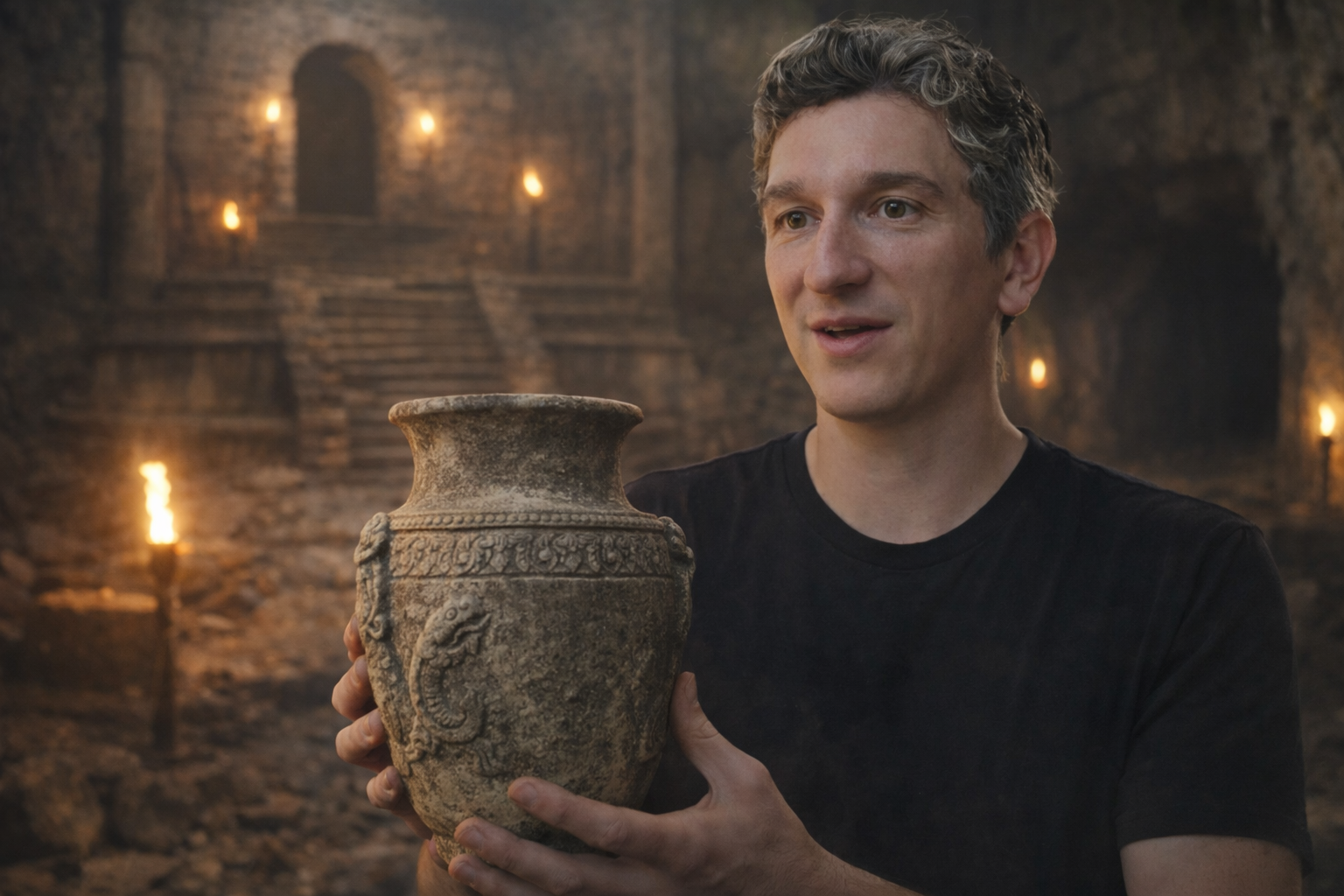
For years, The Curse of Oak Island has asked viewers to look at fragments as if they might be pieces of a much larger design. A coin, a wooden beam, a stone road, a tunnel reading, or a trace of metal can become the beginning of a new theory. But the possible discovery of an ancient stone vase in the Money Pit, reportedly valued at $10 million, would stand apart from the usual pattern of finds.
If confirmed, such an artifact would not simply be another object pulled from the ground. It would represent something portable, crafted, valuable, and potentially tied to a culture far removed from the modern history of Nova Scotia. For the Lagina brothers and the Fellowship, the question would no longer be only what lies beneath the Money Pit. It would become who placed such an object there, when it arrived, and why it was hidden in one of the most debated locations on the island.
From an analyst’s perspective, the importance of a stone vase would come from its context. Oak Island has produced many intriguing clues over the years, but the Money Pit remains the symbolic heart of the search. A rare object found there would immediately carry more narrative weight than a similar item discovered elsewhere. The location would suggest deliberate placement rather than accidental loss, especially if the vase were recovered from a depth associated with earlier underground activity.
The first major storyline would likely focus on authentication. A $10 million valuation sounds extraordinary, but The Curse of Oak Island has always been strongest when it slows down and allows experts to test a claim. The team would need to determine the vase’s age, origin, stone composition, tool marks, residue, and possible cultural style. Emma Culligan and the scientific team would likely play a central role, working alongside outside specialists in archaeology, ancient art, and material analysis.
That process could produce several episodes of tension. If the vase contains residue, it might reveal what it once held. If it bears carvings, symbols, or decorative patterns, those markings could point toward a specific civilization or trade route. If the stone itself came from outside North America, the implications would be even larger. The Fellowship would then have to consider whether the object was brought to Oak Island as treasure, as a ceremonial item, or as part of a hidden archive.
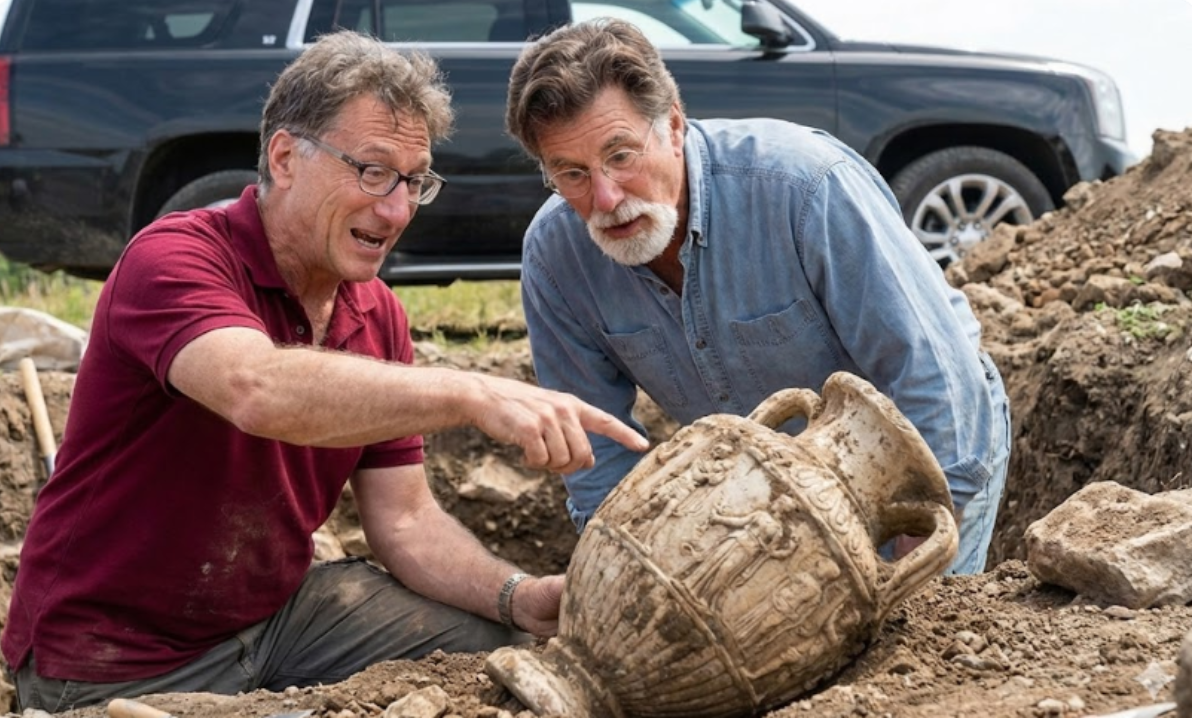
Rick Lagina would likely see the find through the lens of historical meaning. For Rick, Oak Island has never been merely about financial value. His interest is rooted in the idea that the island is guarding a real story, one that has been misunderstood or buried for centuries. An ancient stone vase in the Money Pit would give him a tangible object to connect that belief to. It would be something more emotional than another metal trace or timber sample.
Marty Lagina, on the other hand, would probably approach the discovery with cautious excitement. A $10 million artifact would be remarkable, but Marty would immediately ask what the team can actually prove. Is the valuation reliable? Is the vase complete? Was it found in a sealed context? Could it have been moved by earlier searcher activity? His role would be to keep the Fellowship focused on evidence rather than allowing the value alone to define the find.
That balance between belief and verification would make the storyline compelling. If the vase is truly ancient, it could challenge the timeline of activity on Oak Island. It might suggest that the Money Pit was not just a later treasure deposit, but part of a deeper and older system. The team would need to revisit earlier theories involving foreign visitors, maritime contact, and possible organized concealment.
One likely development is that the vase becomes a key to reinterpreting past evidence. The stone road in the swamp, the Lot 5 discoveries, the Garden Shaft area, and the water samples around the Money Pit could all be reconsidered in light of a high-value ancient artifact. The question would be whether these separate clues are connected or whether the island has gathered layers of unrelated activity over many centuries.
The show could also use the vase to introduce new expert debates. Some researchers might argue that it points to ancient trade or ceremonial activity. Others might suggest it was brought by later collectors, explorers, or depositors who already valued old artifacts. That second possibility would be just as interesting. If someone hid a rare ancient vase in the Money Pit, it may mean the original deposit was not only gold or silver, but a collection of culturally significant objects.
The reported $10 million value would also create a practical problem. A find of that scale would raise questions about custody, conservation, insurance, ownership, and public disclosure. The Fellowship could not treat it like a casual discovery. It would need careful handling and likely secure storage. That would add a modern pressure to the historical mystery: once Oak Island produces something that valuable, the search becomes more scrutinized than ever.
For future episodes, the strongest prediction is that the vase would not provide an immediate answer. Instead, it would become the center of a new investigative arc. The team might discover that its design links to a specific region. They might find microscopic residue that suggests ritual use. They might locate similar objects in museum collections. Or they might discover that the vase’s material came from a source thousands of miles away.
Any of those outcomes would push the series into a more archaeology-driven phase. The Money Pit would remain the central location, but the focus would shift from simply reaching a vault to understanding the nature of what may have been hidden there. That is an important distinction. The Curse of Oak Island has lasted so long because the mystery is not only about treasure. It is about interpretation.
A stone vase would also change fan expectations. Viewers who have waited for gold bars or chests may need to consider that Oak Island’s most important discoveries could be historical rather than purely financial. A $10 million valuation gives the artifact immediate attention, but its real importance would be the story it unlocks.
If the vase is authentic and truly connected to the Money Pit, it could become one of the most meaningful discoveries in the series. It would suggest that whoever worked beneath Oak Island may have been protecting more than wealth. They may have been preserving objects with cultural, symbolic, or political value.
That is why this discovery would matter. The vase would not end the Oak Island mystery. It would deepen it. It would give the Fellowship a new object to study, a new timeline to test, and a new reason to believe that the Money Pit still holds answers beneath its layers of mud, wood, water, and history.
For The Curse of Oak Island, an ancient stone vase would be more than a valuable artifact. It would be a sign that the island’s story may be older, stranger, and far more carefully hidden than anyone expected.