The discovery of an ancient temple beneath Oak Island could shed light on its 2,000-year history.
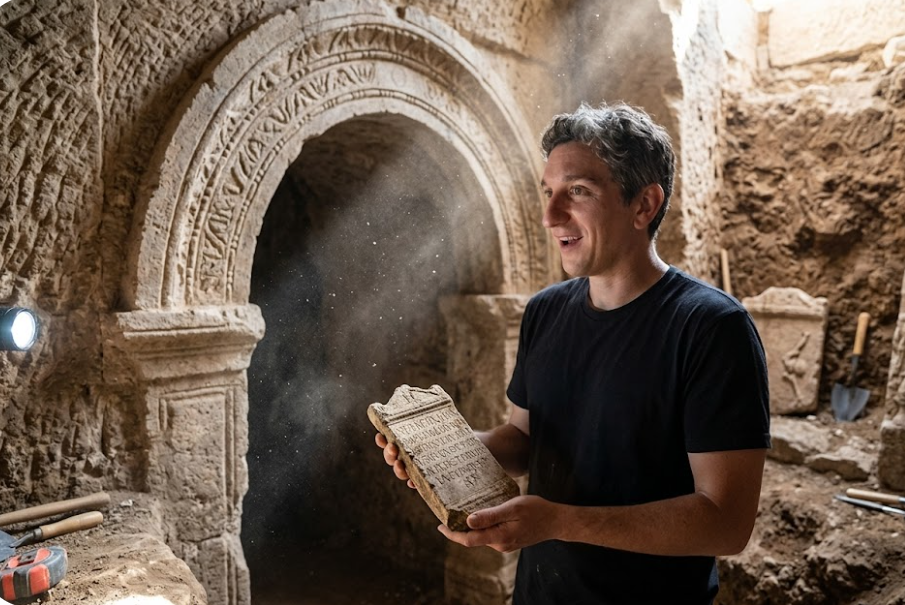
For years, The Curse of Oak Island has built its mystery around shafts, tunnels, flood systems, metallic traces, buried wood, stone roads and scattered artifacts. The search has often focused on whether someone, centuries ago, engineered a hidden system to protect something of great value. But the possible discovery of an ancient temple deep beneath Oak Island would take the story into far more complex territory.
If such a structure were confirmed, it would not simply be another underground anomaly. It would force the team to rethink the entire purpose of the island. Instead of asking only where treasure may be buried, the Fellowship would have to ask who built such a place, why it was hidden, and whether Oak Island was once part of a larger ancient network of ritual, trade, navigation or concealment.
From an analyst’s point of view, this would be one of the biggest narrative shifts the programme could attempt. Oak Island has always worked best when it balances archaeology with mystery. A temple beneath the island would expand that balance dramatically. It would move the search beyond coins, tools and possible vaults, and into the possibility that the island’s underground features were connected to belief, ceremony or a planned sanctuary.
The first challenge would be verification. The team has encountered many promising clues before: wood at depth, unusual stone formations, metallic readings, possible tunnels and man-made features. A suspected temple would require far more careful investigation than a normal dig. Ground-penetrating radar, borehole cameras, structural scans and archaeological review would become central. The Fellowship could not simply break through and explore without understanding whether the site is stable, protected or historically significant.
This is where the show’s scientific side would become essential. Emma Culligan and the wider research team would likely play a major role in analyzing any recovered material. Stone fragments, tool marks, pigments, carvings, organic residue or inscriptions could become the key to dating the structure. If the temple contained symbols or writing, the programme would have a powerful new thread: decoding not just where the builders came from, but what message they intended to leave behind.
A discovery of this kind would also affect Rick and Marty Lagina differently. Rick would likely see it as a deeply emotional breakthrough. For him, Oak Island has always been about more than financial value. It is about proving that the island’s long legend has a real historical foundation. An ancient temple would support the idea that Oak Island was not merely the site of random digging, but a place chosen for a specific and extraordinary reason.
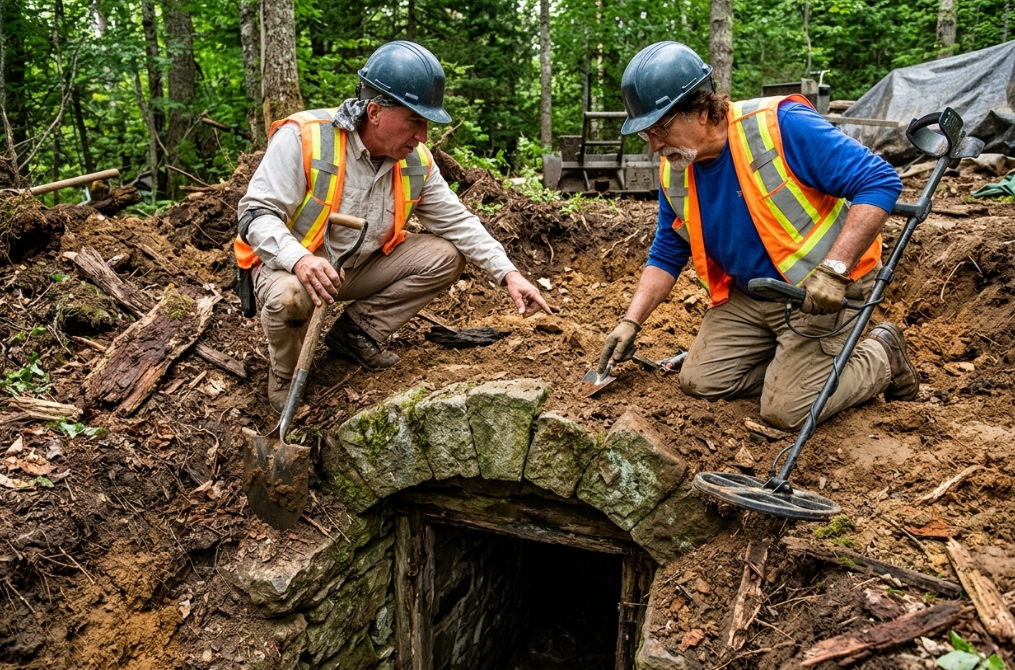
Marty, however, would probably approach it through practical questions. How deep is the structure? Is it safe to access? Who has jurisdiction over the find? Would further work require government approval? Could the discovery stop or slow ongoing operations? His cautious side would become even more important because a temple would not be treated like a normal treasure target. It could become an archaeological site requiring preservation, documentation and outside oversight.
That tension could shape an entire season. Rick may want to keep pushing toward the heart of the structure, while Marty may insist that every step must be controlled. The Fellowship could find itself caught between urgency and responsibility. Fans would understand both sides. After years of searching, the desire to see what lies inside would be enormous. But the risk of damaging a once-in-a-lifetime find would make restraint just as compelling.
The discovery would also force the team to revisit earlier evidence. The swamp, the stone road, the Money Pit area, Lot 5 and other zones might all be reconsidered as pieces of a wider design. What once looked like scattered clues could suddenly appear connected. A temple beneath the island might explain why so much effort was placed into underground engineering. It could suggest that the island was not only hiding treasure, but protecting a sacred or politically important space.
One possible future development is that the team finds a passage leading from the temple toward a known search area. This would be a classic Oak Island turning point. A hidden chamber is interesting, but a hidden chamber connected to the Money Pit would be transformative. It would imply that the island’s most famous mystery was part of a larger system rather than an isolated deposit.
Another possibility is that the temple contains no gold or silver at all, but instead holds information. Stone tablets, carved maps, symbols, ceremonial objects or evidence of ancient contact could prove more important than conventional treasure. For a show often judged by whether it finds valuables, this would be a daring but potentially powerful direction. The treasure would become knowledge, and the meaning of the search would expand.
There would also be a production challenge. The Curse of Oak Island has to keep viewers emotionally invested while avoiding conclusions that move faster than the evidence. A temple storyline would need careful pacing. The programme could build suspense through scans, small recoveries and expert disagreement. Some specialists might argue the structure is man-made. Others might suggest a natural cave modified by later visitors. That debate would give the season intellectual tension without needing to resolve everything immediately.
The strongest prediction is that such a discovery would not end the Oak Island mystery. It would multiply it. A hidden temple would create new questions about builders, dates, purpose and access routes. It could bring historians, archaeologists, geologists and language experts into the investigation. It could also divide fans, with some seeing it as the long-awaited breakthrough and others demanding stronger proof before accepting the theory.
For the Fellowship, the emotional stakes would be higher than ever. An ancient temple would suggest that Oak Island’s story is older and more layered than many imagined. It would also place a greater burden on the team. They would no longer be only treasure hunters chasing a legend. They would become custodians of a possible historical site.
That is why this storyline would be so compelling. It would preserve everything that makes The Curse of Oak Island work: mystery, evidence, debate, risk and the promise of a deeper truth. But it would also push the show into a new phase, where the greatest discovery may not be buried wealth, but the revelation that Oak Island was once part of a forgotten human story.
If an ancient temple truly lies deep beneath the island, the question is no longer just what was hidden there. The real question becomes why someone went to such extraordinary lengths to hide it in the first place.