Parker Schnabel Hands Rick Ness a Lifeline as Gold Rush Season Hangs in the Balance.
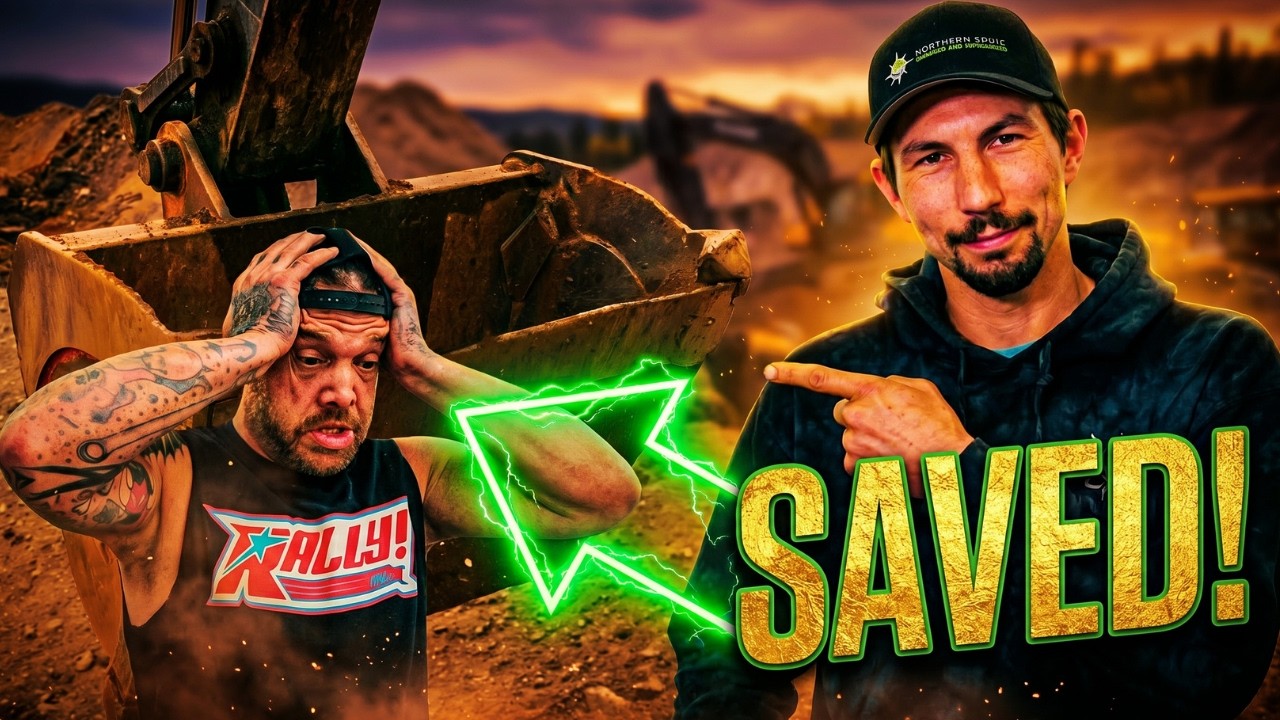
Rick Ness has spent much of his Gold Rush journey trying to prove that he can survive as an independent mine boss. But this season, that ambition came under serious pressure when a failed cut, damaged equipment and collapsing ground left his operation close to a breaking point.
In a year already defined by financial strain and difficult decisions, Rick found himself forced to turn to an old friend and former mentor: Parker Schnabel. What followed was more than a simple equipment deal. It became one of the clearest reminders that, even in the competitive world of Yukon gold mining, relationships can still decide whether a season survives.
Rick’s problems began at the Valhalla cut, a site that had once looked capable of changing the direction of his year. He and his crew invested nearly two months of work and close to a million dollars into stripping the ground, hoping to reach rich pay dirt below. Instead, they encountered a thick layer of clay that blocked access to the material they needed.
The obstacle was not just inconvenient. It was season-altering. With the Yukon summer moving quickly and winter never far away, Rick had to accept that pushing deeper would cost too much time and money. After weeks of effort, Valhalla had to be abandoned.
For Rick, the decision carried emotional weight. He had entered the season needing a strong result after previous struggles, and Valhalla had been one of his major chances to recover financially. Walking away meant admitting that a huge investment of labour, fuel and hope had produced nothing close to what he needed.
Rick then shifted his attention back to Vegas Valley, a site that had helped rescue him the previous year. But the move brought another set of problems. Dangerous permafrost walls threatened to collapse, forcing the crew to stabilize the ground before they could safely continue mining. That required heavy excavator work, but Rick’s aging machinery was already under stress.
Then the situation worsened. The floor of his excavator bucket tore apart, leaving the machine unable to attack the frozen ground. Without a usable bucket, the excavator was effectively powerless. Without the excavator, Rick could not safely clear the unstable permafrost. Without that work, the Vegas Valley plan could fall apart before it truly began.
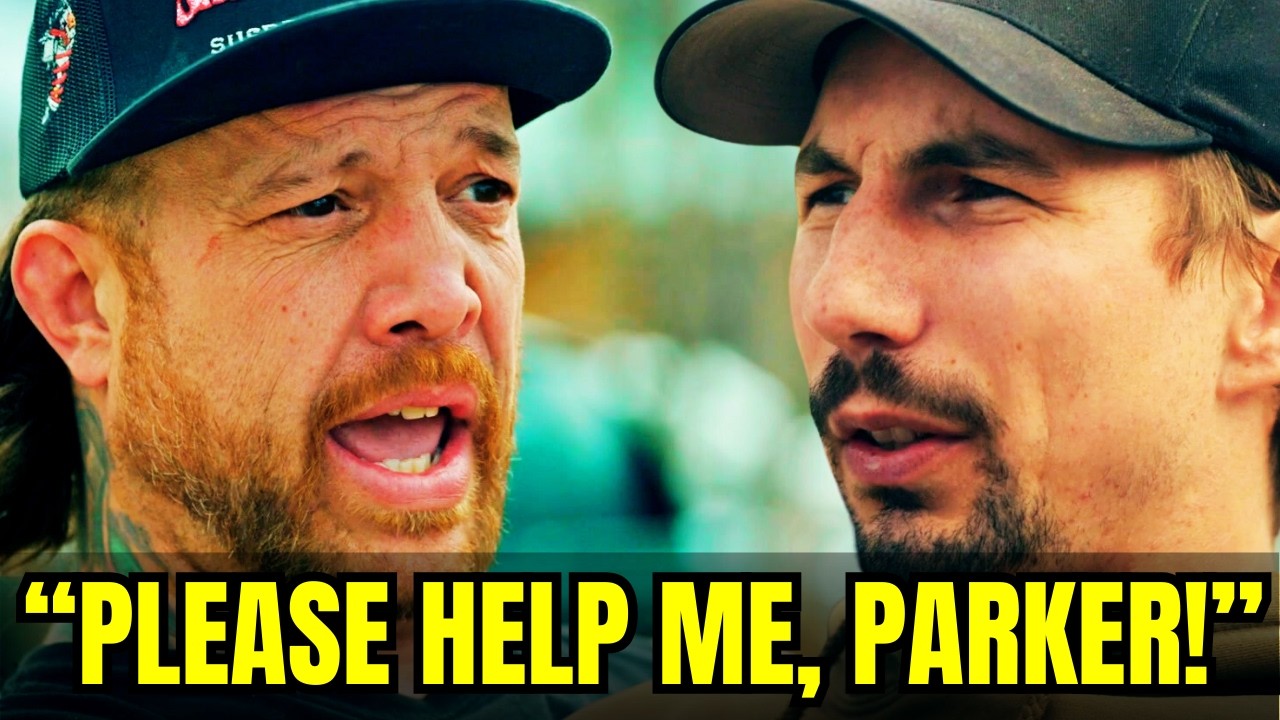
At that point, Rick had few options left. A repair could take too long. A new part might not arrive quickly enough. Every lost day in the Klondike can reduce the chance of recovery before winter arrives. For a smaller operation with limited backup machinery, this was exactly the kind of failure that can finish a season.
Rick’s possible solution was Parker Schnabel.
The visit to Parker’s Hunker Creek operation immediately highlighted the difference between the two miners’ current positions. Parker’s site has become one of the most powerful mining operations in the region, with huge equipment, multiple wash plants and a level of activity that few independent miners can match. Heavy trucks moved through the cuts, large machinery filled the landscape, and a new Caterpillar D11 had recently arrived to strengthen an already impressive fleet.
For Rick, arriving at that kind of operation while his own crew was fighting to keep old machinery working must have been a complicated moment. Parker’s scale showed what is possible in the Klondike, but it also underlined how far Rick still has to go if he wants long-term security.
Yet the meeting did not feel cold or transactional. Despite years of separate careers, the personal history between Rick and Parker remained clear. Rick once worked under Parker and learned much of what helped him become a mine boss. Their relationship has changed, but it has not disappeared.
Rick explained that he needed a replacement bucket immediately. Parker did not dismiss the request. Instead, he helped search through old equipment to find something that might fit. Several options were ruled out because they were not compatible with Rick’s machine, but eventually they found a worn bucket that looked usable enough to give Rick a chance.
Parker joked that he should charge Rick $10,000 because he did not enjoy dealing with used equipment, but the humour softened the pressure of the moment. In the end, he sold the bucket to Rick for $5,000. For Parker, it may have been a small piece of equipment from a large yard. For Rick, it was a route back into the season.
The value of that moment was not measured only in dollars. Rick did not just leave with metal. He left with time, momentum and a reason to keep going. At one of the lowest points of his year, when even selling his mine had become a real possibility, Parker’s help allowed him to return to Vegas Valley with a practical path forward.
Their conversation also revealed a deeper side of life in the gold fields. Rick joked that what he really needed was part of his life back, a comment that reflected years of pressure, exhaustion and sacrifice. Both men discussed the idea that, with gold prices high, selling a mining operation might make sense. But neither sounded truly ready to walk away.
That is one of the most revealing parts of the Gold Rush story. Mining is not simply work for people like Rick and Parker. It becomes identity. The costs are high, the seasons are punishing, and the failures can be brutal, but the search for gold has a way of pulling miners back even when logic tells them to stop.
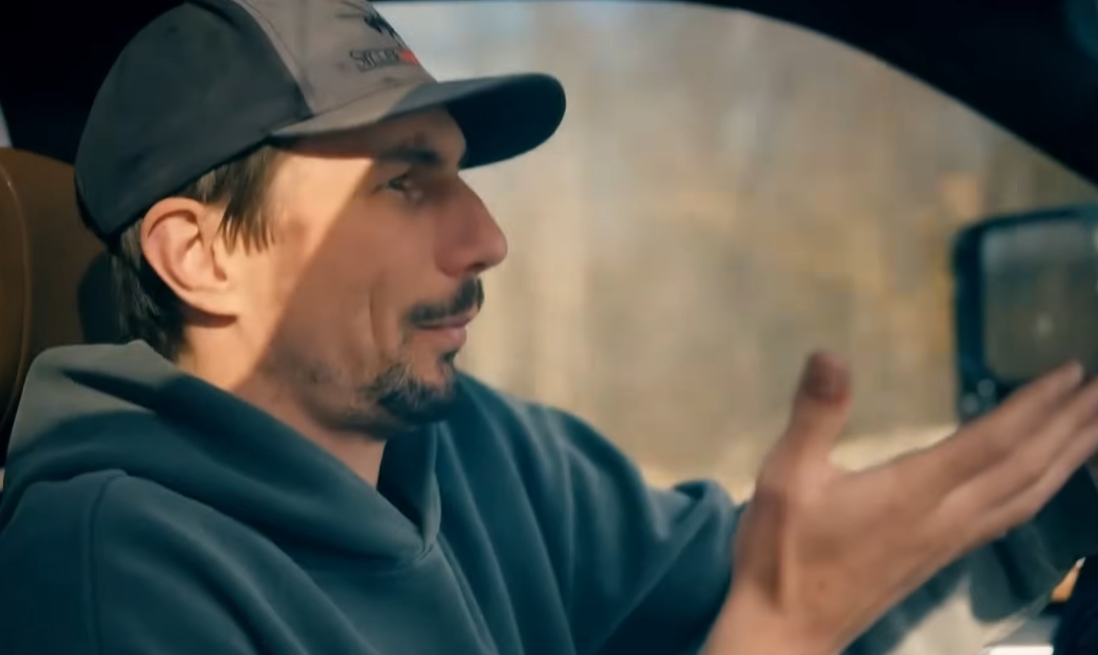
For Rick, the trip to Parker’s operation may prove to be a turning point. The bucket itself gives him the ability to return to work, but the visit may have done something just as important: it restored his belief that the season is not finished.
Gold Rush often focuses on numbers, ounces and machinery, but this moment showed something quieter. In the Yukon, survival is sometimes built on old friendships as much as equipment. Rick Ness left Parker’s yard with a battered bucket, a renewed chance at Vegas Valley and a reminder that even in a fiercely competitive mining world, loyalty can still carry real weight.
Whether that lifeline is enough to save his season remains uncertain. But for now, Rick Ness is still in the fight, and Parker Schnabel may have given him exactly what he needed to keep digging.