Oak Island Breakthrough: Lagina Team Finds Original Work in Smith’s Cove Flood Tunnel
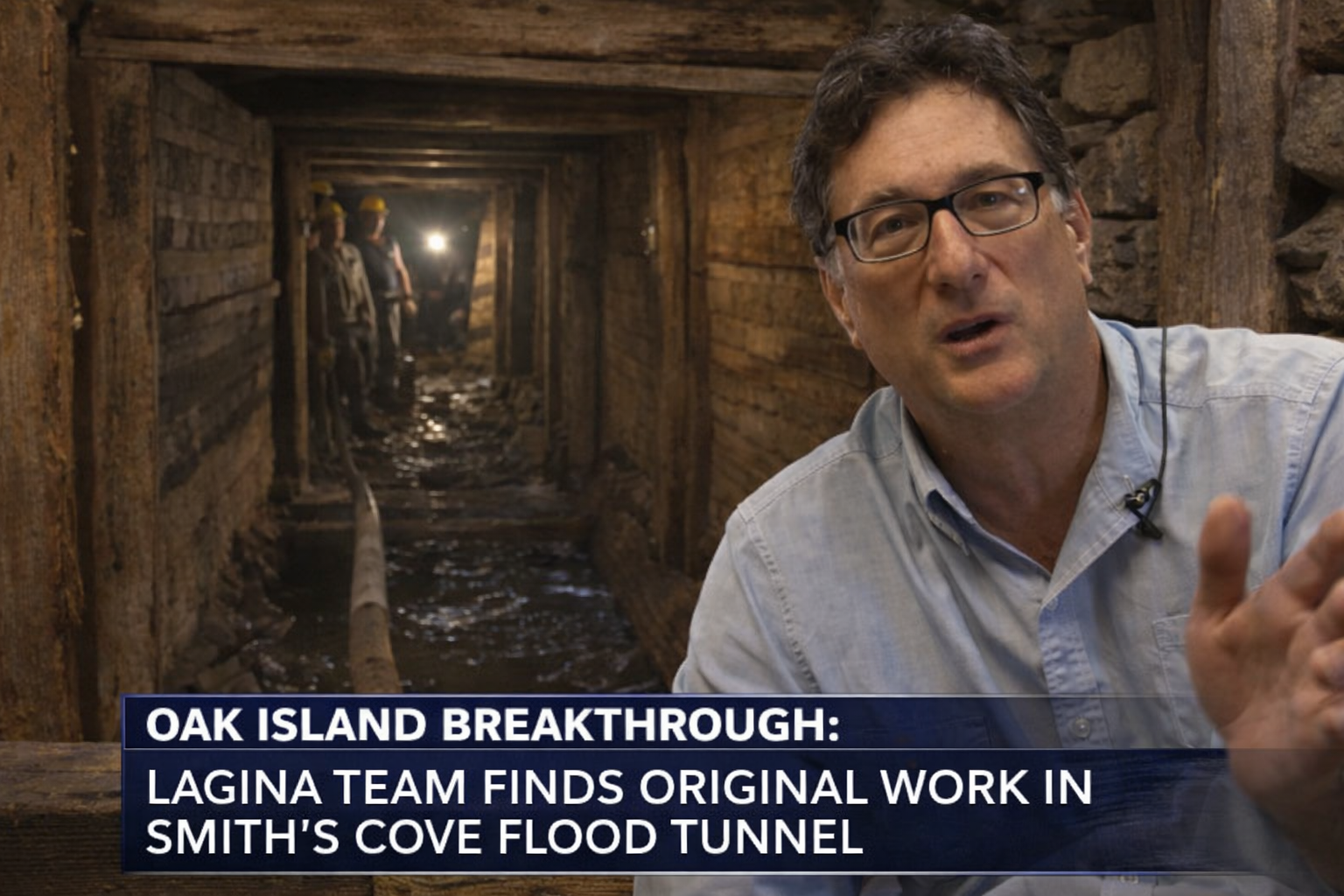
For more than two centuries, Oak Island has fascinated treasure hunters with the legends of the Money Pit, its elusive tunnels, and the booby traps said to protect unimaginable riches. In the latest developments on the series The Curse of Oak Island, Rick and Marty Lagina, along with their team, may have uncovered one of the most significant pieces of evidence in the search: original coconut fiber lining a previously unidentified section of the main flood tunnel at Smith’s Cove.
The discovery began with a routine inspection of an upland area near Smith’s Cove, where water was actively seeping from the ground. Crew members Craig Tester, Jack Begley, Gary Drayton, and Billy Gerhardt were quick to identify the unusual flow and investigate its source. “You can see it squirting up like a geyser,” remarked one team member, highlighting the unusual rate of water ingress from what could be the historic flood tunnel system . The water’s emergence from the landward side suggested a deliberate engineering solution designed to protect the Money Pit, consistent with historical accounts of the 18th- and 19th-century searchers encountering elaborate drainage systems.
As the team cautiously explored the site, it became clear that they were not dealing with ordinary debris. Wooden timbers of varying sizes and structures were visible along the exposed wall, some appearing to be braced in a U-shaped formation. According to Rick Lagina, “It looks more tunnel-like than shaft-like,” suggesting a deliberate construction rather than a collapsed shaft or natural formation . Marty Lagina and geoscientist Dr. Ian Spooner confirmed through analysis that the material included coconut fiber—a remarkable and historically significant element that had been found in earlier 1804 and 1850 explorations but had never been definitively tied to the original tunnel system.
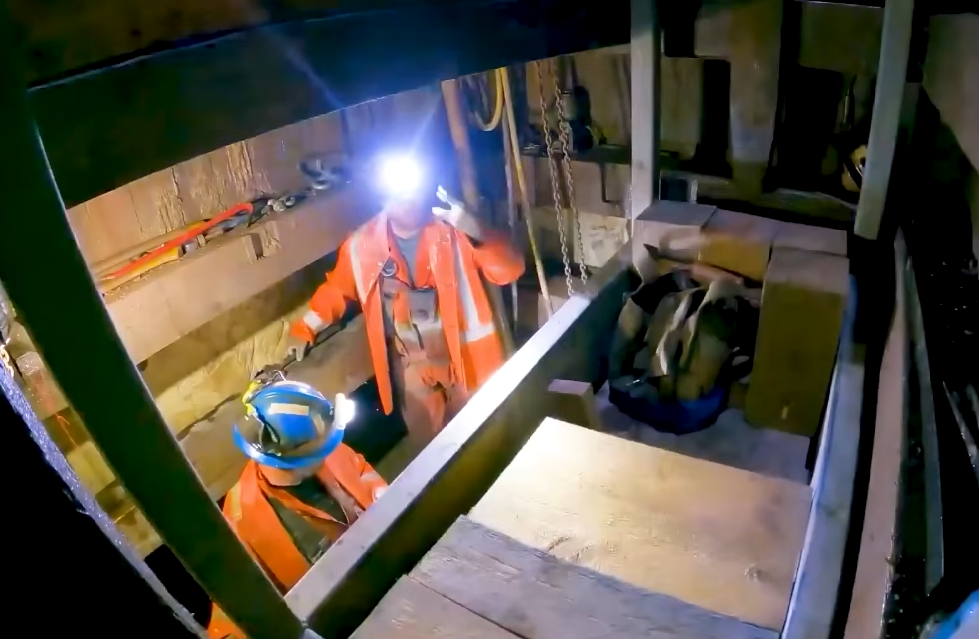
The significance of coconut fiber cannot be overstated. Historically, the material was used in Smith’s Cove as a filtration medium covering the five stone box drains that funneled water into the main flood tunnel. Its presence acts as a critical marker of original construction work, distinguishing natural or later disturbances from genuine 18th-century engineering. This discovery strongly suggests that the Lagina team may have located a portion of the original flood tunnel, the very structure that frustrated countless treasure hunters by inundating the Money Pit with water over the centuries .
Analytically, this discovery opens several avenues for both investigation and speculation. First, the identification of coconut fiber as an original construction material lends credence to theories that Oak Island’s builders used sophisticated engineering techniques to protect the Money Pit. The combination of wood timbers and fiber filtration indicates intentionality, planning, and knowledge of water management—technologies not easily replicated by casual 18th-century diggers. Second, it provides a tangible target for future excavation, allowing the team to map the tunnel system with greater accuracy and possibly trace its path to other hidden chambers or artifacts.
However, the team also faces considerable operational challenges. The exposed area is unstable, with sections of the ground and bridge edges at risk of collapse. As a result, further excavation must be carefully staged to prevent accidents and preserve structural integrity. The team plans to employ cameras mounted on excavator arms and other non-invasive techniques to observe the tunnel until it can be safely stabilized. This cautious approach underscores the balance between discovery and safety that has defined much of Oak Island’s modern exploration .
Predicting the implications of this finding, several scenarios are plausible. If further investigation confirms that the coconut fiber section is indeed original, the team may be able to identify additional elements of the flood tunnel network, including access points to the Money Pit itself. This could also help resolve long-standing questions about the design and purpose of the booby-trapped drainage systems. For viewers and historians alike, such confirmation would represent one of the most compelling pieces of evidence for the presence of pre-planned, engineered works beneath Oak Island.
Additionally, the discovery may influence the series’ narrative trajectory. Previous seasons have highlighted minor artifacts, anomalies, and exploratory dig sites, often leaving viewers questioning the significance of each find. The clear identification of original construction materials provides a milestone that can anchor storylines, offering both educational and entertainment value. Analysts expect that upcoming episodes will focus on interpreting the tunnel’s layout, testing hypotheses about water flow, and potentially uncovering new clues related to the Money Pit’s contents.
Finally, the broader historical and cultural implications are substantial. The use of coconut fiber—material sourced from thousands of miles away—suggests a level of planning, trade, and logistical sophistication that supports theories of deliberate, purposeful construction. It reinforces the notion that Oak Island was not merely a site of random excavation but a carefully engineered system designed to protect valuable objects. Such insights not only illuminate the methods used by historical builders but also enhance the narrative appeal for modern audiences following the Lagina team’s investigations.
In conclusion, the identification of coconut fiber and the observation of wooden timbers in a U-shaped tunnel structure mark a potentially historic breakthrough in the centuries-long search for Oak Island’s Money Pit. While safety and logistical challenges remain, this discovery strengthens the argument that the main flood tunnel may finally be within reach. Analysts and fans alike are watching closely as Rick and Marty Lagina plan the next steps, balancing careful excavation, scientific verification, and the tantalizing possibility that after more than 200 years, Oak Island’s secrets are inching closer to revelation .