The Mystery of the Lost Wartime Gold Train: Rick Lagina’s Most Extraordinary Discovery Yet
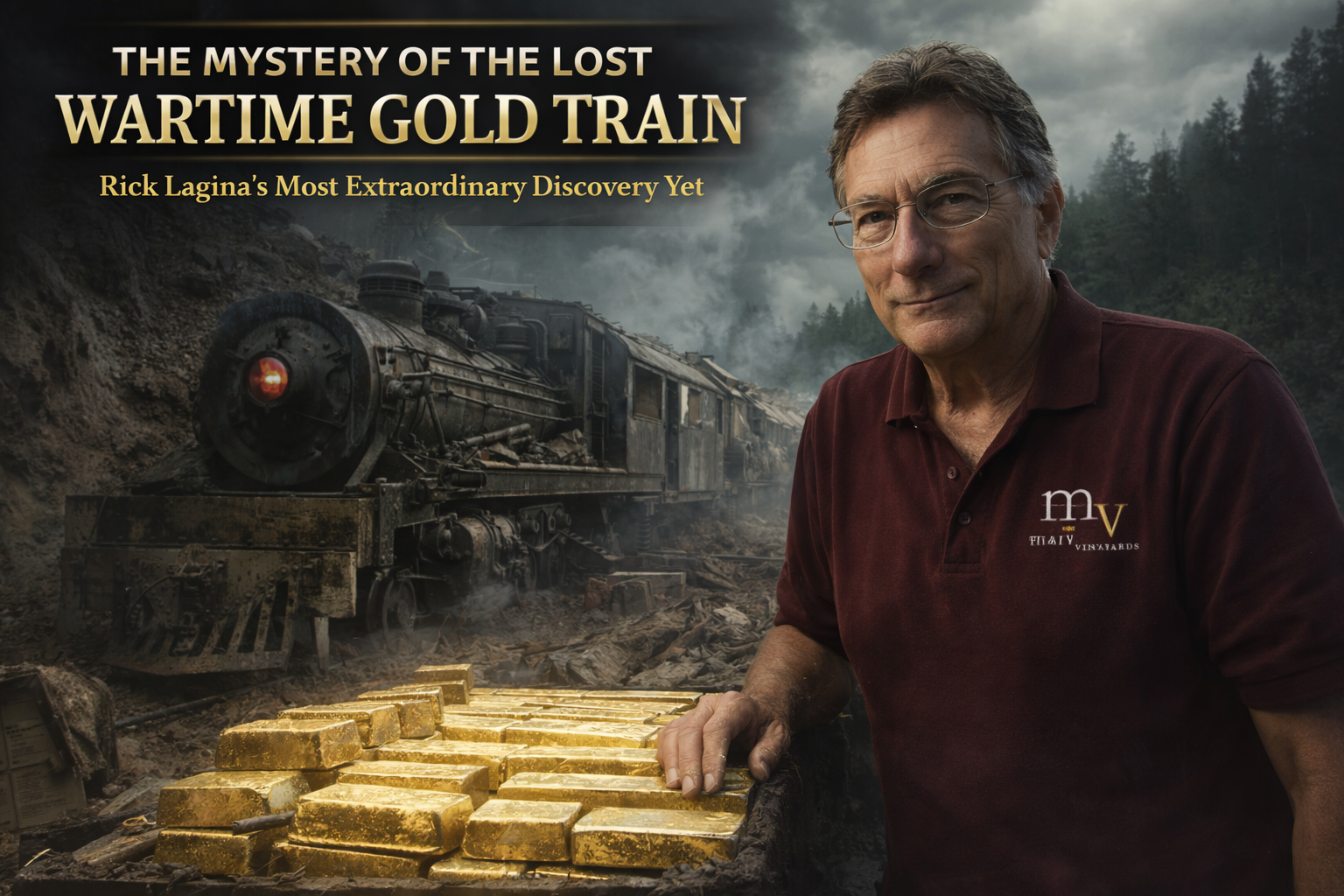
For viewers of The Curse of Oak Island, the idea of a lost wartime gold train would feel strangely familiar. It is not an Oak Island story in the strict geographical sense, but it belongs to the same world of hidden routes, buried evidence, old maps, uncertain testimony, and the long struggle to separate legend from history. If Rick Lagina were ever connected to such a discovery, it would rank among the most unusual and ambitious turns in his long search for answers.
The legend of the wartime gold train has circulated for years, most famously around the Wałbrzych area of southwestern Poland. The story suggests that, near the end of the Second World War, a train carrying valuables may have disappeared into an underground tunnel system. Over time, the tale has grown to include gold, cultural objects, military cargo, and even links to wider treasure lore. Searches have been attempted before, but official proof has remained elusive. Recent reports have pointed to renewed permission for fieldwork and fresh claims from search teams, but not to confirmed recovery of a train. That distinction matters. In treasure television, excitement creates momentum; evidence creates history.
From an Oak Island analyst’s perspective, Rick Lagina’s greatest strength has never been blind certainty. It has been persistence mixed with belief. He is drawn to mysteries because he sees meaning in fragments, but the show is strongest when those fragments are tested by science, archaeology, and expert review. A lost wartime train would demand exactly that approach. A claim of this size cannot rest on rumor, a single map, or one ground anomaly. It would need layered verification.
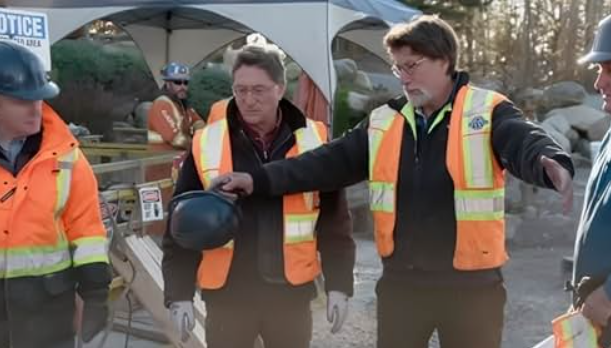
If the series were to frame this as Rick’s most extraordinary discovery yet, the first major development would likely be a shift from legend to location. The opening phase would focus on the supposed route: old railway lines, wartime infrastructure, tunnel entrances, forested terrain, and accounts passed down through local memory. Like the Money Pit, the train mystery depends on whether a hidden system can be reconstructed from incomplete evidence. The key question would not simply be, Is there treasure? It would be, Did a route exist that could have carried and concealed such cargo?
The next phase would be technological. Oak Island viewers are familiar with ground-penetrating radar, magnetometry, drilling, resistivity scans, and carefully plotted dig zones. Those methods would be central to any serious investigation of a possible buried train. If scans revealed a linear metallic anomaly, a void, or a tunnel-like structure, Rick and the team would not immediately have an answer. They would have a target. The story would then move into a familiar Oak Island rhythm: test, compare, question, and return with better equipment.
This is where Rick’s emotional role becomes important. He has always represented the human side of the search. Marty Lagina often asks what can be proven, what can be funded, and what makes sense operationally. Rick asks what the clue means in the larger story. In a wartime gold train investigation, that contrast would become even more powerful. Marty would likely push for caution, expert validation, and a clear excavation plan. Rick would see the possibility of finally touching a hidden chapter of history.
The most likely development is not an instant reveal of gold, but a slow expansion of the mystery. A scan might identify a possible tunnel. A small test dig might expose old rail material, timber, concrete, or wartime debris. Experts would then be asked to date the material and establish whether it belongs to the period in question. Even a partial find could change the direction of the investigation. On The Curse of Oak Island, a single artifact rarely ends the story. More often, it changes the map.
There is also a serious ethical dimension. Any treasure connected to the Second World War would not be treated like ordinary buried wealth. If cultural objects, private property, or looted valuables were involved, legal and historical questions would immediately follow. Who owns the material? Was it taken from individuals, institutions, or occupied territories? Which authorities must be involved? A responsible Oak Island-style investigation would need historians, archaeologists, government officials, and conservation specialists. The value of the discovery would not only be financial. It would be historical, legal, and human.
For the television format, this subject would offer enormous narrative potential. The Curse of Oak Island works because each season combines fieldwork with interpretation. A lost train would allow producers to build episodes around maps, tunnels, wartime engineering, witness testimony, and modern scanning. Rick’s discovery could become the entry point into a broader investigation of how valuables were moved, hidden, or lost during the final phase of the war.
Still, viewers should expect uncertainty. That is the nature of this kind of story. The first promising anomaly may turn out to be geology. A suspected tunnel may be a collapsed utility passage. A metallic reading may be modern debris. Yet even negative results can matter if they narrow the search area and eliminate false leads. Oak Island has taught its audience that progress is not always dramatic. Sometimes progress is knowing where not to dig next.
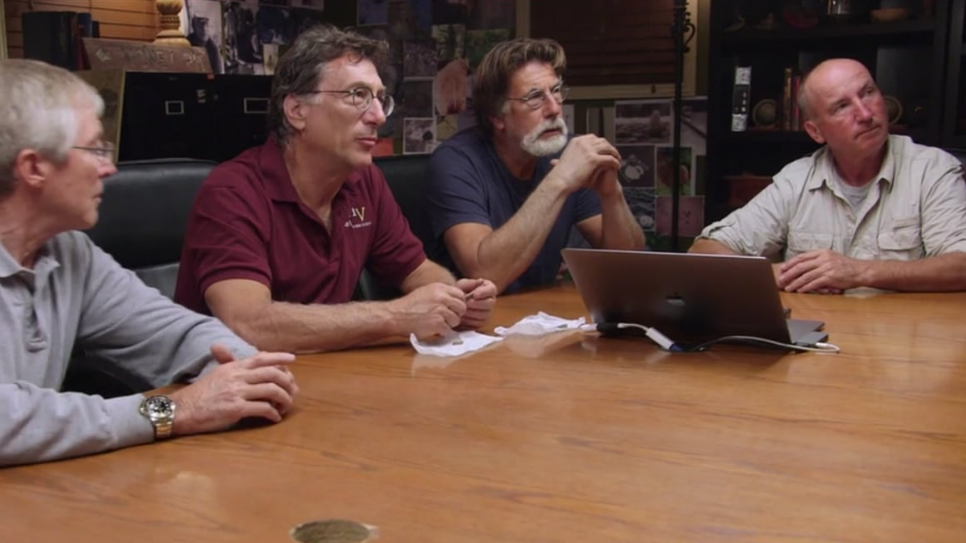
The most compelling prediction is that Rick’s involvement would transform the train mystery from a treasure claim into a disciplined investigation. His instinct would be to follow the story, but the show’s best version would force that story through evidence. If the find proves real, it could become one of the most remarkable treasure-related discoveries ever associated with the Oak Island world. If it does not, it would still reveal why legends endure: because they sit just close enough to documented history to keep people searching.
In the end, The Mystery of the Lost Wartime Gold Train is powerful because it speaks to the same impulse that drives Oak Island. Somewhere beneath the surface, there may be a missing piece of history. Rick Lagina’s role, if placed at the centre of such a search, would not simply be to find gold. It would be to ask whether a story repeated for generations can finally be tested, measured, and understood.
That is why this would be more than another treasure hunt. It would be a collision between myth, memory, technology, and historical responsibility. For Rick Lagina, it could be his most extraordinary discovery yet — not because of what it might be worth, but because of what it might finally explain.