“Rachel Reeves could change agricultural inheritance taxes!”: Jeremy Clarkson makes a statement that delights millions of farmers.
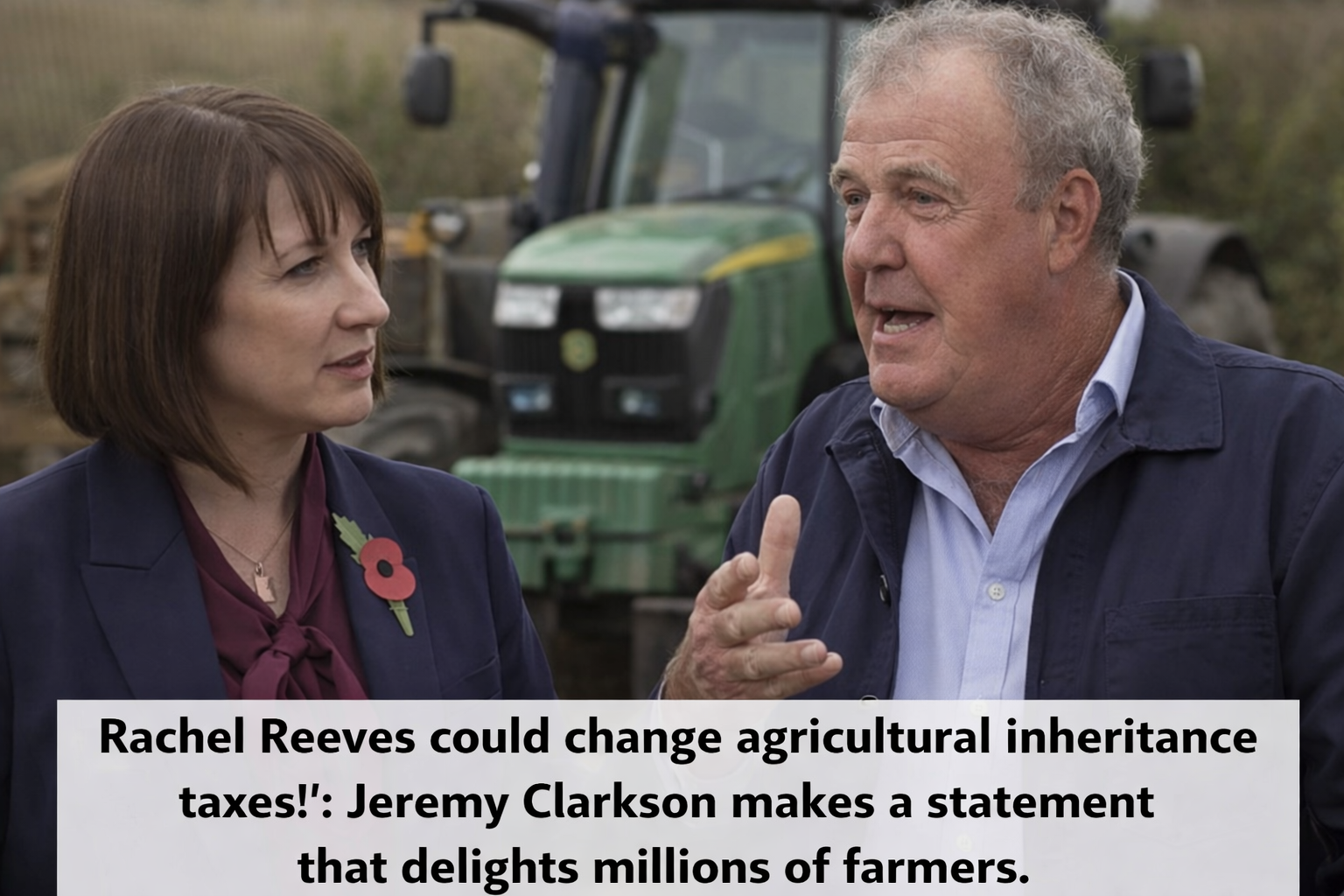
Jeremy Clarkson has never presented Clarkson’s Farm as a quiet countryside escape. From the beginning, the series has been a collision between celebrity television, real agricultural pressure, and the brutal economics of British farming. But the latest conversation surrounding Rachel Reeves and possible changes to agricultural inheritance taxes may become one of the most politically significant storylines connected to the show.
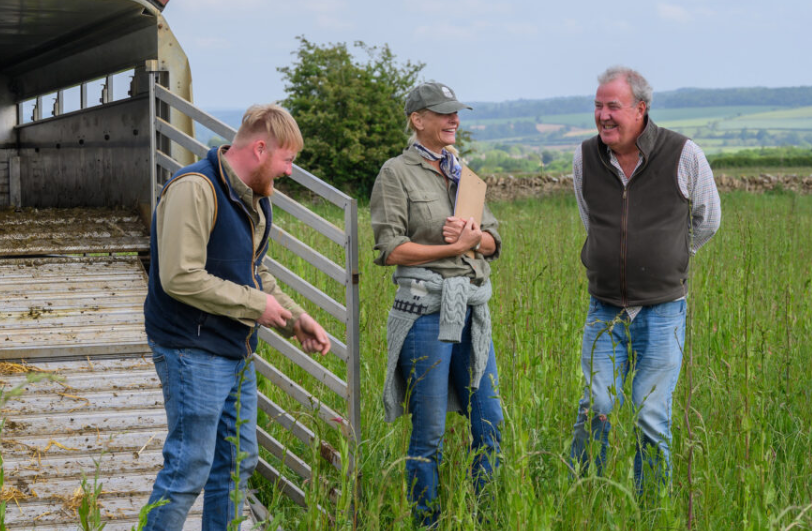
For millions of viewers, Clarkson’s Farm is entertaining because of Jeremy’s mistakes, Kaleb Cooper’s blunt corrections, Lisa Hogan’s steady presence, and the unpredictable chaos of Diddly Squat Farm. Yet beneath the humor, the series has steadily become a platform for one of the most urgent debates in rural Britain: whether family farms can survive in a policy environment that often appears disconnected from farming reality.
The issue of agricultural inheritance tax has become especially emotional. Land values can make farms look wealthy on paper, but many working farms operate with tight margins, high costs, seasonal uncertainty, and limited cash flow. This is where Clarkson’s argument has found such a powerful audience. He has repeatedly suggested that policy makers misunderstand the difference between owning valuable land and having real disposable wealth.
From a television analyst’s perspective, this is exactly why Clarkson’s Farm has become more than a factual entertainment show. It does not simply show farming; it dramatizes the gap between urban assumptions and rural experience. When viewers see Jeremy struggling with weather, costs, regulations, animal care, planning disputes, and unpredictable returns, they begin to understand why tax policy can feel existential to farming families.
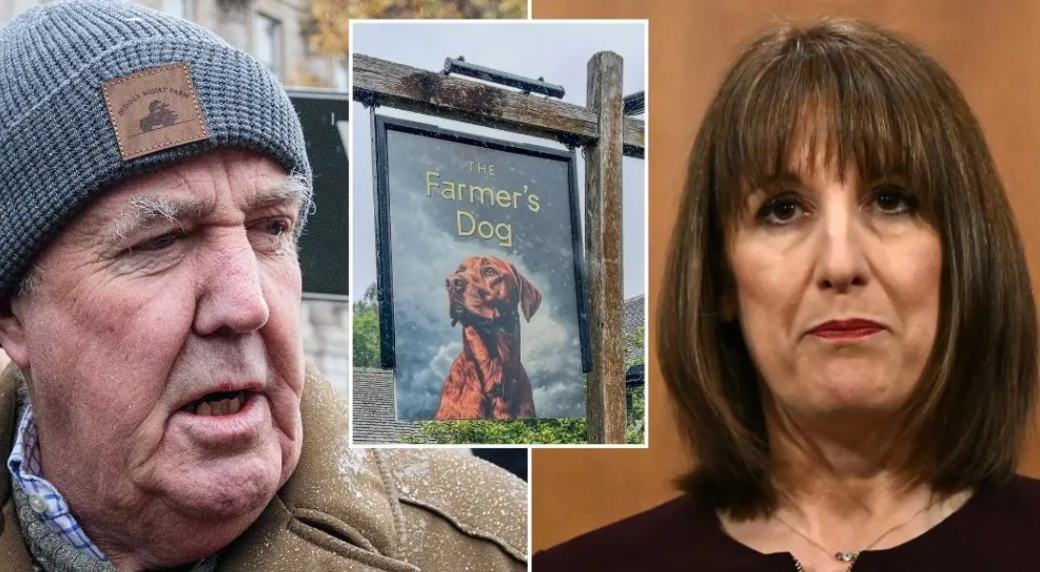
If Rachel Reeves does move further toward changing or softening agricultural inheritance tax rules, Clarkson will likely frame it as proof that public pressure from farmers has made an impact. That would be a major emotional moment for the show’s audience. It would suggest that the voices amplified through Clarkson’s Farm and wider farmer protests are no longer being ignored.
However, the key question is whether any change would go far enough. A partial adjustment may reduce pressure on some farms, but it may not satisfy farmers who believe the policy still threatens succession planning. Many farms are passed from one generation to the next not as luxury assets, but as working businesses. If heirs are forced to sell land to meet tax obligations, the structure of family farming could be permanently altered.
This is where Season 5 of Clarkson’s Farm could become especially powerful. The series may use the tax debate as a central thread, showing how national policy lands on real fields, real families, and real businesses. Jeremy’s statement could become the opening point for a wider investigation into what farmers actually face when preparing for the future.
Kaleb Cooper would likely be central to that storyline. As a younger farmer trying to build his own career, Kaleb represents the next generation of British agriculture. His perspective could be especially important because inheritance tax is not only about older landowners. It is also about whether young farmers can realistically take over farms without being crushed by financial complications before they even begin.
Lisa Hogan’s role may also deepen. In previous seasons, she has often brought a more emotionally grounded view of the farm’s struggles, particularly when dealing with animals, the farm shop, and community relationships. If the inheritance tax debate becomes part of the season, Lisa could help translate the issue into human terms. Rather than discussing policy as an abstract financial mechanism, the show could explore what it means for families, workers, and rural communities.
Charlie Ireland, often the voice of practical caution, would also be important. He could explain the numbers, the legal structure, and the business implications in a way that balances Jeremy’s more emotional commentary. This has always been one of the show’s strengths: Jeremy creates the noise, but Charlie often reveals the fine print. A tax storyline would need both.
The most likely development is that Clarkson’s Farm will present the inheritance tax debate as part of a broader rural crisis. The show may connect it to rising costs, poor margins, weather instability, food security, and the difficulties of keeping farms viable. This would allow the series to move beyond one political argument and ask a larger question: does Britain truly value the people who produce its food?
Jeremy Clarkson’s statement may delight many farmers because it suggests a possible shift in momentum. For months, rural communities have argued that the proposed tax changes would punish working farms rather than simply target wealthy landowners. If Reeves is seen as reconsidering the policy, farmers may interpret that as a rare moment when Westminster has been forced to listen.
Still, the show will probably avoid presenting the issue as completely resolved. Clarkson’s style is confrontational, but Clarkson’s Farm is most effective when it shows complexity. Not every viewer will agree with his position. Some may argue that tax relief should be reformed to prevent wealthy investors from using farmland as a shelter. Others will side with farmers who say family-run agricultural businesses should be treated differently from passive land assets.
That debate could make the season more compelling. Instead of offering a simple victory lap, Clarkson’s Farm may show Jeremy celebrating the possibility of change while warning that farmers remain exposed. This would keep the emotional tension alive and reflect the real uncertainty surrounding rural policy.
From a storytelling standpoint, the inheritance tax issue gives Season 5 a strong political spine. It allows the series to connect Diddly Squat’s local problems to a national debate. It also reinforces Jeremy Clarkson’s unexpected transformation from television provocateur to one of the loudest public voices for British farmers.
Whether Rachel Reeves ultimately changes course fully or only makes limited adjustments, the impact on Clarkson’s Farm could be significant. The show may no longer be judged only by its comedy, characters, or farming mishaps. It may increasingly be judged by its influence.
And that may be the most remarkable development of all. A series that began with Jeremy Clarkson trying to run a farm badly has become a programme capable of shaping how millions of people understand British agriculture. If farmers feel heard because of Clarkson’s latest statement, then Season 5 could become not just another chapter at Diddly Squat, but a turning point in the conversation about the future of family farming.