TYSON LEE UNDER PRESSURE: INSIDE THE COLLAPSE POINT OF A GOLD RUSH POWERHOUSE OPERATION

In the high-pressure world of modern gold mining, performance is measured in ounces, but consequences are measured in people. In Gold Rush Season 16, one name has increasingly drawn attention from viewers and analysts alike: Tyson Lee. Once seen as one of Parker Schnabel’s most reliable operators, Tyson’s arc this season has evolved into something far more complex—an extended case study in operational overload, emotional fatigue, and leadership under extreme industrial pressure.
According to season breakdown material and production narration, Tyson’s trajectory is framed not simply as a professional challenge, but as a gradual psychological and logistical strain point within one of the largest mining operations in the series’ history.
A SEASON BUILT ON SCALE — AND PRESSURE
Season 16 of Gold Rush is defined by expansion at nearly every level. Parker Schnabel’s operation escalates into a multi-plant, multi-site system with ambitious production targets, extensive machinery fleets, and daily operational costs that place constant pressure on output.
Within this environment, Tyson Lee is positioned as a key operational manager. On paper, this is a promotion in responsibility and trust. In practice, it becomes a structural stress point. The more the system expands, the more Tyson becomes the operational bridge between high-level ambition and ground-level execution.
This is where the tension begins to form. Each additional wash plant, each expansion in production scope, and each aggressive seasonal target does not simply add opportunity—it multiplies coordination demands. Tyson is repeatedly placed in situations where he is required to stabilize systems that are inherently unstable by design.

WHEN RESPONSIBILITY BECOMES RISK
One of the defining characteristics of Tyson’s season is not a single failure, but cumulative strain. He is repeatedly tasked with managing overlapping responsibilities across multiple sites, crews, and mechanical systems.
As operations scale up, Tyson’s role shifts from execution to enforcement. He is not only responsible for keeping production moving but also for making personnel decisions that directly affect crew structure. This includes difficult workforce evaluations and firings under Parker’s directive—moments that fundamentally change the interpersonal dynamics on site.
These decisions elevate Tyson’s authority but also intensify his exposure. In high-output mining environments, leadership roles often come with psychological trade-offs: accountability rises faster than control.

SYSTEMIC BREAKDOWNS AND OPERATIONAL CHAOS
As the season progresses, mechanical failures and logistical disruptions begin to compound the pressure. Multiple wash plants operating simultaneously create a fragile production ecosystem where downtime in one area ripples across the entire operation.
Tyson frequently finds himself managing crisis-level scenarios: equipment breakdowns, scheduling conflicts, and resource shortages that threaten production continuity. At several points, he describes the environment as increasingly chaotic, reflecting a system stretched beyond comfortable operational limits.
The critical issue is not isolated failure—it is simultaneity. Multiple problems occur at once, forcing rapid decision-making under conditions where delays directly translate into financial loss.
PERSONAL LINES BEGIN TO BLUR
Perhaps the most defining shift in Tyson Lee’s season is not professional, but personal. As his responsibilities increase, his private life becomes increasingly entangled with his work environment.
The introduction of a close personal relationship into the operational setting creates an additional layer of emotional complexity. Suddenly, Tyson is not only managing crews and machinery but also navigating interpersonal dynamics under production pressure.
In one notable incident, a brief message requesting assistance escalates momentarily into concern before being revealed as a mechanical issue. While resolved quickly, it highlights Tyson’s heightened state of alertness—a sign of sustained stress conditioning rather than isolated anxiety.
These moments illustrate a key pattern: Tyson is no longer reacting only to operational problems, but to perceived signals of crisis, even in routine communication.
THE MIKE TUPPER FACTOR — EMOTIONAL WEIGHT OF MEMORY
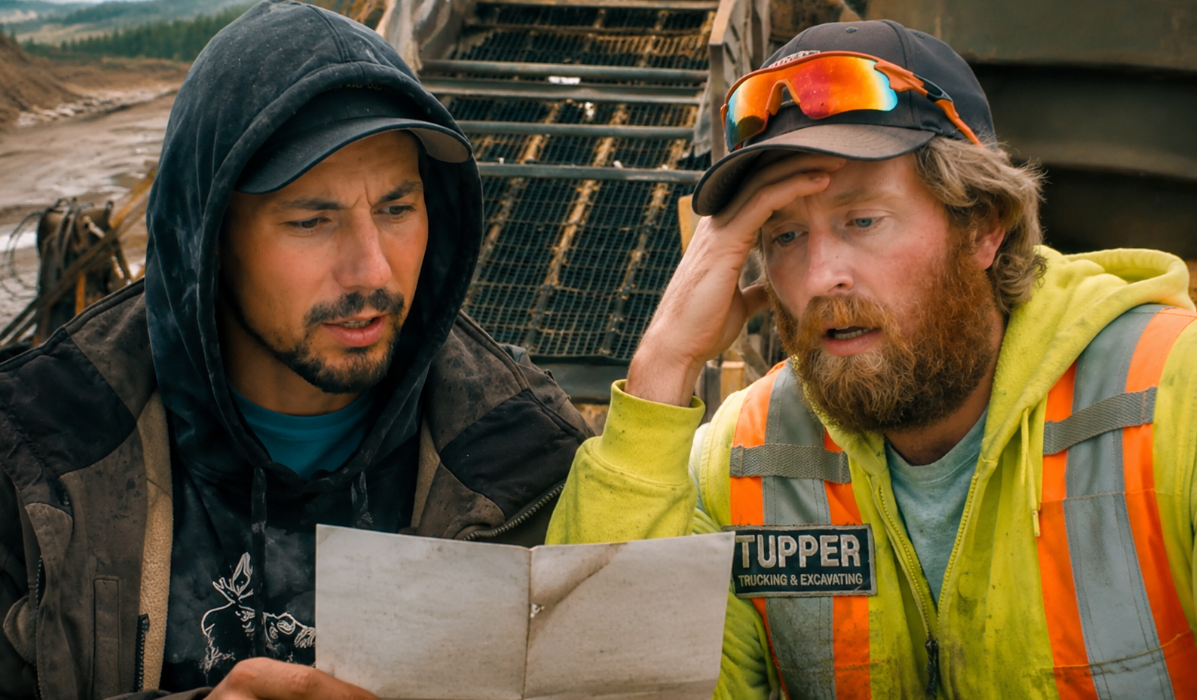
The most emotionally significant subplot in Tyson’s arc involves his long-standing connection to former colleague Mike Tupper. As operational crises escalate, Tyson reaches for familiar support systems—only to confront the reality that his mentor figure is battling serious illness.
This development shifts the narrative away from pure industrial stress into something more human. Tyson’s operational burden is now layered with emotional responsibility, memory, and concern for someone who shaped his early career.
This moment marks a turning point in the season’s emotional architecture. It is no longer simply about production targets or mechanical reliability—it becomes about personal endurance under compounded life stressors.
ROCK BOTTOM OR BREAKTHROUGH POINT?
Despite repeated setbacks, Tyson Lee does not collapse in the traditional sense. Instead, he continues to function, adapt, and maintain operational flow. Production numbers remain strong even during periods of intense internal strain.
This paradox defines his season: outward success coexisting with internal pressure. It raises a critical analytical question—whether “rock bottom” in high-performance industrial environments is defined by failure, or by sustained operation under unsustainable conditions.
In Tyson’s case, the evidence suggests the latter. He does not stop performing; he absorbs more responsibility than is realistically manageable and continues executing regardless.
CONCLUSION: THE COST OF HIGH-OUTPUT LEADERSHIP
Tyson Lee’s Season 16 storyline ultimately reflects a broader truth about large-scale industrial operations: success is rarely linear, and pressure rarely distributes evenly.
As Parker Schnabel’s operation expands in ambition and scale, Tyson becomes one of the key structural load-bearing figures holding the system together. The result is a season defined not by collapse, but by endurance under continuous strain.
Whether this represents a breaking point or a proving ground remains open to interpretation. What is clear, however, is that Tyson Lee’s experience this season is less about failure—and more about the hidden cost of keeping an expanding empire operational when everything is moving faster than the system was designed to handle.