Serious warning: Rick Ness is banned from gold mining for violating environmental regulations.
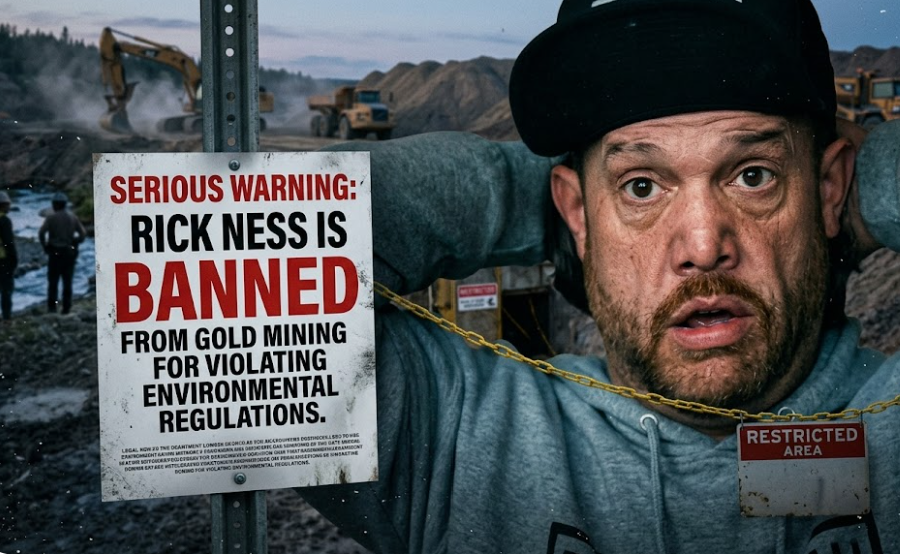
The following analysis examines the implications of the reported situation in which Rick Ness is allegedly banned from gold mining due to environmental regulation violations, viewed through the operational and narrative lens of Gold Rush.
From an industry standpoint, such a development—if enforced in reality rather than rumor or narrative framing—would represent one of the most disruptive regulatory interventions in the modern history of placer mining operations depicted on the series. The mining landscape in Yukon and Alaska is tightly governed by environmental compliance frameworks covering water usage, land disturbance, fuel storage, reclamation obligations, and sediment control. Even minor infractions can escalate quickly into permit suspensions, but a full ban implies either repeated violations or a severe breach of environmental impact thresholds.
Regulatory Pressure as a Structural Force
In analyzing Rick Ness’s operational trajectory within Gold Rush, his mining model has historically been characterized by high-risk, low-margin reclamation attempts and frequent location shifts. These strategies inherently increase environmental exposure—especially in fragile permafrost regions where excavation and water diversion must be carefully controlled.
A ban scenario would not simply remove a miner from production; it would effectively reset his entire operational ecosystem. Equipment leases, water licenses, and land access agreements would all become void or frozen. This would force a shutdown not just of active mining, but of capital flow, crew employment, and seasonal planning.
Within the narrative ecosystem of the show, such an event also introduces a rare “hard stop” disruption—something typically avoided in reality TV mining arcs, where setbacks are usually recoverable within a season structure.

Impact on Crew Structure and Operational Continuity
A mining ban targeting Rick Ness would immediately destabilize his crew hierarchy. Gold mining teams in the Klondike are not easily transferable because they are built around specialized roles: heavy equipment operators, wash plant mechanics, and gold room operators. Without a permitted site, this labor force becomes inactive or migrates to competing operations.
In practical terms, this creates three likely outcomes:
- Talent absorption by rival crews
Skilled personnel could be absorbed by larger operations, particularly those run by dominant figures such as Parker Schnabel or Tony Beets. Historically, Gold Rush has shown cyclical labor movement when smaller crews fail or pause operations. - Temporary redeployment under allied claims
It is possible that displaced crew members could be subcontracted to neighboring mining sites under shared agreements, especially if regulatory action is temporary rather than permanent. - Crew dissolution and rebuild scenario
In the most severe interpretation, Ness would need to rebuild an entire operation from scratch once compliance is restored, effectively restarting at the prospecting phase.
Strategic Advantage for Competitors
Within the competitive framework of Gold Rush, disruptions to one miner often translate into opportunistic expansion by others. A shutdown of Rick Ness’s operation would likely accelerate consolidation trends already visible in recent seasons.
Larger operators with stronger regulatory compliance infrastructure would benefit most:
- High-capacity miners could expand into adjacent claims or lease abandoned ground.
- Equipment fleets that were previously underutilized could be redistributed.
- Labor markets would temporarily favor stable operations, increasing crew availability for recruitment.
This shift would deepen the existing imbalance between large-scale industrial mining setups and smaller independent crews.
Narrative Implications for the Series
From a production perspective under Discovery, a regulatory ban storyline is structurally significant because it introduces legal stakes rather than purely mechanical or financial failure.
Gold Rush typically revolves around three pressure systems:
- Weather constraints
- Mechanical breakdowns
- Financial risk vs gold yield
A regulatory ban adds a fourth dimension: institutional authority.
This transforms Rick Ness’s storyline from an operational struggle into a compliance and redemption arc. Producers often leverage such arcs to reposition a character, potentially framing the next season as a comeback narrative centered on environmental remediation, legal negotiation, and re-entry into mining eligibility.

Predictive Scenarios
Based on historical patterns in mining reality television and regulatory enforcement cycles, several future developments are plausible:
1. Compliance Restoration Arc
The most likely outcome is that the ban—if temporary—is tied to corrective actions. This would involve environmental remediation efforts, inspections, and eventual reinstatement of permits. The show would likely frame this as a “fight to return to the ground” storyline.
2. Geographic Relocation Strategy
If restrictions persist, Ness may pivot to new jurisdictions with less restrictive permitting pathways or partner with established operators who already possess active licenses. This would effectively reposition him from independent miner to subcontractor.
3. Corporate Partnership or Buy-In Scenario
Another possible evolution is partial acquisition or operational partnership, where a larger mining entity absorbs his assets. This would align with broader consolidation trends seen across multiple seasons.
4. Permanent Exit and Reinvention
The least common but narratively dramatic outcome would be a full exit from mining, potentially transitioning the character into consulting, equipment logistics, or exploration roles within the Gold Rush universe.
Conclusion
The concept of a mining ban for Rick Ness represents a high-impact disruption point within the broader ecosystem of Gold Rush. Whether interpreted as rumor, narrative device, or hypothetical escalation, its implications are consistent: operational collapse, workforce redistribution, and strategic opportunity for competing miners.
More importantly, it introduces a structural shift in storytelling—from survival in the wilderness to survival under regulation. In modern placer mining narratives, this transition is increasingly relevant, as environmental oversight becomes as decisive as gold yield itself.
If such a scenario unfolds within the series, it would likely mark one of the most pivotal turning points in Rick Ness’s career arc—forcing either reinvention or redemption under far stricter operational constraints than ever before.