Parker Schnabel earned $2.89 million in just one week, setting a new record in the gold mining industry.

A major early-season surge in production has placed Parker Schnabel in one of his strongest positions in recent years, as his Yukon operation crosses the 2,000-ounce mark within just six weeks of mining. The rapid start has placed his team on track for what could become a multi-million-dollar season, but the aggressive expansion strategy behind the numbers is also introducing significant operational pressure.
At the center of this push is the Sulfur cut, where Mitch Blaschke and the crew have been working through both active digging and stockpiled pay material. However, rather than winding down operations in the area, Parker has made the decision to extend the cut by an additional two acres, aiming to capture a suspected continuation of the pay streak that may extend toward the access road. The move reflects a familiar approach: maximize ground utilization before regulatory and environmental constraints reduce operational flexibility.
EXPANSION STRATEGY DRIVES AGGRESSIVE EARLY-SEASON MINING
The decision to extend the cut was driven by Parker’s belief that earlier dredging activity may have left untapped gold behind. Historical ground disturbance in the area, combined with uneven recovery patterns, has led the team to suspect that richer pay zones remain just beyond the current excavation boundary.
By pushing deeper into the extension zone, the operation is targeting an estimated additional 500 ounces of gold—worth approximately $1.7 million at current recovery valuations. While the strategy aligns with Parker’s long-standing preference for aggressive ground exploitation, it also introduces logistical strain, particularly with time constraints linked to water licensing regulations.
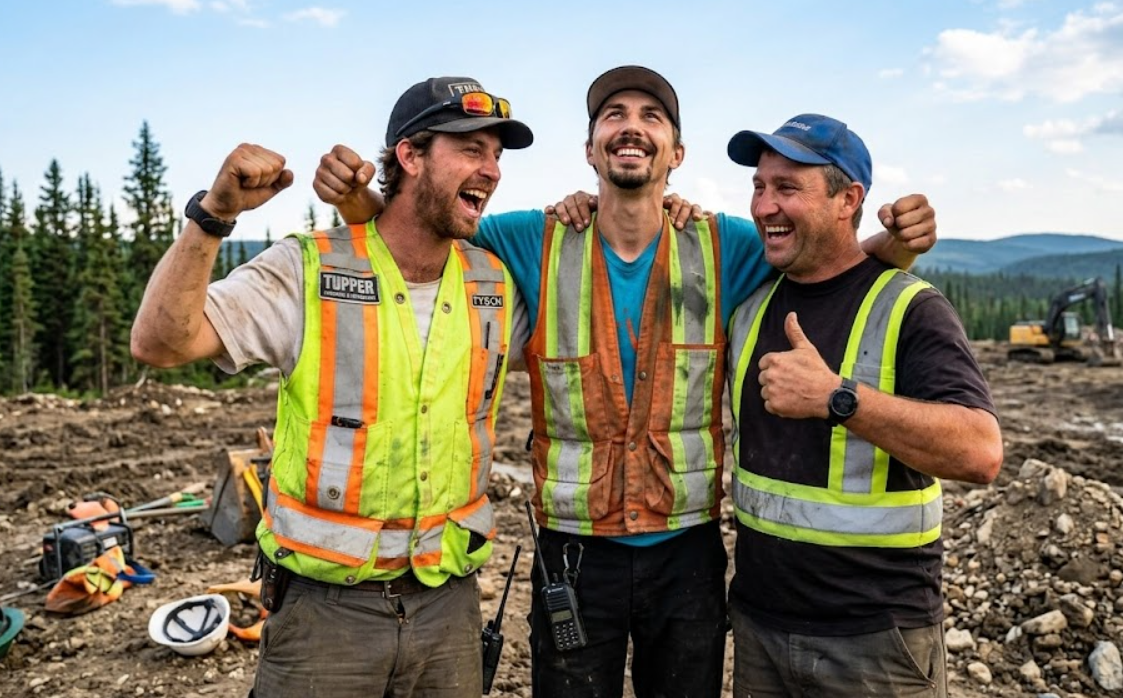
Crew members have acknowledged that the expanded workload is stretching both manpower and equipment capacity. With multiple machines operating simultaneously—five haul trucks, two excavators, and a loader feeding the plant—the operation is functioning at near-maximum throughput. Despite this intensity, the goal remains clear: extract every recoverable ounce before seasonal restrictions force shutdown.


EQUIPMENT FAILURE THREATENS MOMENTUM
Midway through the expansion push, the operation faced a significant setback when the 220 loader suffered a hydraulic-related failure. The issue originated from a failed parking brake seal, which allowed hydraulic oil to contaminate the transmission system. The malfunction forced an immediate shutdown of the loader, temporarily halting material movement and risking an estimated production loss of over $8,000 per hour.
Mechanic Taylor Matika was brought in to diagnose and repair the issue. Inspection revealed that the parking brake piston itself remained intact, but the seals had completely degraded. The repair process required disassembly of the brake assembly, replacement of internal seals, and careful reassembly under pressure to minimize downtime.
After approximately five hours of work, the system was restored, refilled, and returned to operational status. The rapid turnaround was critical in preventing extended production losses during a period where every hour of sluicing directly impacts seasonal output targets.
For Parker Schnabel, the incident underscored a recurring theme in large-scale mining operations: even minor mechanical failures can cascade into significant financial consequences when operating at peak capacity.
RECORD WEEK OUTPUT CHANGES SEASON TRAJECTORY
Despite the setback, the Sulfur cut delivered one of its strongest performance weeks to date. Following the restoration of full plant operations, Mitch’s crew processed a high-yield batch that produced approximately 406.5 ounces of gold from a single run. Combined with additional recovery from ongoing processing, weekly output reached an estimated 827 ounces.
At current gold valuations, the week’s production is estimated at approximately $2.89 million in recovered value, marking the strongest weekly cash performance in Parker’s mining career.
The result has shifted internal expectations for the season. Early projections had already placed the operation above the 2,000-ounce threshold, but the acceleration in weekly yield suggests that total seasonal output could exceed initial forecasts if ground conditions remain consistent.
Crew members described the result as unexpected given the operational constraints and equipment strain experienced earlier in the week. However, the performance also validated Parker’s decision to extend the cut, suggesting that additional recoverable pay may indeed exist beyond the original excavation zone.

OPERATIONAL BALANCE BETWEEN RISK AND REWARD
While the numbers are encouraging, the strategy behind them continues to reflect a high-risk operational philosophy. Extending the cut increases exposure to both mechanical failure and regulatory time limits, particularly with water licensing deadlines approaching.
The reliance on continuous equipment uptime further amplifies this risk. As demonstrated by the 220 loader failure, even short interruptions can result in substantial production losses. In a system operating at this scale, efficiency is tightly linked to equipment reliability, and any weak point in the chain can significantly reduce output.
However, the counterbalance is clear: without expansion, potential gold remains uncollected. The decision to push further into the Sulfur ground reflects a calculated gamble that remaining pay streaks justify the additional operational pressure.
SEASON OUTLOOK: STRONG START, UNCERTAIN ENDGAME
With more than six weeks of production completed, Parker Schnabel finds himself in a position of early strength, but with a long season still ahead. The combination of high weekly yields and aggressive ground expansion suggests that total seasonal recovery could reach or exceed ambitious targets if conditions remain stable.
However, as the team itself acknowledges, early success does not guarantee long-term stability. Equipment reliability, weather variability, and regulatory constraints all remain factors capable of altering the trajectory of the season.
For now, the Sulfur cut stands as a defining early-season success story—one driven by aggressive strategy, rapid problem-solving, and a willingness to push ground to its limits. Whether that momentum can be sustained will determine whether this season becomes one of Parker’s most profitable yet, or another reminder of how quickly conditions can change in the Yukon.