Jeremy Clarkson devastated after the heartbreaking “massacre” at Diddly Squat — Clarkson’s Farm Season 5
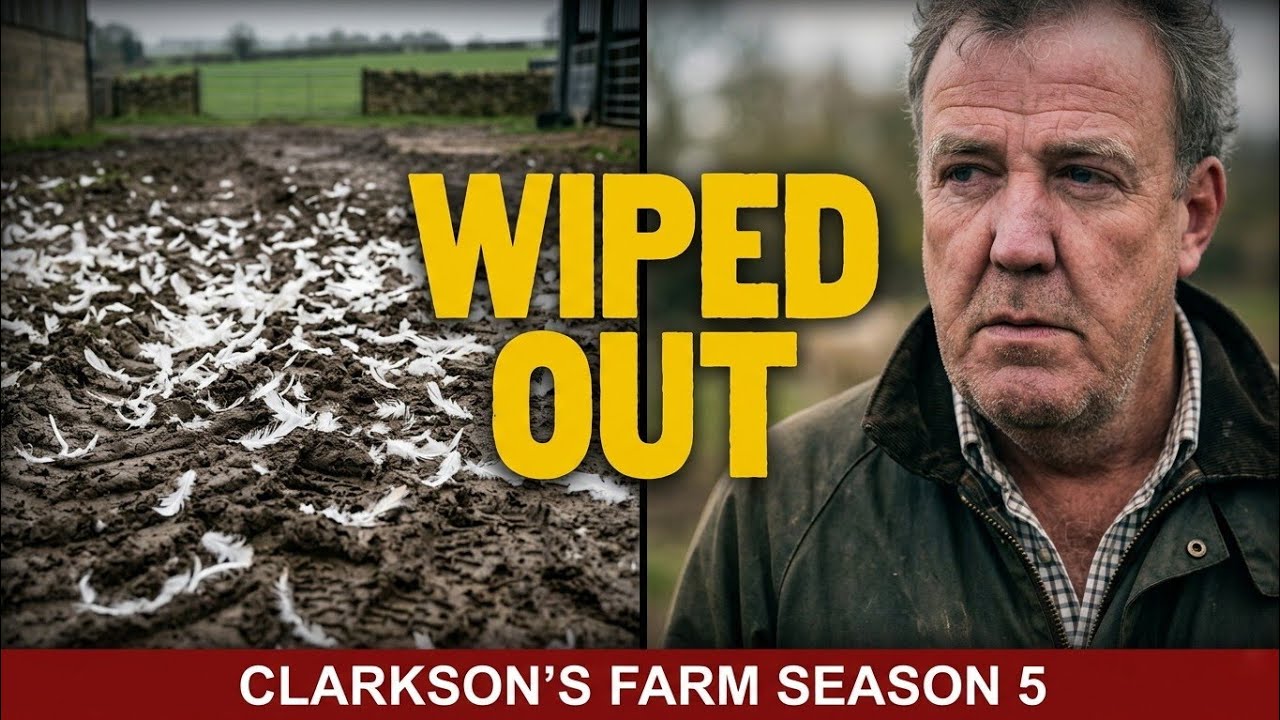
A quiet morning on the Cotswolds turns into one of the most emotionally intense moments in the series as Season 5 exposes the fragile reality behind modern farming life.
A sudden and unsettling silence has become the defining image of the latest season of Clarkson’s Farm, as the hit Prime Video series follows Jeremy Clarkson through one of the most difficult periods yet at Diddly Squat Farm.
What begins as an ordinary morning quickly transforms into a moment of shock when Clarkson notices that the usually deafening calls of his guinea fowl have disappeared entirely. On a farm where noise is constant—birds, machinery, livestock, wind—silence is never normal. And in this case, it signals something far more serious unfolding overnight.
A SILENCE THAT SIGNALS TROUBLE
Diddly Squat Farm, located in the heart of the Cotswolds near Chadlington, has become one of the most recognisable farms in Britain since the series first launched in 2021. Spanning roughly 1,000 acres, it has evolved from a personal experiment into a nationally followed agricultural operation documented in real time for millions of viewers.
Season 5, which premiered on 3 June 2026, opens with a noticeably darker tone. Clarkson is recovering from serious heart surgery involving the insertion of two stents, and the series does not avoid showing the physical limitations and emotional strain that now accompany his work on the land.
But it is the fate of the farm’s guinea fowl that delivers the season’s most unexpected emotional blow.
Introduced as part of Clarkson’s ongoing effort to diversify livestock and reduce farm workload, the birds quickly became a chaotic but familiar part of daily life. Known for their piercing calls and unpredictable behaviour, they were intended to help manage pests while adding character to the farm environment.
That character, however, disappears overnight.
A SCENE THAT CHANGES EVERYTHING
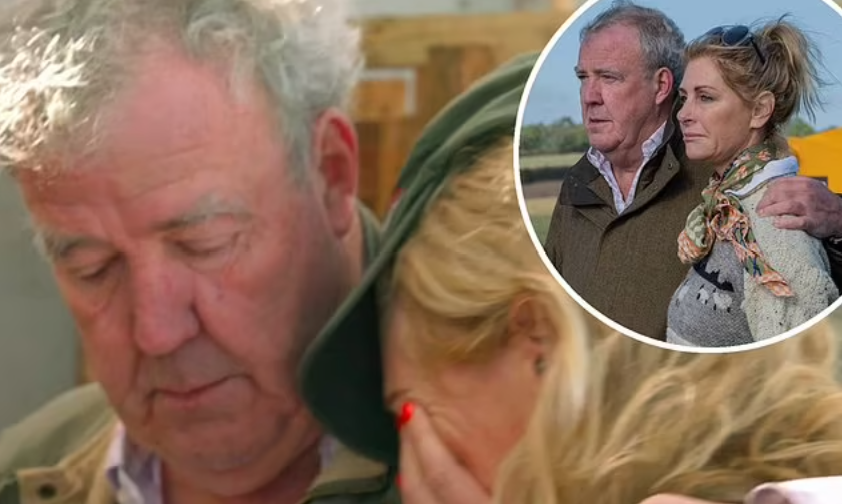
When Clarkson and his partner Lisa Hogan begin searching the farm after noticing the silence, what they discover is immediately recognisable to any experienced farmer. Feathers scattered across the ground. Signs of disturbance. And a growing realisation that something has happened during the night that cannot be undone.
The moment is described on screen as a “massacre,” a word that reflects not dramatic exaggeration, but Clarkson’s own immediate reaction to the loss of the flock.
For viewers, the emotional impact comes not from scripted tension, but from the authenticity of the situation. These are not fictional animals created for entertainment—they are part of a functioning farm, and their loss carries both emotional and practical consequences.
A brief moment of hope appears when one guinea fowl is spotted in a tree, still alive. But that relief is temporary. By the end of the sequence, the entire flock is gone.
BEYOND ONE INCIDENT: A DIFFICULT YEAR ON THE FARM
While the guinea fowl storyline has captured attention, it is only one part of a broader series of challenges facing Diddly Squat in Season 5.
The farm has also been dealing with the aftermath of a bovine tuberculosis outbreak that placed the entire herd under strict movement restrictions in late 2025. At its peak, the situation led to devastating losses, including the culling of a young cow that had tested positive despite showing signs of pregnancy.
Even the farm’s breeding bull, Enfys, faced uncertainty after an inconclusive test result, adding further pressure to an already fragile situation. Although he ultimately survived and the farm was officially declared TB-free in March 2026, the emotional and operational toll remains evident.
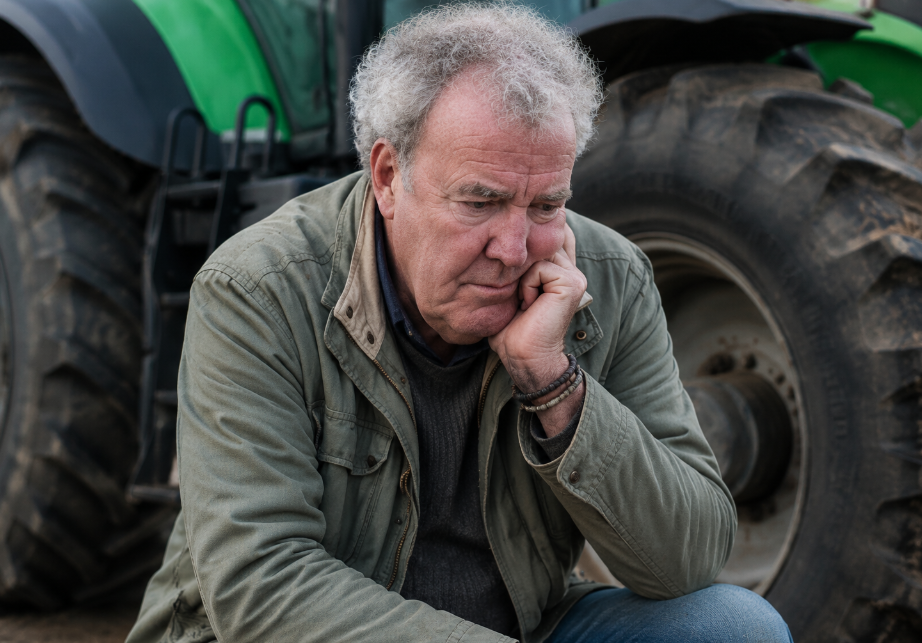
On top of livestock issues, poor harvest conditions and financial strain linked to the expansion of Clarkson’s hospitality ventures have compounded the difficulties. Clarkson himself has described the previous year as one of the worst ever experienced at Diddly Squat.
WHY THE SERIES CONTINUES TO RESONATE
Despite the setbacks, Clarkson’s Farm continues to draw large audiences, not because it glamorises farming, but because it refuses to soften its reality. The series presents agriculture not as a romanticised lifestyle, but as a constant cycle of investment, risk, loss, and recovery.
What sets it apart is the absence of artificial storytelling. The events unfolding on screen are not constructed for drama—they are the direct result of farming conditions, biological unpredictability, and environmental pressures.
This authenticity is what gives moments like the guinea fowl loss their emotional weight. The reaction seen from Clarkson is not performance—it is responsibility meeting reality.
For many viewers unfamiliar with agricultural life, the series serves as an unfiltered introduction to what farming actually involves: the unpredictability of disease, the impact of predators, and the financial vulnerability of even well-known operations.
A TURNING POINT IN SEASON 5
Industry observers have noted that Season 5 represents a tonal shift for the series. While earlier seasons often balanced humour with challenges, the latest episodes lean more heavily into the emotional and operational realities of managing a large-scale farm.
The loss of the guinea fowl flock becomes symbolic of a broader truth the series has consistently highlighted: farming does not pause for fame, media attention, or financial investment. It continues regardless of circumstance, and it demands constant adaptation.
For Clarkson, who entered farming with limited practical experience, the journey has evolved into something far more complex than a television project. It is now a lived experience shaped by uncertainty, decision-making under pressure, and the acceptance of outcomes beyond control.
CONCLUSION: SILENCE THAT SPEAKS LOUDER THAN WORDS
As Season 5 continues, the events at Diddly Squat Farm underline a central theme that has defined the entire series since its inception: farming is unpredictable, unforgiving, and deeply personal.
The silence of the guinea fowl has become more than a plot point—it is a reminder of how quickly conditions can change on the land, and how little control even experienced operators have over nature’s outcomes.
In that silence, Clarkson’s Farm finds its most powerful message yet: that behind every harvest, every animal, and every decision, there is a reality that cannot be scripted.