Risk of ending up empty-handed after season 16: Parker’s team faces the worst flood disaster ever.

A sudden infrastructure breakdown at a key mining operation has nearly brought production to a halt, as rising water levels, a failed culvert, and rapid tailings movement triggered a chain reaction that nearly shut down the entire wash plant system.
A routine day on a modern placer mining site quickly turned into a critical emergency after a water control failure threatened to stop operations at one of the active wash plants featured in Gold Rush. The incident unfolded when a blocked drainage system caused uncontrolled water buildup, followed by a sudden release that overwhelmed downstream containment structures and disrupted the entire water circulation network.
At the center of the operation is Mitch Blaschke, who, along with his crew, was forced to respond immediately as the system supplying water to the wash plant began to fail. Without a stable water supply, the entire recovery process would grind to a halt, risking the loss of both productivity and valuable pay material already exposed in the cut.
A BLOCKED DRAINAGE SYSTEM TRIGGERS A CASCADE FAILURE
According to field accounts, the issue began when a drainage ditch connected to the site’s settling pond became obstructed by silty tailings. Over time, this blockage caused water levels to rise across the interconnected pond system, gradually increasing pressure behind a key culvert and berm structure designed to regulate flow.
In an attempt to resolve the buildup, crew member Tatiana cleared portions of the blocked channel. However, the intervention unintentionally released a large volume of trapped water too quickly. The sudden surge overwhelmed the berm and culvert system, resulting in what operators described as a “blowout” that destabilized water control across the site.

The result was immediate: uncontrolled water movement downstream, rapid depletion of the intake pond, and a dangerous drop in water levels feeding the wash plant system.
WASH PLANT AT RISK AS WATER SUPPLY COLLAPSES
As the water level dropped, operators observed the intake system beginning to fail. The pump hose—responsible for supplying water to the wash plant’s recovery system—was at risk of being exposed. If uncovered, the system would lose suction entirely, forcing a full shutdown of operations.
Crew members moved quickly to stabilize the situation, with urgent instructions to monitor equipment and prepare for an emergency shutdown if required. The priority shifted from gold recovery to system preservation, as continued operation without water flow would risk mechanical damage and production loss.
Field operators described the situation as highly unstable, with water levels changing rapidly and limited time to react before the system failed completely.
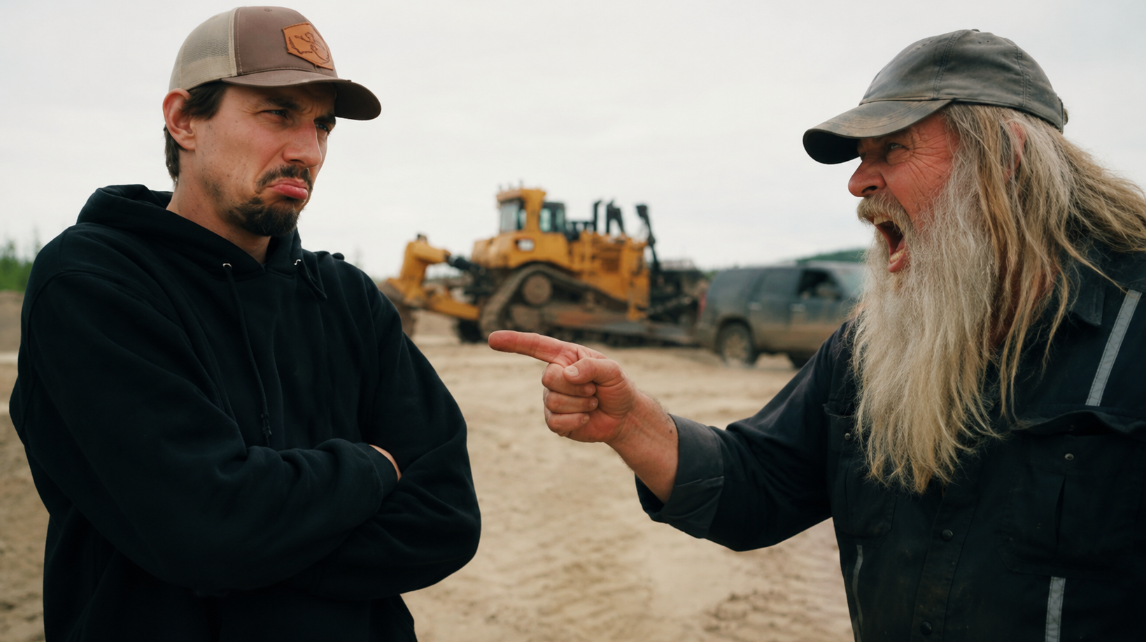
HEAVY EQUIPMENT DEPLOYED IN EMERGENCY RESPONSE
To counter the loss of containment, crew members deployed heavy machinery to push material back into the compromised berm and re-establish water retention. The goal was to rebuild pressure control and restore balance to the pond system before the wash plant’s intake system ran dry.
A loader was used to rapidly shift soil and tailings into the breach point, effectively sealing the leak and slowing the uncontrolled drainage. The intervention was successful in stabilizing the system, preventing further loss of water and allowing partial recovery of circulation flow.
Operators confirmed that once the berm was reinforced, the water level began to stabilize, reducing immediate risk to the pump system and preventing a full operational shutdown.
HUMAN ERROR AND SYSTEM COMPLEXITY UNDER PRESSURE
In post-incident reflection, crew leadership acknowledged that the failure highlighted the complexity of managing interconnected water systems in active mining environments. While maintenance and clearing operations were underway, the lack of precise control over the volume and timing of released water contributed to the sudden overflow event.
The incident underscores a common challenge in modern placer mining: balancing sediment management with controlled water flow. When systems rely on interconnected ponds, even small miscalculations can trigger cascading effects across the entire operation.
As one operator summarized, the situation escalated from routine maintenance to near-disaster in a matter of moments.

MINING OPERATIONS RESUME AFTER CRITICAL FIX
Following the emergency response, the berm was successfully reinforced and water flow was brought back under control. Although the system experienced significant disruption, full shutdown was ultimately avoided.
Once stability returned, attention shifted back to the wash plant, where remaining pay material still required processing before the end of the mining season. Operators emphasized that despite the setback, production targets remain in focus, and recovery efforts will continue as planned.
The event serves as a reminder of the fragile balance between mechanical systems, environmental conditions, and human intervention in large-scale gold mining operations.
CONCLUSION: A CLOSE CALL IN A HIGH-STAKES ENVIRONMENT
While no permanent damage was reported, the incident exposed how quickly mining infrastructure can transition from controlled operation to emergency response. A blocked drainage line, a rapid release of water, and a compromised containment system combined to create a situation that nearly halted production entirely.
Thanks to fast action from the crew and the deployment of heavy equipment, the system was stabilized before catastrophic failure occurred. However, the event highlights the ongoing risks inherent in operating complex water-dependent recovery systems in dynamic field conditions.
As operations continue, the focus now shifts back to maintaining stability—because in environments like these, even a small imbalance in water flow can determine whether the wash plant runs smoothly or shuts down completely.