A proud achievement: Parker Makes $364,000 In Gold After Getting Rookie Operator To Move Sluicifer

A single operational decision involving “Sluicifer” has delivered a fast cash boost—but industry observers say the real test for the mining season is only just beginning.
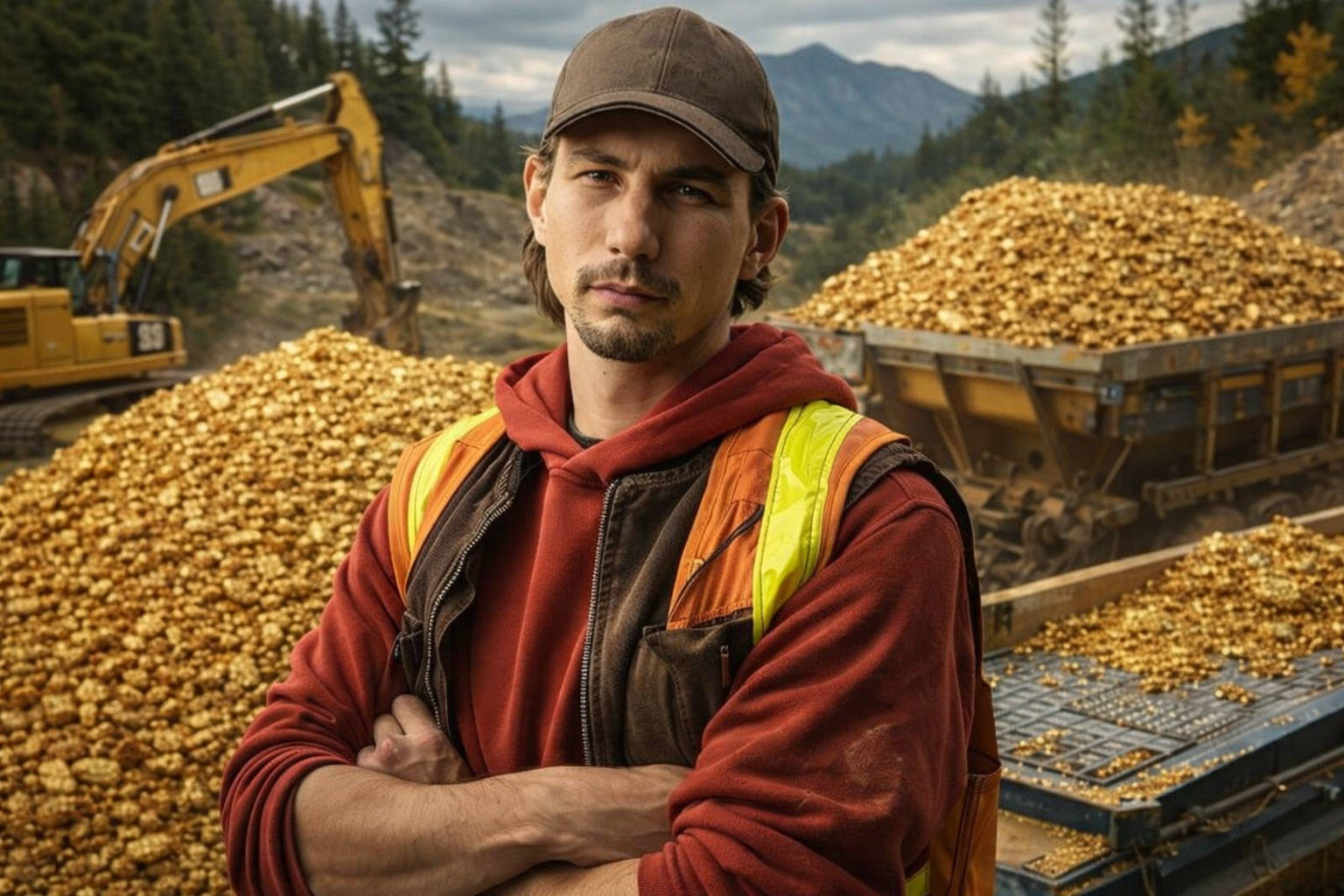
In a standout development from the latest phase of Gold Rush, miner Parker Schnabel has reportedly secured approximately $364,000 in recovered gold after convincing a rookie operator to reposition the high-capacity wash plant known as “Sluicifer.” The move, initially considered a routine operational adjustment, has instead become a focal point for analysts tracking efficiency, risk, and decision-making within modern placer mining operations.
From an industry analysis perspective, this moment is less about a single cleanup and more about what it reveals: the delicate balance between machine placement, operator experience, and ground interpretation in high-volume gold recovery environments.
THE STRATEGIC VALUE OF “SLUICIFER” IN HIGH-VOLUME RECOVERY
“Sluicifer,” one of the largest wash plant systems in Parker Schnabel’s operation, is designed to process massive volumes of pay dirt with maximum throughput efficiency. However, its effectiveness is heavily dependent on precise placement relative to pay streak geometry, water flow, and excavation sequencing.
According to field dynamics observed in similar Gold Rush operations, even minor misalignment can result in significant losses in recoverable gold. In this case, the decision to reposition the unit—delegated to a less experienced operator—appears to have corrected a productivity bottleneck that was limiting yield from a high-value zone.



The result: a rapid cleanup cycle producing an estimated $364,000 in gold, reinforcing the importance of adaptive decision-making in fluctuating ground conditions.
A RARE WIN IN A HIGH-RISK MINING ENVIRONMENT
While the immediate outcome appears positive, analysts caution against interpreting the event as a guaranteed indicator of long-term success. In placer mining, isolated strong cleanups can often reflect temporary access to concentrated pay pockets rather than sustained improvement in ground strategy.
The operation’s broader performance still depends on multiple variables, including stripping efficiency, fuel cost per yard, equipment downtime, and consistency of pay streak continuity. Even experienced crews can see sharp fluctuations in gold output when moving between cut zones.
From an operational standpoint, the key question is whether this $364,000 result represents a structural improvement—or simply a short-lived spike in an unpredictable mining environment.
THE ROLE OF ROOKIE OPERATORS IN HIGH-STAKES DECISIONS
One of the more notable aspects of this development is the involvement of a rookie operator in executing a critical repositioning decision. In large-scale mining environments like Schnabel’s, operator hierarchy typically separates strategic planning from machine execution.
However, modern Gold Rush operations increasingly rely on distributed decision-making, where newer operators are trained to respond to changing ground conditions in real time. This approach can increase flexibility but also introduces variability in execution quality.
In this instance, the outcome suggests that even less experienced team members can deliver high-impact results when properly guided within a structured system.
ANALYST PERSPECTIVE: WHY THIS MOVE MATTERS
From an industry analysis standpoint, the significance of this event lies not in the dollar figure alone, but in what it indicates about operational adaptability.
Three key insights emerge:
First, plant mobility remains one of the most undervalued variables in placer mining. Moving a wash plant like Sluicifer even short distances can dramatically alter recovery rates if it aligns with richer pay channels.
Second, leadership flexibility is becoming increasingly important. Schnabel’s willingness to approve a repositioning decision executed by a rookie operator suggests a trust-based system rather than rigid command structure.
Third, high-output cleanups like this reinforce the importance of real-time geological interpretation rather than static mining plans. Ground conditions in Yukon-style deposits can shift rapidly, making adaptability more valuable than strict adherence to pre-season mapping.
WHAT THIS COULD MEAN FOR THE REST OF THE SEASON
The central question now is whether this success can be replicated. If the repositioned configuration of Sluicifer continues to produce above-average yields, it could signal a turning point in the season’s strategy.
However, seasoned observers of Gold Rush caution that early or mid-season spikes often mask underlying volatility. Ground depletion, water management challenges, and equipment fatigue all increase as the season progresses.
If Schnabel’s crew is able to maintain consistency following this adjustment, it may validate a more decentralized approach to plant operations—potentially influencing how other teams structure decision authority in future seasons.

THE BROADER COMPETITIVE CONTEXT
Within the broader competitive landscape of Gold Rush, every significant cleanup has ripple effects. Teams operating parallel claims closely monitor output trends, often adjusting their own strategies in response to perceived breakthroughs.
A $364,000 recovery event does not occur in isolation; it becomes a benchmark for efficiency, influencing expectations across multiple operations in the region.
For Schnabel, however, the challenge remains unchanged: convert strong individual cleanups into sustained seasonal performance capable of meeting long-term production goals.
CONCLUSION: A WIN THAT RAISES MORE QUESTIONS THAN ANSWERS
While the immediate outcome at Sluicifer represents a clear financial success, it also highlights the unpredictable nature of modern placer mining. In environments where ground variability defines outcomes, even small operational adjustments can produce outsized results.
As Gold Rush continues, the focus will now shift from this single $364,000 milestone to whether it signals a deeper shift in strategy—or simply a momentary alignment of luck, timing, and ground conditions.
Either way, Schnabel’s operation has once again demonstrated a core truth of gold mining: success is never just about what you find, but where—and how—you choose to look.