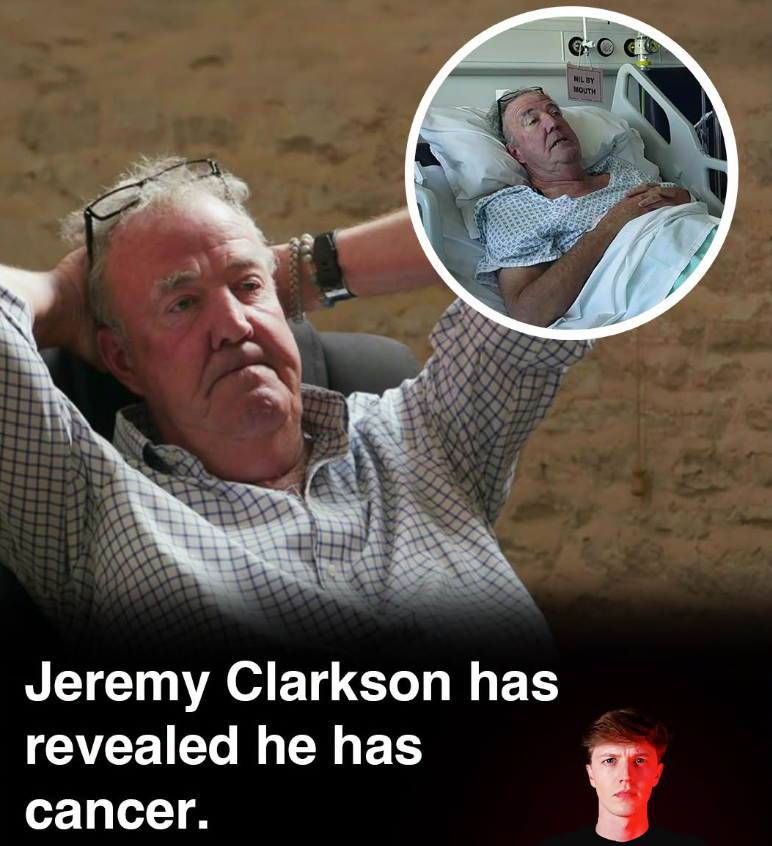
Bad news hit Clarkson Farm: Jeremy Clarkson was diagnosed with prostate cancer.
 A wave of concern has swept through the Clarkson’s Farm community following reports that Jeremy Clarkson has been diagnosed with prostate cancer. While details of the condition remain limited, the announcement alone has introduced a profound sense of uncertainty around the future direction of the farm, the show, and the broader ecosystem built around Diddly Squat Farm.
From an analytical standpoint, this development represents one of the most significant personal and operational turning points in the history of the series. Clarkson is not only the central figure of the show but also its primary decision-maker, financier, and public identity. Any health-related disruption at this level inevitably raises questions about continuity, production structure, and long-term sustainability.
A Central Figure in a Highly Personalized Farming System
Unlike traditional agricultural documentaries, Clarkson’s Farm is built around a highly centralized leadership model. Jeremy Clarkson functions simultaneously as owner, investor, operator, and on-screen narrator. This structure has created both the show’s appeal and its vulnerability.
Clarkson’s personality drives major farm decisions—from crop selection to infrastructure expansion, livestock strategy, and commercial diversification through ventures such as the farm shop and hospitality operations. His partnership with Kaleb Cooper and agricultural advisor Charlie Ireland has provided balance, but ultimate authority has consistently rested with him.
A health diagnosis of this magnitude therefore introduces more than personal concern—it introduces structural risk.
Operational Implications for Diddly Squat Farm
From a farming operations perspective, Diddly Squat Farm is now a diversified enterprise with multiple revenue streams: arable production, livestock, retail operations, tourism traffic management, and branded food products. Each of these requires continuous oversight and strategic coordination.
If Clarkson’s involvement is reduced, even temporarily, the immediate challenge will be decision continuity. Farming is time-sensitive; delays in planting, harvesting, or livestock management can have cascading financial effects. While Kaleb Cooper provides strong operational execution on the ground, and Charlie Ireland has historically provided technical agricultural planning, Clarkson remains the link between commercial ambition and resource allocation.
An analyst would expect the following short-term adjustments:
- Increased autonomy for Kaleb Cooper in daily field operations
- Greater reliance on Charlie Ireland for agronomic planning
- Possible restructuring of Clarkson’s personal oversight role
- Redistribution of decision-making responsibilities across the team
However, the deeper issue is not short-term functionality—it is strategic direction.
Impact on the Show’s Production Model
Clarkson’s Farm is uniquely dependent on real-time agricultural outcomes shaped by Clarkson’s presence. His reactions, frustrations, and decisions are central to the narrative structure of the series. Any prolonged absence or reduced visibility would require significant production adaptation.
The production team may need to:
- Rebalance episodes toward supporting cast narratives
- Increase focus on Kaleb Cooper’s operational leadership
- Expand coverage of farm systems rather than Clarkson-led decision moments
- Potentially adjust filming schedules around Clarkson’s availability
In documentary analysis terms, this represents a shift from “person-led narrative farming” to “systems-led farming documentation.” That is a fundamentally different storytelling model.
The Role of Kaleb Cooper in a Transitional Phase
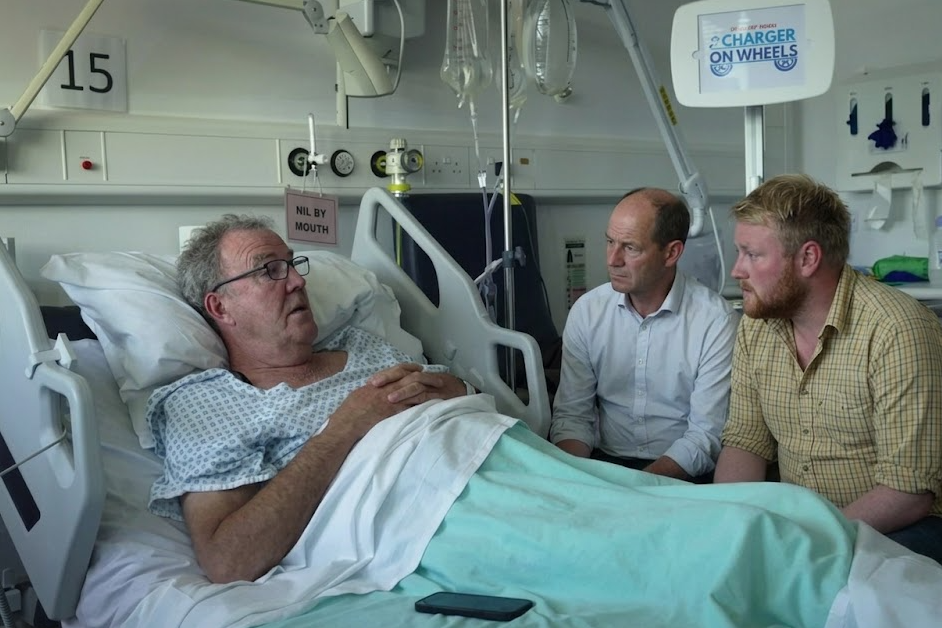
Kaleb Cooper’s importance in this scenario cannot be overstated. Already a central figure in the show’s success, he represents the operational backbone of the farm. His hands-on expertise in machinery, livestock, and field management positions him as the most likely figure to absorb increased responsibility.
However, analysts note an important distinction: Kaleb is an executor, not a strategic owner. The gap left by Clarkson is not purely operational—it is financial and directional. Bridging that gap would require either external advisory input or a formalized management restructuring, neither of which has been previously necessary on the farm.
Financial and Commercial Considerations
Beyond farming operations, Clarkson’s health situation could affect the broader commercial ecosystem built around Clarkson’s Farm. This includes:
- Farm shop revenue and tourism demand
- Branded product distribution channels
- Media rights and streaming agreements
- Potential future expansion projects
Investor confidence in personality-driven brands is closely tied to continuity risk. While there is no indication of immediate financial instability, uncertainty around leadership often leads to cautious reassessment of expansion timelines and capital deployment.
Narrative and Audience Impact
From a media analysis perspective, this development also alters the narrative trajectory of the series. Clarkson’s Farm has historically balanced humor with agricultural realism. A serious health diagnosis introduces a tonal shift toward vulnerability and long-term reflection.
Future seasons may increasingly explore:
- The sustainability of Clarkson’s farming model
- Succession planning and delegation
- The emotional toll of farming leadership
- The resilience of rural enterprises under personal strain
This could mark a transition from “celebrity farming experiment” to “legacy farming narrative.”
Possible Future Scenarios
Analysts generally outline three plausible trajectories:
1. Short-Term Recovery Scenario
Clarkson resumes normal involvement after treatment, with minimal structural changes. Operations continue as before, with temporary delegation during recovery.
2. Partial Delegation Scenario
Clarkson reduces on-farm presence, delegating more authority to Kaleb and advisors while maintaining strategic oversight.
3. Structural Transition Scenario
Long-term reduction in Clarkson’s operational role leads to formalized management restructuring and increased professional agricultural governance.
At present, there is no evidence confirming which scenario will unfold, but the announcement forces all three into consideration.
Conclusion: A Turning Point for Clarkson’s Farm
Jeremy Clarkson’s prostate cancer diagnosis represents more than a personal health concern—it is a structural inflection point for Clarkson’s Farm as both a working agricultural enterprise and a global television phenomenon.
The farm’s future resilience will depend on the strength of its supporting team, the adaptability of its operational model, and Clarkson’s own capacity to continue guiding the project in some form.
While uncertainty now defines the immediate outlook, one conclusion is clear from an analytical standpoint: the farm has evolved beyond a single individual, but it has not yet fully detached from him. How that balance is managed in the coming months will determine not only the future of the farm, but potentially the next chapter of the series itself.