A valuable artifact: Storm Erosion Uncovers Rare Artifacts at Isaac’s Point in New Oak Island Excavation Drive
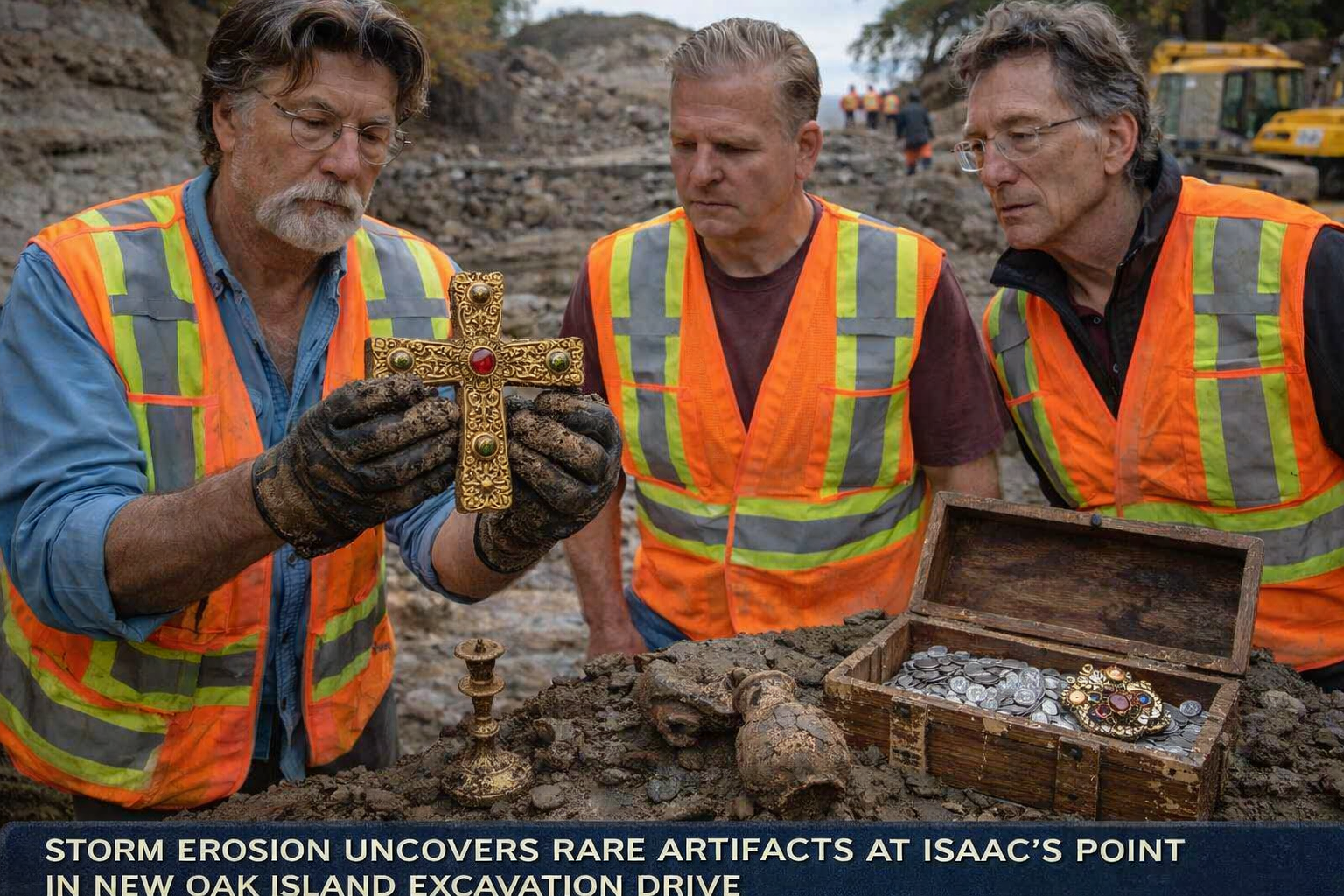
Oak Island, Nova Scotia — A fresh wave of discoveries has emerged from the storm-battered eastern shoreline of Oak Island, where renewed metal-detecting operations have yielded a series of historically significant artifacts that may deepen the ongoing mystery surrounding centuries of human activity on the island.
Following severe winter storms that caused substantial coastal erosion, the investigative team led by the Lagina family and metal-detection expert Gary Drayton returned to Isaac’s Point with a renewed focus on exposed ground that had previously been inaccessible. According to on-site observations, shifting sands and collapsed banks have revealed new material deposits that appear to span multiple historical periods.
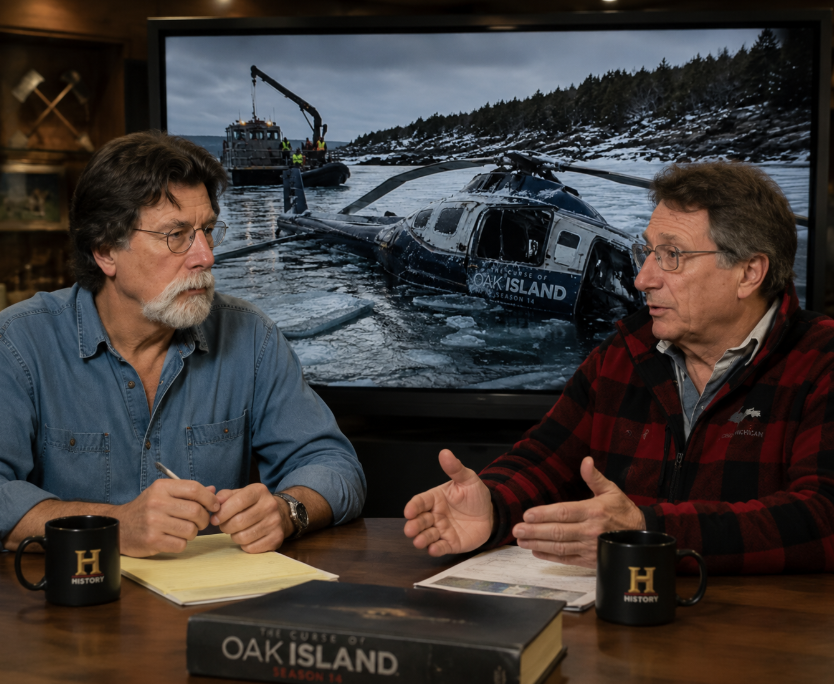
The renewed search effort forms part of the broader investigation chronicled in The Curse of Oak Island, which continues to document attempts to uncover the origin of the so-called Money Pit and surrounding anomalies.
Erosion Turns the Tide on New Discoveries
The latest fieldwork began at Isaac’s Point, where Gary Drayton noted that storm activity had significantly reshaped the shoreline. The erosion, while destructive to terrain stability, created a rare investigative advantage by exposing deeper layers of soil and potentially untouched deposits.
Working alongside Peter Fornetti and Jack Begley, Drayton began scanning the exposed terrain and quickly identified multiple metal signals. Initial finds included iron fragments and what was later identified as an early 20th-century woodworking axe. While not directly tied to the island’s central mystery, the object reinforced the theory that the area has seen repeated human use across different eras.
More compelling signals soon followed.
A Cut Coin Sparks 17th-Century Questions
One of the first major discoveries came in the form of a fragmented coin, later identified as a cut copper maravedí. The coin, deliberately divided in half, is believed to originate from Spanish colonial currency systems used widely across the Americas during the 17th and 18th centuries.
The discovery immediately drew attention due to its potential historical implications. Cut coins of this type were often used by sailors, traders, and privateers as a form of divisible currency, particularly in maritime environments where standardized coinage was scarce.
Drayton suggested that the coin could date back to the 1600s or early 1700s, placing it well before the documented British military presence on Oak Island. If verified, this would reinforce long-standing theories that the island may have been visited or used by earlier European explorers—or possibly even private maritime groups operating in the region.
Communication with the Lagina Team Intensifies Interest
The discovery was promptly reported to Rick Lagina and Marty Lagina, who responded with immediate interest. The pair, central figures in the Oak Island investigation, emphasized the importance of further analysis and conservation of the artifact.
Drayton highlighted the significance of soil preservation, noting that the coin had not been exposed to saltwater, suggesting it may have remained undisturbed for centuries. This condition increases the likelihood that the item is associated with primary deposition rather than secondary displacement.
The team agreed that further cleaning and metallurgical analysis could provide crucial dating information, potentially narrowing down the period of human activity in the region.
Evidence of Maritime and Industrial Activity Emerges
Beyond the coin discovery, the expedition yielded another unexpected artifact: a caster wheel, believed to be part of a small industrial or tunneling cart system.
The object, heavily corroded but structurally intact, raised immediate questions about subsurface construction activity. Drayton suggested that such a component would typically be used in confined transport systems, possibly linked to excavation or tunneling operations.
The implication that engineered transport systems may have existed on Oak Island adds weight to long-standing hypotheses that parts of the island were deliberately modified for underground activity.
Swamp Excavation Reveals Structural Clues
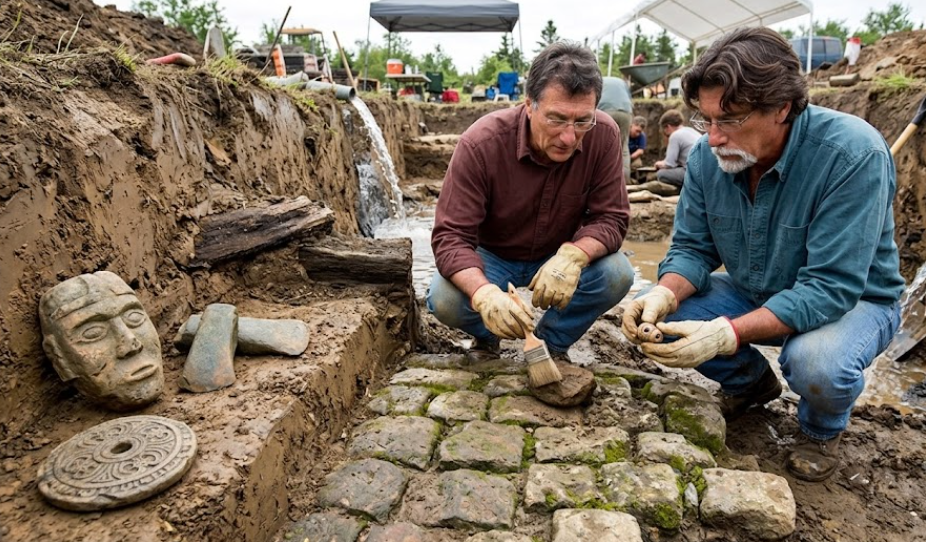
Further inland, the team expanded its search into areas near the swamp, where archaeologists and geoscientists have been investigating suspected structural features. Assisted by Dr. Ian Spooner, Dr. Aaron Taylor, and Miriam Amirault, the team uncovered additional metal signals embedded within a trench system.
Among the finds was a heavily corroded iron wheel-like component later interpreted as part of a caster assembly. According to Dr. Taylor, the object may have been used in transporting materials through confined or reinforced underground spaces.
While no definitive construction has yet been confirmed, the presence of industrial hardware strengthens the hypothesis that structured engineering work occurred in the area, potentially linked to earlier excavation phases or search operations dating back centuries.
Smith’s Cove Continues to Yield Historic Materials
At Smith’s Cove, another area of sustained interest, Jack Begley and Gary Drayton recovered additional artifacts including wrought iron spikes and lead fragments. These items are consistent with previous discoveries believed to date back to the 18th century or earlier.
Researchers noted that some lead materials may align with previously recovered medieval artifacts from the same region, suggesting a possible continuity of activity across multiple historical periods.
Ammunition Discovery Raises Military Questions
Perhaps the most intriguing discovery came from Lot 16, where what appeared to be a fragment of grape shot was recovered. Grape shot, a form of clustered cannon ammunition, was widely used in naval warfare from the 15th century onward.
The presence of such material raises questions about whether Oak Island may have experienced direct military engagement or whether the artifact was transported and repurposed by later occupants.
Drayton and the team emphasized caution, noting that further analysis is required before drawing conclusions about battlefield activity or naval encounters in the region.
A Puzzle Still Expanding
As the day concluded, the team acknowledged both the significance and limitations of their findings. While no single artifact definitively solves the Oak Island mystery, the accumulation of coins, industrial components, and possible military remnants continues to build a layered historical narrative.
Rick Lagina summarized the sentiment on site, noting that even a small portion of the island has produced a surprising density of artifacts—suggesting that much more remains undiscovered beneath the surface.
With erosion continuing to reshape the landscape, investigators believe future storms may yet reveal further evidence hidden for centuries beneath Oak Island’s shifting sands.