DAN BLANKENSHIP AND THE OAK ISLAND LEGACY: Dan Blankenship’s 50-Year Odyssey Ends on Oak Island’s Terms
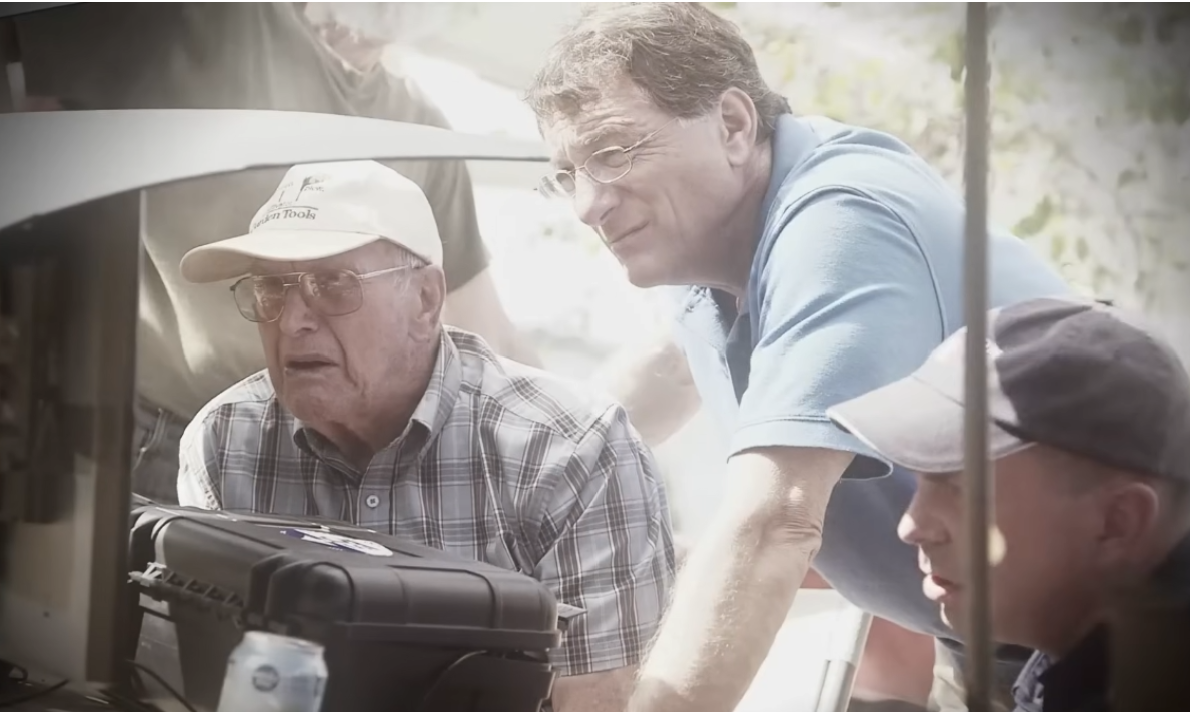
In the long and often speculative history of treasure hunting at Oak Island, few figures have achieved the near-mythical status of Dan Blankenship. Yet behind the layers of online folklore, conspiracy theories, and dramatic retellings, the real story of Blankenship is not one of mystery surrounding his death—but of a life completely consumed by it.
Blankenship passed away on March 17, 2019, at the age of 95. Official records confirm a peaceful death from natural causes, closing the final chapter of a man whose identity became inseparable from one of North America’s most enduring enigmas: the Oak Island Money Pit.
Despite persistent internet speculation suggesting hidden forensic investigations or unusual circumstances, no such evidence exists. There were no DNA controversies, no covert examinations—only the end of a long life defined by obsession, endurance, and unwavering belief.
FROM MIAMI CONTRACTOR TO NOVA SCOTIA OBSESSIVE
The story of Blankenship’s transformation begins far from the rocky shoreline of Nova Scotia. In 1965, while working as a successful contractor in Miami, Florida, he encountered a short article in Reader’s Digest describing the legendary Oak Island treasure mystery.
For most readers, it was a curiosity. For Blankenship, it was a turning point.
He reportedly felt a rare sense of certainty—that the mystery was not only real, but solvable. Within a few years, that conviction reshaped his entire life. By 1970, he had relocated to Nova Scotia, investing his savings, career stability, and personal future into a search that would define the next five decades of his existence.
What followed was not casual exploration, but total immersion. Blankenship became one of the earliest “boots-on-the-ground” pioneers of modern Oak Island excavation, long before television crews and global audiences transformed the site into a cultural phenomenon.
THE DANGEROUS PURSUIT OF 10X
Among the most defining episodes of Blankenship’s career was his work at Borehole 10-X, one of the deepest and most hazardous drilling sites on the island. Descending into the narrow shaft—reportedly extending more than 200 feet into unstable ground—he personally entered conditions that many engineers would later describe as extremely high-risk.
Clad in early-generation diving equipment and operating under limited visibility, Blankenship’s descent was driven by something beyond scientific curiosity. It was conviction—the belief that direct observation was the only path to truth in a landscape full of false leads and collapsed tunnels.
While the descent did not produce definitive proof of buried treasure, it cemented his reputation as a figure willing to physically enter the unknown rather than merely theorize about it.

THE ISLAND’S LIVING ARCHIVE
When modern production teams behind The Curse of Oak Island, including brothers Rick and Marty Lagina, arrived in the 2010s to continue systematic exploration of the island, they encountered something unexpected: an individual who functioned as a living archive.
Blankenship was not just another enthusiast. He was institutional memory.
Decades of handwritten notes, drilling logs, water intrusion observations, and fragmented site maps gave him an unparalleled understanding of what had already been attempted—and failed. In many ways, his knowledge functioned as a parallel database to modern geotechnical surveys.
Observers of the early Lagina-era operations frequently noted that decisions were often influenced by Blankenship’s recollections of earlier excavation attempts. He represented continuity in a project otherwise defined by discontinuity.
DEBUNKING THE MYTHS SURROUNDING HIS DEATH
Following his passing in 2019, online speculation rapidly filled the informational vacuum surrounding his final days. Some internet forums suggested elaborate theories involving DNA testing or hidden medical investigations tied to Oak Island’s so-called “curse.”
These claims are unfounded.
There is no record of forensic anomalies, DNA analysis related to his death, or any official inquiry beyond standard documentation. At 95 years old, Blankenship’s passing was consistent with natural causes, surrounded by family and in line with expected end-of-life circumstances.
The persistence of these rumors reflects more about the cultural psychology of Oak Island fandom than any factual ambiguity. The island’s mythology encourages the search for hidden meaning—even where none exists.
A LEGACY BUILT ON DATA, NOT TREASURE
If Blankenship did not uncover the treasure he spent half a century pursuing, he nonetheless left behind something of enduring value: a structured body of empirical observation accumulated through decades of trial, error, and persistence.
His records continue to inform modern excavation strategies, serving as reference material for ongoing investigations led by contemporary teams on Oak Island. These documents represent one of the most comprehensive privately compiled datasets related to the island’s subsurface activity.
Rick Lagina has previously acknowledged the importance of this legacy, noting that modern exploration efforts are, in many ways, extensions of Blankenship’s original groundwork.
THE HUMAN COST OF OBSESSION
Beyond technical contributions, Blankenship’s story raises deeper questions about the psychological cost of long-term pursuit. He is often described not as a failed treasure hunter, but as a man who chose a singular mystery over conventional stability.
He left behind not only maps and drilling logs, but a life reshaped by uncertainty—one in which the possibility of discovery outweighed the certainty of comfort.
His son, Dave Blankenship, continues to maintain a presence on the island, preserving both the physical work and the emotional continuity of his father’s legacy.
CONCLUSION: A LIFE THAT BECAME THE MYSTERY
Dan Blankenship’s story does not end with treasure found or lost. It ends with something more ambiguous—and perhaps more fitting for Oak Island itself.
He did not die as a victim of myth, nor as a subject of conspiracy. He died as a man who devoted his life to a question that refused to answer him back.
In the end, the greatest artifact he left behind was not what he discovered underground, but the decades of human determination he poured into the search itself.
And on an island defined by unanswered questions, that may be the most enduring legacy of all.