Explore Rick Lagina’s history: Ancient characters unlock the path to the ultimate treasure unearthed on the rock wall of Oak Island.
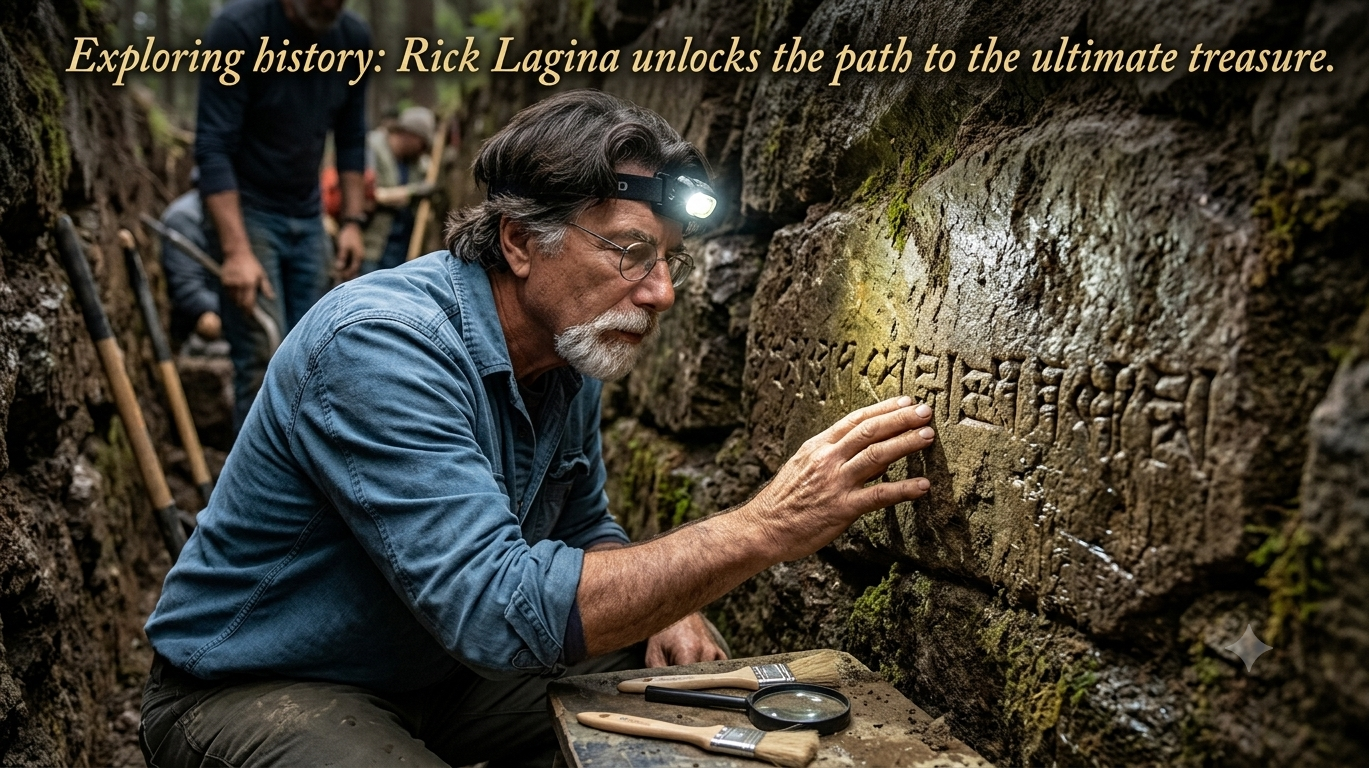
A striking new theory emerging from the ongoing Oak Island investigation suggests that a set of ancient characters discovered etched or embedded within a rock wall formation may represent a coded message pointing toward a deeper and more structured treasure system beneath the island. According to interpretations discussed within the team’s analytical framework, Rick Lagina’s historical focus on these markings could represent one of the most significant decoding efforts yet undertaken in the long-running search.
From an analytical standpoint, the presence of carved or naturally inscribed symbols in a controlled geological context raises immediate questions about intent, origin, and function. Unlike scattered artifacts recovered across the island in previous seasons, rock wall inscriptions suggest deliberate communication or directional encoding—potentially transforming the interpretation of Oak Island from a site of isolated anomalies into a structured, message-driven landscape.
A Shift From Artifacts to Communication Systems
For years, Oak Island investigations have centered on physical discoveries such as coins, tools, wooden structures, and underground shafts. These finds, while significant, have often been treated as disconnected evidence spread across multiple excavation zones.
However, the emergence of identifiable “ancient characters” on a rock wall introduces a fundamentally different category of evidence: symbolic communication. If these markings are indeed intentional, they may indicate that Oak Island was not merely used for storage or concealment, but was instead part of a guided system requiring interpretation to access its deeper layers.
Analysts suggest that such systems are historically associated with controlled access environments, where only individuals with knowledge of the code or sequence could navigate the site successfully. This raises the possibility that Oak Island’s underground network was designed with a form of security mechanism based on knowledge rather than physical barriers alone.
Rick Lagina’s Historical Focus on Pattern Recognition
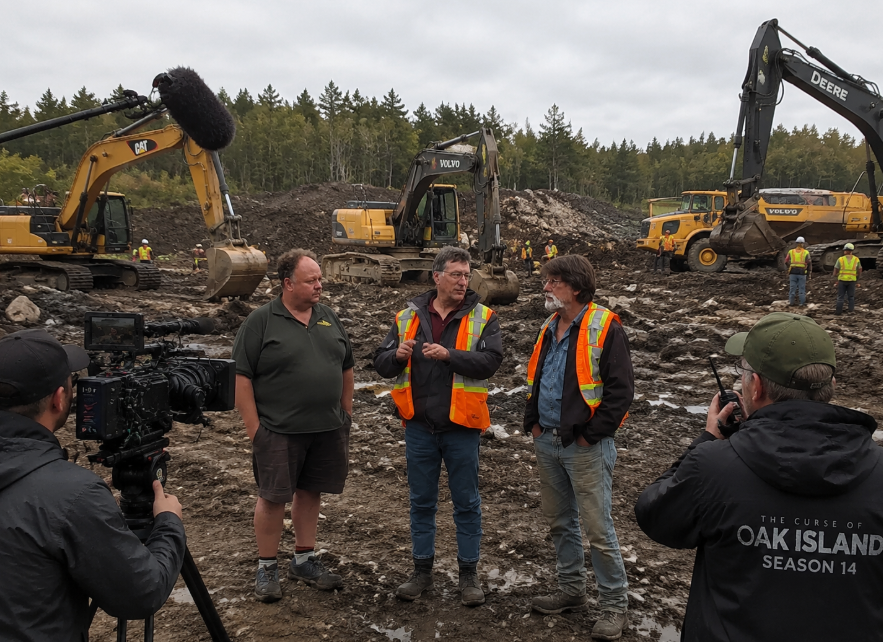
Rick Lagina’s investigative approach has consistently emphasized pattern recognition, spatial alignment, and historical consistency. His continued interest in inscriptions and structural anomalies suggests that he views Oak Island not as a collection of random deposits, but as a deliberately constructed system with layered meaning.
In this context, the rock wall characters become more than geological curiosities—they become potential keys. If the symbols can be decoded, they may point toward previously unidentified excavation zones or structural intersections within the island’s subsurface architecture.
This interpretation aligns with earlier discoveries, including aligned stone structures, engineered flood tunnels, and deep shaft systems such as the Money Pit and associated searcher excavations. The idea that these features are connected through symbolic instruction adds a new dimension to the investigation.
Possible Connection to a “Master Treasure Pathway”
One of the most compelling interpretations emerging from this development is the possibility of a “master pathway”—a conceptual route embedded in both physical geography and symbolic markers. Under this theory, the rock wall inscriptions could function as navigational instructions leading toward a central underground location.
Such a system would imply a high degree of planning and foresight, potentially involving multiple construction phases and coordinated engineering efforts. Rather than a single buried deposit, Oak Island could contain a layered network of protected zones, each accessible only through interpretive sequencing.
If this hypothesis is correct, the “ultimate treasure” referenced in analytical discussions may not be located at a single point, but rather at the convergence of multiple encoded directions.
Geological Context and Structural Significance
The rock wall itself plays a crucial role in this interpretation. Geological formations used for inscription or carving are rarely arbitrary; they are typically selected for stability, visibility, and permanence. A deliberately chosen rock surface suggests intent to preserve information over long periods, potentially across generations.
Analysts are now considering whether the wall is natural or modified, and whether the inscriptions were added during construction or embedded into pre-existing formations. The answer to this question could significantly alter the timeline of human activity on Oak Island.
If the markings are confirmed as artificially placed, they may represent one of the earliest known communication systems on the island, predating many of the excavation structures currently under study.
Decoding Challenges and Methodological Approach
The primary challenge facing the team is interpretation. Ancient characters, particularly those lacking a confirmed linguistic origin, require cross-disciplinary analysis involving archaeology, cryptography, and historical linguistics.
Potential methodologies include:
- Symbol frequency analysis to identify repeated patterns
- Spatial correlation mapping between inscriptions and excavation sites
- Comparison with known historical cipher systems
- Stratigraphic dating of the rock surface to establish chronology
Each of these methods could help determine whether the markings represent language, directional coding, ownership identifiers, or ritualistic symbols.
Implications for Ongoing Excavations
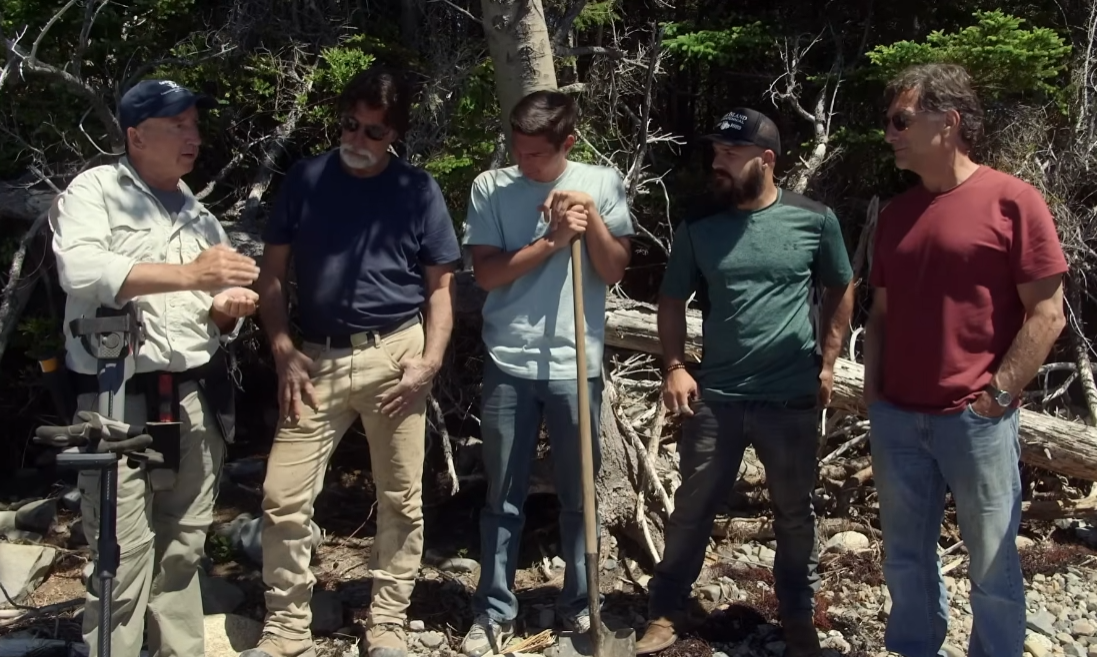
If the inscriptions are validated as directional markers, they could immediately reshape excavation priorities. Instead of focusing solely on high-yield zones like the Money Pit or swamp anomalies, the team may redirect efforts along pathways suggested by the encoded system.
This would mark a strategic shift from reactive digging to interpretive excavation—where decisions are guided not just by physical anomalies, but by decoded instructions embedded within the island’s structure.
Such a shift could significantly increase efficiency while also narrowing the search radius for the island’s most elusive targets.
A Broader Historical Interpretation
Beyond immediate excavation implications, the discovery of symbolic rock wall characters raises broader historical questions. Who possessed the knowledge to construct such a system? What was being protected that required encoded guidance? And why was Oak Island selected as the location for such a complex arrangement?
Competing theories range from early European exploratory groups and military engineering efforts to more speculative interpretations involving secret societies or maritime networks. However, analysts caution that without definitive translation, these remain hypotheses rather than conclusions.
Conclusion: A Potential Turning Point in the Oak Island Narrative
The identification of ancient characters on a rock wall, combined with Rick Lagina’s continued focus on historical pattern analysis, represents a potentially transformative moment in the Oak Island investigation.
If these markings are indeed part of a structured system, they may redefine the entire framework of the island—not as a series of isolated discoveries, but as a coherent, intentionally designed landscape built around encoded knowledge.
In that scenario, the ultimate treasure may not simply be buried beneath the surface. It may be hidden within the instructions themselves, waiting for the correct interpretation to unlock the final path forward.
As exploration continues, the possibility remains that Oak Island’s greatest secret is not just what lies underground—but how to read the island itself.