Rick Lagina discovers a meteorite fragment containing rare uranium on Oak Island.
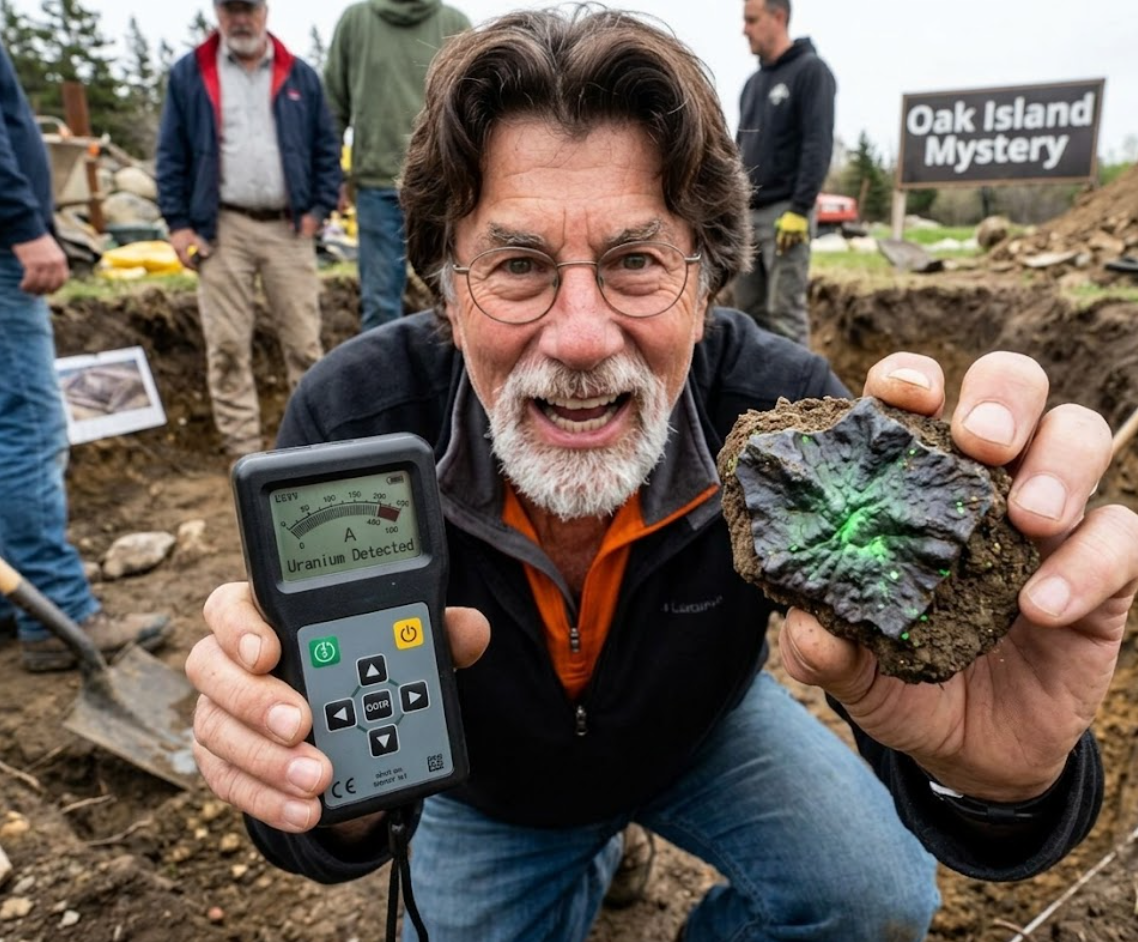
A new and highly unusual claim emerging from Oak Island has sparked intense discussion among researchers and fans of The Curse of Oak Island, suggesting that Rick Lagina may have uncovered a meteorite fragment containing traces of uranium. If confirmed, the discovery would represent one of the most scientifically significant anomalies ever associated with the island’s long-running investigation, potentially expanding the mystery beyond historical treasure theories into the realm of extraterrestrial material and rare geological formations.
From an analytical perspective, this development introduces an entirely new layer to the Oak Island narrative—one that moves beyond medieval engineering theories and buried human activity, and into questions about natural anomalies, cosmic material deposition, and long-term geological contamination. While no official confirmation has been released by the production team or scientific laboratories associated with the show, the implications of such a find are already reshaping speculative discussion around the island’s origins.
A STRANGE MATERIAL DISCOVERED DURING EXCAVATION WORK
According to the claim, the fragment was recovered during ongoing excavation efforts led by Rick Lagina and his team in Nova Scotia. The object is described as a dense, irregularly shaped rock-like material with metallic properties, reportedly showing abnormal radiation readings consistent with trace uranium presence.
If accurate, this would immediately distinguish the object from previously documented Oak Island artifacts, which have largely consisted of wood fragments, iron objects, and human-made construction materials. A meteorite-origin hypothesis would place the item outside the historical timeline of human activity on the island entirely, suggesting an origin dating back thousands—or even billions—of years before any known settlement or excavation.
SHIFTING THE OAK ISLAND NARRATIVE BEYOND HUMAN HISTORY
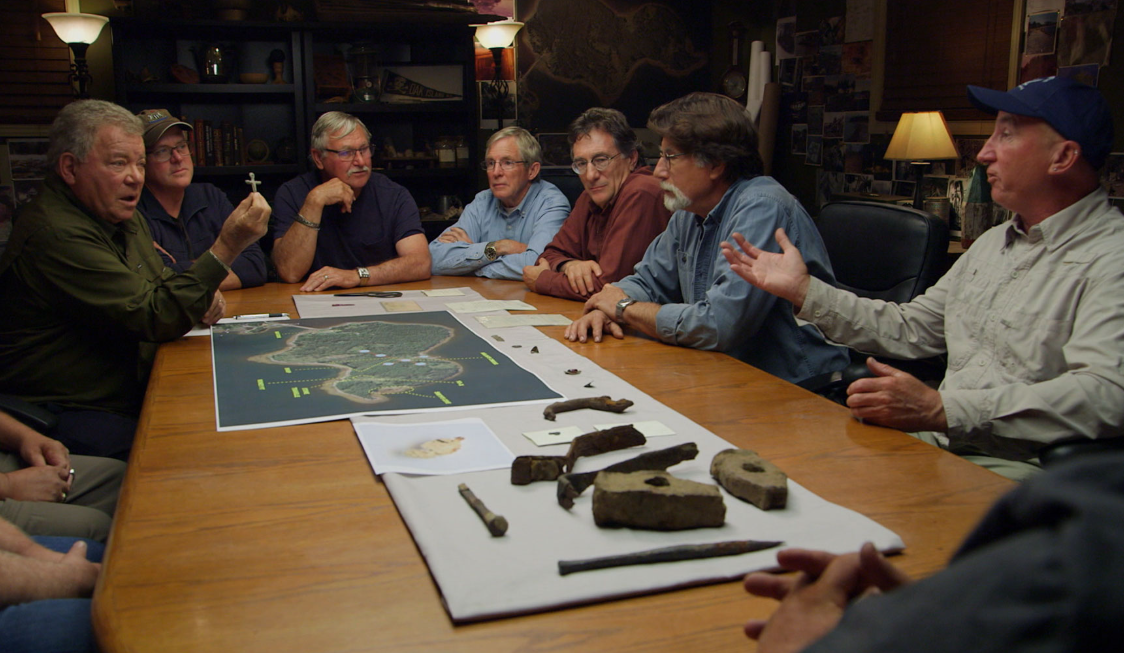
For over a decade, The Curse of Oak Island has focused on uncovering evidence of possible buried treasure, engineered flood tunnels, and pre-Columbian activity on the island. The introduction of a potential meteorite fragment, however, disrupts this framework by introducing a non-human, geological explanation for at least part of the island’s anomalies.


From a scientific and analytical standpoint, uranium traces in meteorite material are not unprecedented, but they are rare and typically associated with specific types of iron-nickel meteorites or highly altered space debris. If the object truly originates from space, its presence on Oak Island would raise new questions about how such material could have influenced soil composition, electromagnetic anomalies, or even historical misinterpretations of earlier findings.
IMPLICATIONS FOR THE ISLAND’S GEOLOGICAL COMPLEXITY
One of the most persistent challenges in Oak Island research has been distinguishing between natural geological formations and human-engineered structures. The island is known for complex layers of glacial till, water-saturated soil, and irregular underground voids that have complicated excavation for generations.
A meteorite fragment containing uranium-like signatures would add a new variable to this already complex system. Natural radioactive materials can influence soil readings, geophysical scans, and even groundwater behavior—potentially explaining some of the anomalies previously attributed to engineered tunnels or buried structures.
However, analysts caution that without verified laboratory testing, the claim remains speculative. Radiation anomalies can also result from terrestrial minerals, contamination, or misinterpretation of sensor data during excavation conditions.
REDEFINING THE SEARCH STRATEGY ON OAK ISLAND
If the discovery is validated, it could force a partial reassessment of search strategies employed by the Oak Island team. Historically, excavation has focused on identifying human-made structures, particularly in the Money Pit, swamp zones, and engineered shafts.
A confirmed meteorite fragment would shift some attention toward broader geological mapping rather than exclusively archaeological excavation. It would suggest that at least part of Oak Island’s mystery may be rooted in natural history rather than solely human intervention.
This does not eliminate the possibility of buried human activity, but it introduces a parallel narrative: that the island may contain both engineered structures and rare natural anomalies, overlapping in ways that complicate interpretation.
ANALYST PERSPECTIVE: WHY THIS CLAIM IS SO DISRUPTIVE
From a program analysis perspective, the significance of this claim lies not only in its scientific implications but also in its narrative impact. The success of The Curse of Oak Island has always depended on maintaining a balance between mystery, historical theory, and incremental discovery.
A meteorite fragment containing uranium traces introduces a category shift: from historical investigation to interdisciplinary science involving astrophysics, mineralogy, and geochemistry. This expands the scope of the series beyond traditional treasure hunting narratives.
It also risks reframing past discoveries. Previous anomalies interpreted as engineered or symbolic structures could, in theory, be partially influenced by natural geological factors rather than deliberate construction.
WHAT COULD HAPPEN NEXT
Looking ahead, several possible developments could emerge if this claim gains traction:
First, independent laboratory verification would become essential. Any confirmed uranium signature would require strict analysis to determine whether it is naturally occurring, contamination-based, or genuinely extraterrestrial in origin.
Second, the Oak Island team may expand collaboration with geological and astrophysical experts, adding new layers of scientific interpretation to ongoing digs. This would represent a significant evolution in the show’s investigative model.
Third, public and fan interpretation of the island’s mystery could shift toward a dual-layer theory: one involving human activity and another involving natural extraterrestrial deposition.
A NEW DIMENSION TO AN OLD MYSTERY
For more than 200 years, Oak Island has been defined by unanswered questions—about buried treasure, engineered tunnels, and lost historical secrets. The possibility of a meteorite fragment containing uranium adds an unexpected dimension to that legacy.
If verified, it would not only expand the scientific interest in the island but also challenge long-standing assumptions about what lies beneath its surface. Whether this discovery becomes a confirmed breakthrough or remains another intriguing rumor, it reinforces a central truth about Oak Island: the deeper the investigation goes, the more complex the mystery becomes.