Oak Island Breakthrough: Lagina Team Uncovers 1805 Shaft That May Lead Directly to the Money Pit
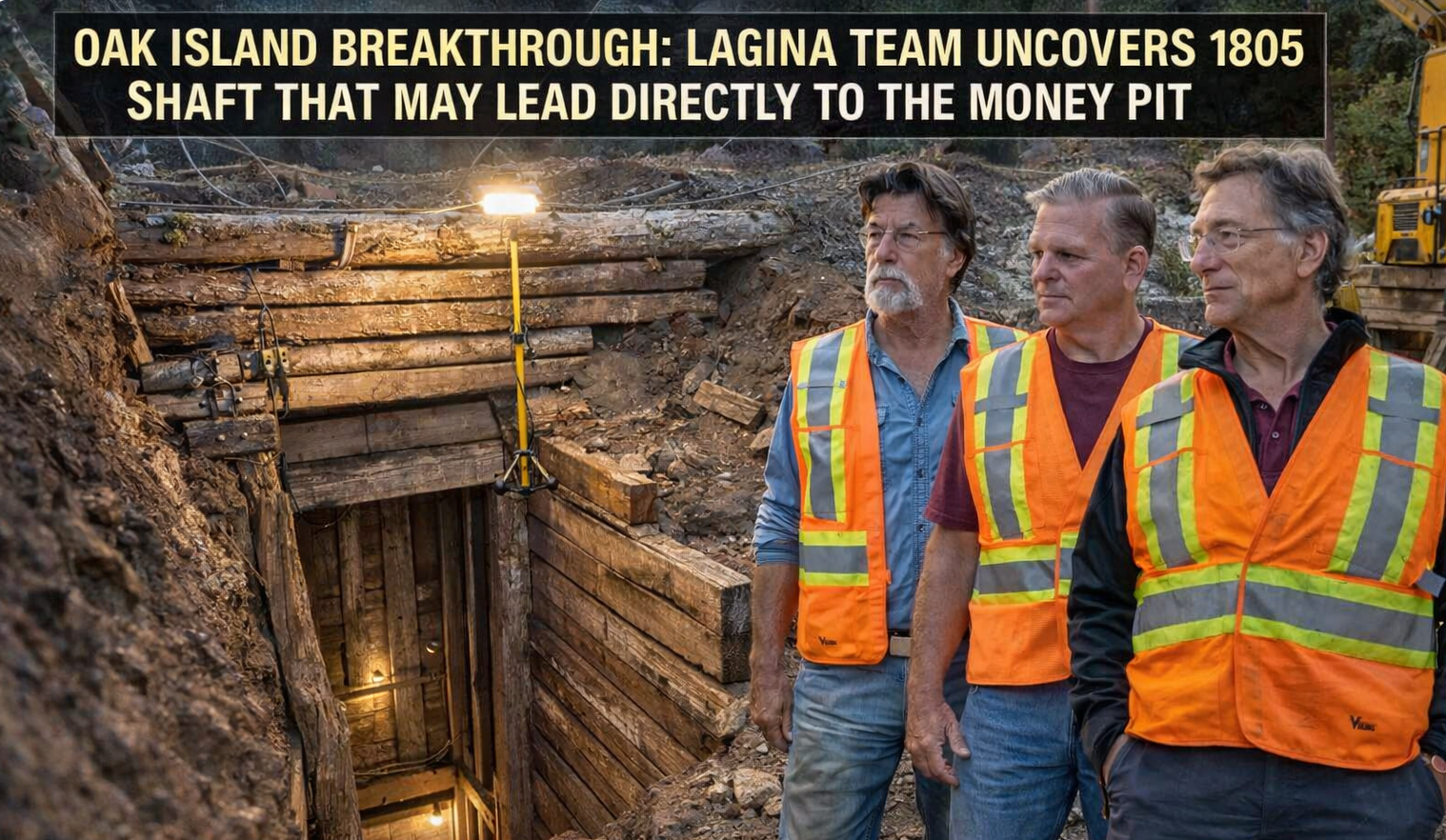
A new chapter in the long-running The Curse of Oak Island investigation has opened with what may be one of the most significant structural discoveries to date. Rick and Marty Lagina, alongside their research team, have announced the potential identification of “Shaft Two,” a deep, early searcher excavation dating back to around 1805. Located just 14 feet southeast of the legendary Money Pit, the find has immediately intensified speculation that the original deposit zone may finally be within reach.
The development comes after a carefully coordinated excavation effort involving heavy machinery, archaeological oversight, and dendrochronological sampling techniques. The team’s goal was clear from the outset: locate and confirm Shaft Two, believed to be the first major searcher shaft ever constructed on Oak Island. If verified, it could serve as a critical geographic and historical reference point for the long-elusive Money Pit.
A Structured Excavation With Historical Implications
From an analytical perspective, the discovery is significant not just because of what was found, but because of where it was found. Shaft Two—if confirmed—represents one of the earliest known attempts to systematically excavate Oak Island’s subsurface anomalies. Positioned a short distance from the Money Pit, it offers a rare spatial relationship between early 19th-century search activity and the original target that has fascinated investigators for over two centuries.
The Lagina team’s approach focused on extracting intact wooden beam samples from deep within the shaft walls. These samples are now undergoing dendrochronological testing, a scientific method that determines the exact year trees were cut down by analyzing growth rings. If the timber dates to approximately 1805, it would strongly support the theory that the structure is indeed Shaft Two.
Evidence Emerging From Deep Excavation
As excavation progressed, the team uncovered substantial structural wood elements embedded approximately 40 feet below the surface. The condition and configuration of these beams suggest deliberate construction rather than natural deposition. Of particular interest was a large, rounded timber section believed to be part of a shaft wall, showing characteristics consistent with early industrial-era excavation methods.

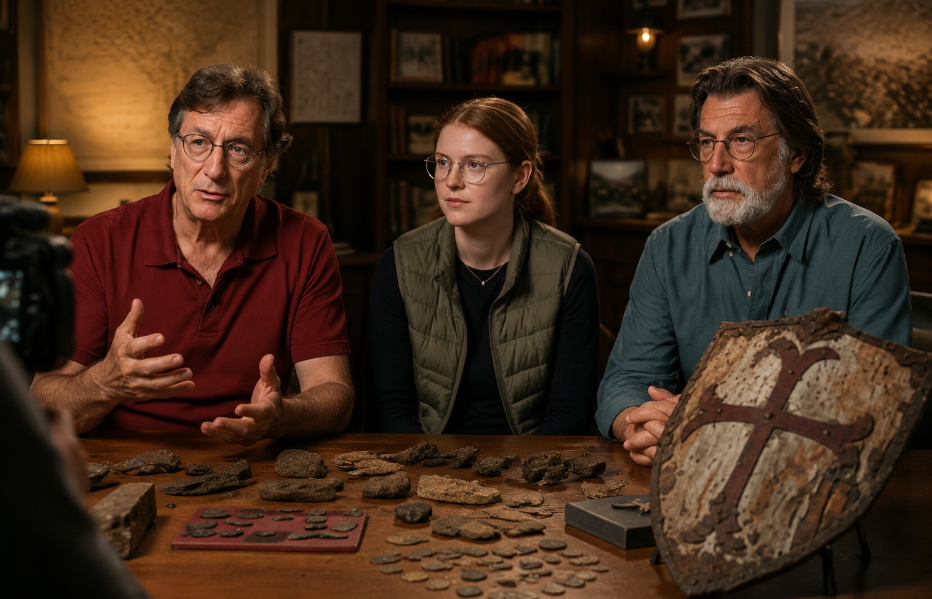
One of the most compelling finds was a rose-head spike—hand-forged iron hardware commonly used between the late 18th and mid-19th centuries. These spikes, identifiable by their irregular hammered heads, were widely used in early construction projects. Their presence within the shaft strengthens the hypothesis that this is not a natural formation but a man-made structure consistent with historical searcher activity.
A Possible Link to the Original Money Pit
The proximity of Shaft Two to the Money Pit has long been a point of theoretical discussion among researchers. If the shaft is confirmed as genuine, its location just 14 feet from the original deposit zone could represent a crucial breakthrough in mapping the island’s earliest excavation efforts.
Rick Lagina emphasized the importance of the find, noting that verifying Shaft Two could provide the team with a precise landmark for further drilling operations. The structural alignment and depth relationship between the two sites suggest that early searchers may have been working with limited but targeted knowledge of underground activity—possibly even following pre-existing clues or markings.
From a strategic standpoint, this discovery allows the team to refine its excavation grid, focusing future drilling in a highly concentrated area rather than broader exploratory zones. In practical terms, it narrows the search radius for what many believe to be the original Money Pit entrance or chamber system.
Scientific Analysis and Next Steps
The key to confirming the significance of the discovery now rests with laboratory analysis. Dendrochronology results will determine whether the wood samples truly date to the early 1800s. If confirmed, this would establish a strong chronological link between Shaft Two and early documented searcher activity on Oak Island.
In parallel, material analysis of the iron spike and surrounding soil composition may help determine construction techniques and environmental conditions at the time of excavation. Researchers are also examining whether the darker wood sections observed deeper in the shaft indicate original construction layers or later reinforcement work—potentially suggesting multiple phases of excavation.
Operational Challenges in Deep Excavation
The excavation itself presented considerable technical challenges. Operating heavy machinery within a confined vertical shaft required precise coordination between operators and ground teams. Visibility limitations meant that excavator buckets had to be guided remotely, with constant adjustments based on radio communication and surface monitoring.
Despite these difficulties, the team successfully retrieved multiple large structural beams intact—a key factor in preserving the integrity of the samples for scientific testing. The operation has been described as one of the most technically demanding digs of the season.
Interpreting the Findings: Searchers or Original Builders?
One of the central analytical questions emerging from the discovery is whether Shaft Two represents early searcher activity or a reconstruction of older subterranean structures. The absence of metal fasteners in some deeper sections suggests the possibility of older construction techniques, potentially predating documented 1805 excavation efforts.
If the shaft predates known searchers, it could indicate that the structure was originally built for a different purpose entirely, later repurposed or re-excavated in the early 19th century. This would add a new layer of complexity to Oak Island’s already multi-generational mystery.
A Measured Declaration of Progress
While stopping short of definitive conclusions, the team expressed cautious optimism regarding the discovery. The combination of structural wood, historical iron hardware, and precise geographic alignment has led investigators to describe the moment as a major step forward in the broader search.
In analytical terms, the identification of Shaft Two—if confirmed—does not solve the Oak Island mystery, but it significantly refines its parameters. It provides a tangible reference point tied to documented early excavation efforts and strengthens the hypothesis that the Money Pit lies in extremely close proximity.
Conclusion: A Narrowing Path Toward the Money Pit
The uncovering of what may be Shaft Two marks a pivotal moment in the Oak Island investigation. After more than two centuries of speculation, drilling, and fragmented discoveries, the Lagina team appears closer than ever to defining the original search landscape of the island.
With dendrochronology results pending and further excavation planned, the coming weeks may determine whether this structure is indeed the long-sought Shaft Two—or something even more significant. Either way, the discovery has already reshaped the strategic direction of the search.
As Rick Lagina noted in closing, the team has “declared victory” on locating a key structural target—but in true Oak Island fashion, that victory may be only the beginning of an even deeper question: what was originally buried just 14 feet away?