Oak Island Team Confronts Dangerous Collapse as New Evidence Points to the Legendary Flood Tunnel
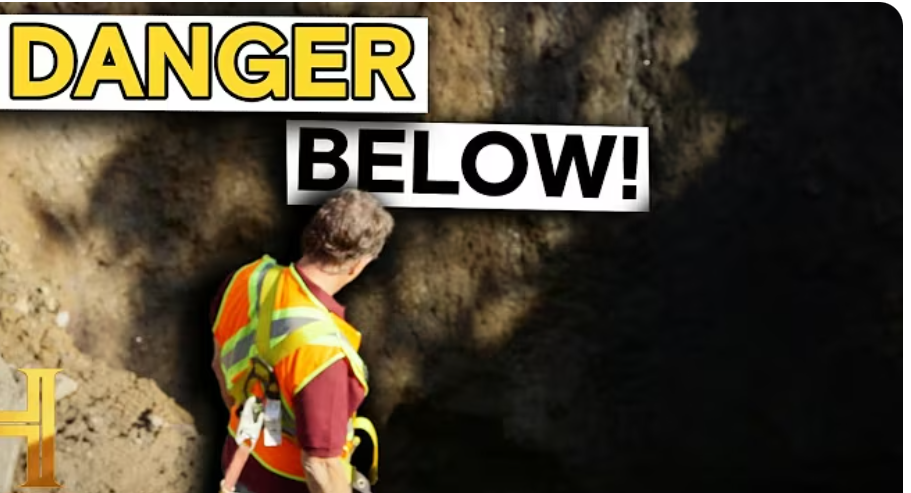
In one of the most dramatic developments of the season, the Oak Island team found themselves face-to-face with a hazardous situation that may also mark a major breakthrough in the centuries-old mystery of the Money Pit. What began as a routine investigation in the uplands near Smith’s Cove quickly escalated into a race against time as water, earth, and centuries of engineering converged in a startling display.
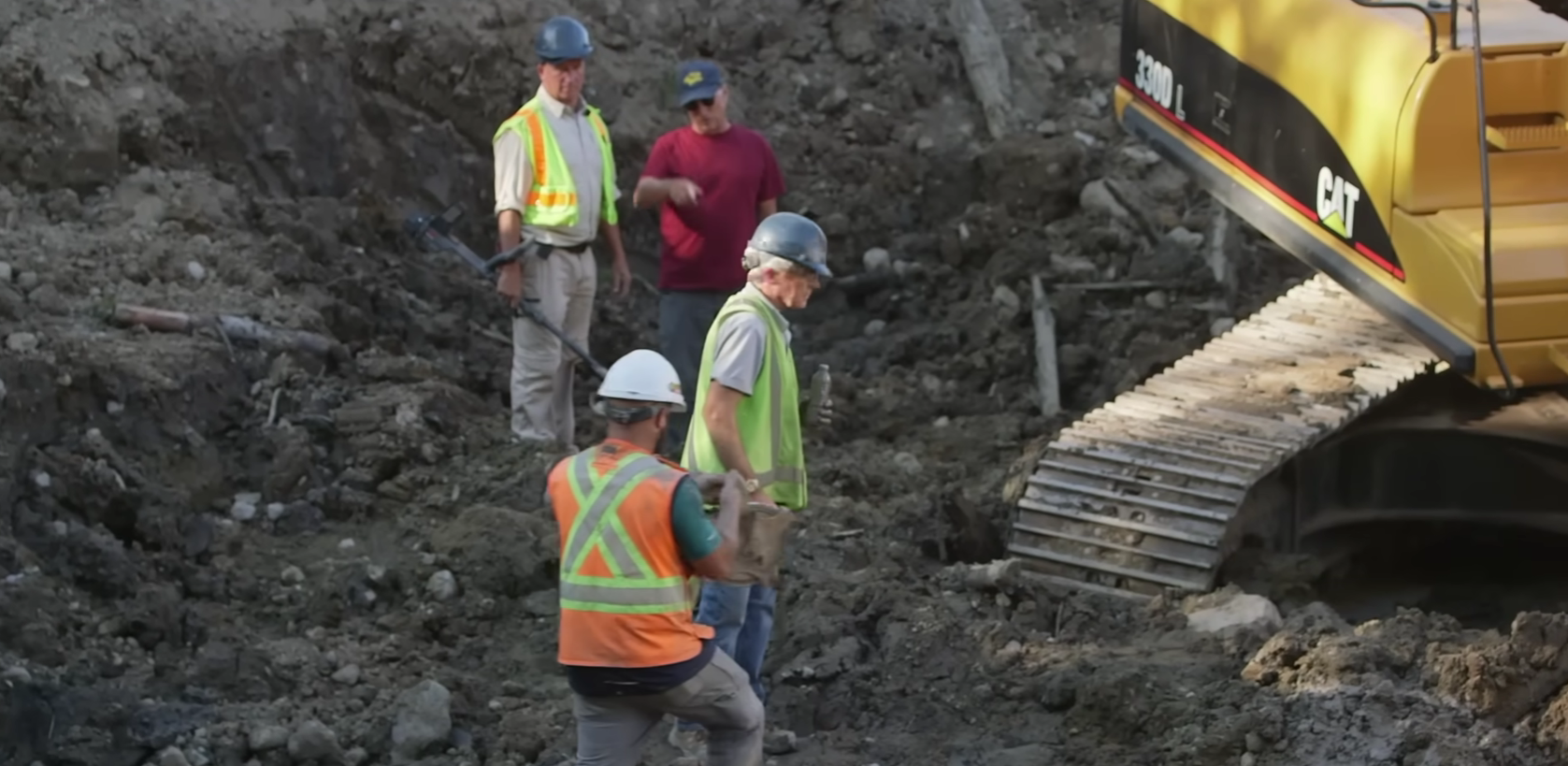
While inspecting newly exposed wooden posts and fast-rushing water deep below ground, team members Craig Tester, Jack Begley, Gary Drayton, Billy Gerhardt, and later Marty Lagina realized they may have stumbled upon a section of the elusive flood tunnel system. This system, first engineered more than two centuries ago, is believed to have been intentionally built to protect the Money Pit by flooding it whenever treasure hunters dig too close.
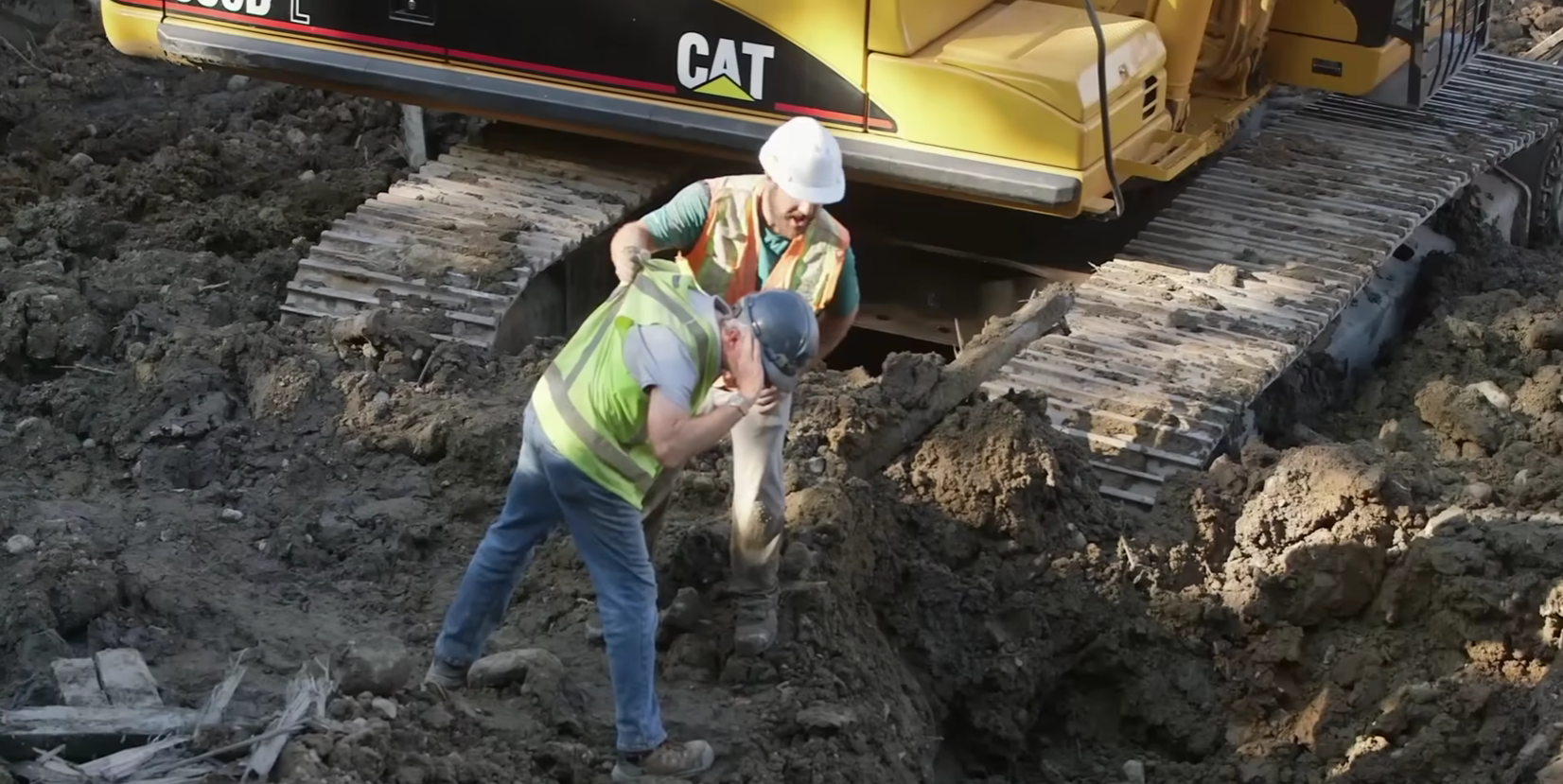
As the team observed water surging upward “like a geyser,” the ground beneath their feet began shifting. Cracks formed rapidly, edges buckled, and a portion of the structure threatened to collapse. Realizing the risk, Marty immediately advised retreat: “This is all getting kind of dangerous.” The team withdrew just moments before a significant section of the embankment gave way—proof that the flood tunnel mechanism was still doing exactly what it was designed to do.
With the area destabilizing, the team had no choice but to halt digging and begin emergency backfilling. Continuing would not only threaten their equipment, but their safety. Stabilizing the site means further excavation will have to wait until the ground settles—an unavoidable setback.
Yet even as the collapse forced them back, there was no question that the discovery was meaningful. “It looks like a tunnel to me going that way,” one team member observed as they peered into the void. Wooden structures were visible on both sides, along with beams that appeared carefully positioned. The possibility that this was original work dating back prior to the Money Pit’s discovery in 1795 is now under active consideration.
Back in the war room, Rick and Marty Lagina, along with Craig Tester, reviewed footage recorded by a camera mounted to the excavator’s bucket. The video revealed double-layered wooden walls, large beams, and rock fill—features consistent with a constructed tunnel rather than a natural formation. As Craig noted, dendrochronology will be key. If the wood dates to pre-1795, it may confirm they are finally looking at part of the original flood tunnel system.
However, the team faces another challenge: in less than 24 hours, Irving Equipment crews are scheduled to remove the massive steel coffer dam at Smith’s Cove. The operation will effectively shut down access to the area for the remainder of the year. Though the evidence is promising, the timeline has closed in. As Rick summarized, “We’re done. Our permits won’t allow us to excavate anymore this year.”
While work at Smith’s Cove slows, attention is shifting back to the Money Pit area. There, drilling in a high-priority zone known as the “Golden Egg”—the region believed most likely to contain buried metals—has produced its own surprises. Borehole EN13 encountered soft material followed by firm resistance, suggesting proximity to another underground structure. Later, Dr. Ian Spooner reported hearing what he described as a deep underground “collapse,” followed by water in the borehole turning noticeably darker. According to Spooner, this may indicate the presence of a void shifting beneath the surface, possibly a chamber.
“These clues strongly suggest this area holds significant interest,” Spooner explained. He believes the collapse could have opened new pathways for water movement, providing fresh data about the source of metal concentrations detected earlier in the season.
Meanwhile, another major discovery has renewed interest in Oak Island’s possible connection to early trans-Atlantic travelers. After uncovering a second Roman coin on Lot 5, team members Doug Crowell and Emiliano Santangelo discussed the growing evidence pointing to Norse—or Viking—activity in the region. With the known Viking site at L’Anse aux Meadows dating to approximately 1021 AD and located only 625 miles northeast of Oak Island, the team believes an expedition there could provide crucial context.
The presence of Roman artifacts, possible Scandinavian items, and structures predating known colonial activity have fueled speculation that descendants of Viking explorers—and possibly later groups such as the Knights Templar—may have used Oak Island for storage or concealment of valuable objects. “If something happened here in the 1200s, it almost has to involve Viking descendants,” Emiliano noted.
The team is now preparing an investigative trip to L’Anse aux Meadows to better understand the materials and techniques used by Norse builders, hoping to compare their findings with artifacts on Oak Island.
As one chapter ends with the forced suspension of work at Smith’s Cove, another begins with renewed focus in the Money Pit and the possibility of ancient European contact. With new geological data, structural evidence, and historical connections emerging simultaneously, the team believes they are closer than ever to meaningful answers.
Whether the collapse in the uplands marks a breakthrough or simply another twist in a 229-year-old mystery remains to be seen. But as Rick Lagina remarked, “We’re not giving up. Not when we’re this close.”