Why Chris Doumitt Really Left Parker Schnabel’s Crew — And What It Means for Gold Rush’s Future

For more than a decade, Chris Doumitt has been one of the most recognisable, respected and steady presences in the Gold Rush universe. His quiet disappearance from Parker Schnabel’s crew puzzled viewers, sparked speculation, and gradually evolved into one of the show’s most-asked questions: why did Chris leave, and what does his exit signal for the future of Parker’s high-pressure mining empire?
After piecing together Chris’s own comments, behind-the-scenes clues and the long-term patterns of Parker’s operation, a clearer picture emerges—one rooted not in drama, but in structural pressure, generational change and the limits of human endurance. And the implications for Season 16 and beyond may be larger than fans realise.
A Man Who Became Indispensable by Accident
As an analyst who’s followed the series for years, it’s worth remembering one key fact: Chris Doumitt wasn’t supposed to be here.
He came to Alaska as a carpenter. He stayed as a miner. And within a few years he had become one of the most reliable operators in the entire franchise. His transition from Hoffman cast-off to Parker’s quiet backbone speaks to his adaptability—but also to a deeper truth about Gold Rush: the show’s biggest assets often emerge organically, not by design.
When Parker recruited him, Doumitt became more than a crew member. He became the stabiliser in an environment built on volatility. Young bosses need veterans who don’t escalate conflict, and Parker—who matured on screen under immense scrutiny—benefited enormously from Chris’s grounded presence.
But reliability can be a double-edged sword. The more reliable you are, the more weight you carry. And for Chris, that weight accumulated year after year.
The Parker Effect: A Crew Built for Speed, Not Longevity
Viewers sometimes underestimate the intensity of Parker Schnabel’s mining philosophy. He runs a results-first operation, measuring success in ounces per hour and yards per shift. His crew is expected to adapt, endure and deliver—often at a pace that younger miners can barely sustain, let alone a veteran in his 60s.
From a production-analysis standpoint, this creates a unique dynamic:
-
High output equals a compelling storyline.
-
High turnover is almost inevitable.
-
Long-term crew members burn out faster, especially those who absorb more responsibility than they voice.
Chris Doumitt was the crew’s emotional shock absorber. When breakdowns, sleepless nights and high-pressure targets pushed the younger crew to the brink, Chris absorbed the spillover. He took on the messy, unglamorous tasks. He stayed late. He solved problems before they became arguments.
But as seasons progressed, Parker’s operation scaled dramatically—bigger machines, higher targets, more risk. And with scale comes stress. To analysts, the signs of quiet burnout were detectable long before fans noticed Chris missing from episodes.

Not a Feud — A Shift in Priorities
Contrary to online theories, nothing indicates an explosive confrontation or fractured relationship. Instead, the data points to a slower, subtler break:
-
Increasing pressure + decreasing recovery time
-
Age-related strain in a physically punishing environment
-
Personal commitments outside the mine
-
New opportunities that did not require 100-hour weeks
The decision he finally made—stepping away on his own terms—was consistent with his character. Quiet, considered, dignified.
From a narrative perspective, this also explains why the show never turned his exit into a storyline. There was no dramatic hinge point, no villain, no scandal—just a man recognising his limits.
Chris 2.0: Embracing a Life He Controls
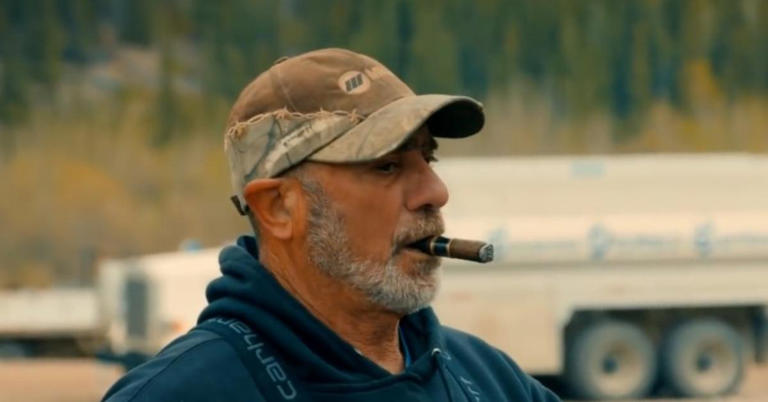
Since leaving Parker’s camp, Chris has built something surprisingly rare for Gold Rush alumni: a second career that feels both sustainable and authentic. His cigar brand, custom boxes and public appearances allow him to:
-
engage with fans
-
work on flexible schedules
-
maintain visibility
-
avoid the punishing physical labour of mining
This shift mirrors a broader trend in reality television: long-time cast members often evolve into independent brands, using their screen identity as a launch pad rather than clinging to gruelling on-screen roles.
What His Departure Signals for Parker’s Operation
This is where analysis gets interesting.
The vacancy left by Chris is not about labour—it’s about leadership structure. His departure highlights three potential fault lines for Parker’s future seasons:
1. A Mentorship Gap
Parker has always relied on a blend of youthful energy and veteran experience. Chris’s exit removes a buffer between Parker and the less experienced operators. This may result in:
-
More on-screen conflicts
-
Higher turnover
-
Increased reliance on mid-level leaders like Tyson or Brennan
2. The Risk of Crew Instability
High-output mining operations function best when emotional stability is present. Without Chris absorbing tension, pressure may disperse unevenly—especially during mechanical failures or license deadlines.
3. The Rising Need for Delegation
Chris was the kind of crewman Parker didn’t need to micromanage. Without him, Parker may be forced to lean more heavily on Kevin, Tyson or new hires—potentially triggering a larger restructuring of his team.
Predictions: How This Plays Out in Season 16 and Beyond
Based on historical patterns and current trajectory, several developments feel likely:
1. Parker Will Overcorrect
He may respond to losing a veteran by intensifying his recruitment of skilled older operators. Viewers may see at least one new “seasoned pro” enter the story.
2. Brennan or Tyson Will Shift Upwards
One of them is poised to quietly inherit more responsibility—operationally and emotionally.
3. Chris May Return Temporarily
Not as a full-time miner, but for:
-
a cameo
-
a consulting role
-
or a special project episode
History shows that Discovery often reintegrates respected alumni when story arcs align.
4. A Documentary-Style Retrospective
Given fan interest, producers could create a feature episode exploring the careers and departures of iconic crew members—Chris included.
The Final Word
Chris Doumitt didn’t leave because he was defeated. He left because he finally chose himself.
And in a franchise that celebrates grit, endurance and survival, his quiet decision might be one of the most powerful stories Gold Rush has told—without ever filming it.
If anything, Chris’s exit marks a new era for the show: one where the cost of mining isn’t just measured in gold, but in the people who decide when the story continues… and when it ends.