Lisa Hogan opens up on Jeremy Clarkson’s ‘petrifying’ health scare
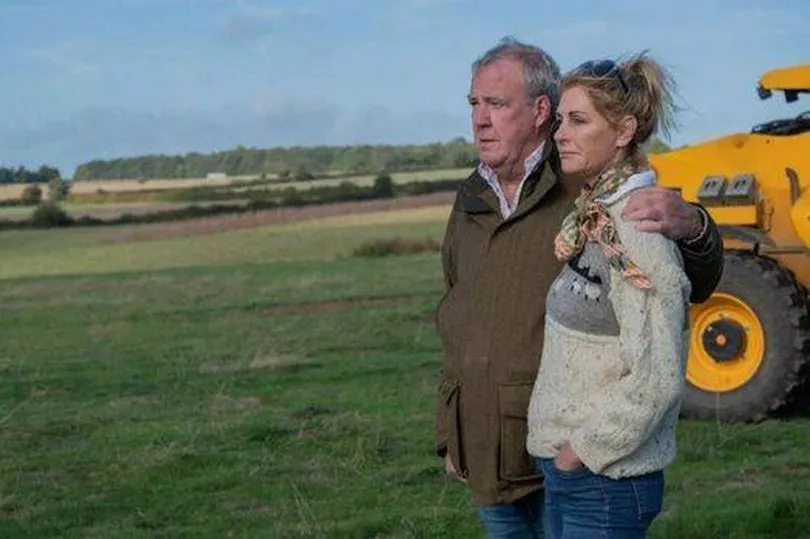
Jeremy Clarkson’s decision to swap supercars for sheep marked one of the most dramatic turns of his television career. Over the past year, the former Top Gear and The Grand Tour host has faced a steep learning curve after buying a 1,000-acre farm in the English countryside and attempting to run it himself—despite having no prior farming experience. What unfolded, as documented in Amazon Prime’s Clarkson’s Farm, was not just a battle with unpredictable weather, stubborn livestock, and red tape, but also a deeply personal test involving illness, fear, and resilience.
During the filming of the series, Clarkson contracted Covid-19 shortly before Christmas, at a time when uncertainty surrounding the virus was at its peak. Writing in his Sunday Times column, the presenter later described the experience as “quite scary,” a rare admission from a man better known for bravado than vulnerability. While his symptoms turned out to be relatively mild, the timing and circumstances amplified the anxiety for those around him.
Lisa Hogan, Clarkson’s partner and a central figure in the show, has since spoken candidly about the impact the health scare had on the farm and its crew. “Jeremy getting Covid was petrifying,” she said, reflecting on the period when little was known about how severely the illness might affect individuals. “But it was thankfully a very light dose. At the time, everyone thought that if you got it, you’d end up in hospital, so we were very aware of that.”
According to Hogan, strict precautions were taken throughout filming to minimise risk. Despite working in close quarters on the farm, no other crew members or farm workers fell ill. “We were all really careful,” she explained, emphasising how the production adapted to constantly evolving health guidance.
Those precautions, however, created unexpected complications during filming—particularly during hands-on farming tasks that usually require close contact and cooperation. One such moment involved beekeeping, a segment that quickly became memorable for reasons beyond honey production. Hogan recalled trying to help a cameraman whose protective suit had become covered in bees. As she moved closer to assist, panic broke out over social distancing rules. “‘Two metres, two metres!’ someone was yelling at me,” she said, describing how she backed away just before the cameraman was stung twice on the forehead.
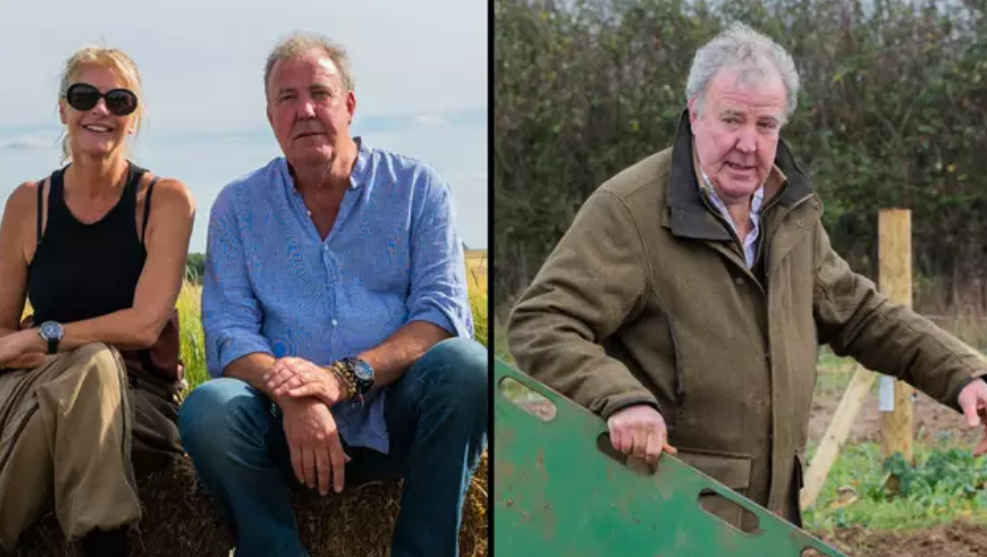
Clarkson himself was not spared from the hazards of farm life. Hogan revealed that he was stung “quite badly on his backside,” prompting her to joke darkly about the incident. “Who would you have to be to come back as a bee and get killed on Jeremy’s backside?” she quipped. “You’d have to be quite evil in life, wouldn’t you?” The remark captured the tone that has come to define Clarkson’s Farm—a mix of genuine difficulty, self-deprecating humour, and moments of absurdity.
Covid restrictions also reshaped how Clarkson learned basic farming skills, including lamb shearing. Hogan explained that under normal circumstances, teaching someone to shear would involve close guidance: holding the sheep, demonstrating techniques, and offering hands-on encouragement. That approach, however, was impossible during the pandemic.
“The handpiece is really sharp,” Hogan said, noting the risks involved. “Because he wasn’t very confident in handling them, I didn’t think it was safe for him to hold her and clip her himself.” Drawing on her own experience, she added that shearing injuries can be serious. “I’ve had a few cuts from shearing and they go quite deep, and you can cause quite a lot of damage to yourself.”
Instead, Clarkson was tasked with manoeuvring the sheep into the correct positions without using sharp tools. Even then, Hogan admitted, things could still go wrong. “He didn’t actually have a sharp implement in his hand in case something did go wrong,” she said. “But the sheep was in charge. It does happen.”
These moments, often played for laughs on screen, underline a broader reality: running a farm proved far more demanding than Clarkson anticipated. From navigating agricultural regulations to coping with illness and isolation, the experience challenged many of his long-held assumptions. While Clarkson has never shied away from complaining—about weather, bureaucracy, or sheep—the series also reveals a quieter evolution, showing a man gradually learning respect for a profession he once underestimated.
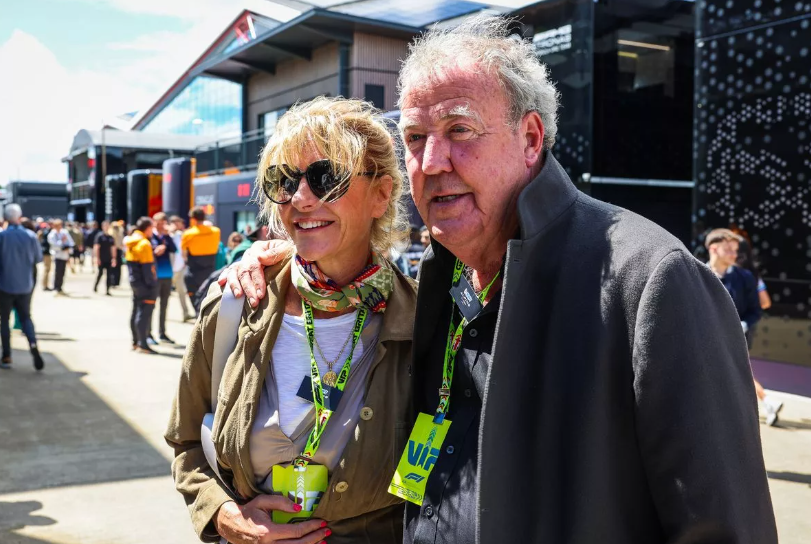
For Hogan, the year has been equally intense. Balancing concern for Clarkson’s health, the pressures of filming, and the unpredictable nature of farm work required constant adaptability. Her reflections offer a glimpse behind the scenes, revealing that the humour audiences see is often layered over genuine tension and responsibility.
As Clarkson’s Farm continues to resonate with viewers, its appeal lies not just in Clarkson’s personality, but in its honest portrayal of rural life under extraordinary circumstances. The Covid scare, the stings, and the improvised solutions all serve as reminders that the series is rooted in real challenges, not scripted mishaps.
In the end, Clarkson’s year on the farm became about more than learning to grow crops or shear sheep. It became a lesson in vulnerability, teamwork, and perseverance—qualities rarely associated with the outspoken presenter, yet unmistakably present when the cameras kept rolling and the stakes felt suddenly very real.