Dating the Wood and Stone Structures of Oak Island: Could the Timeline Be Older Than We Thought?
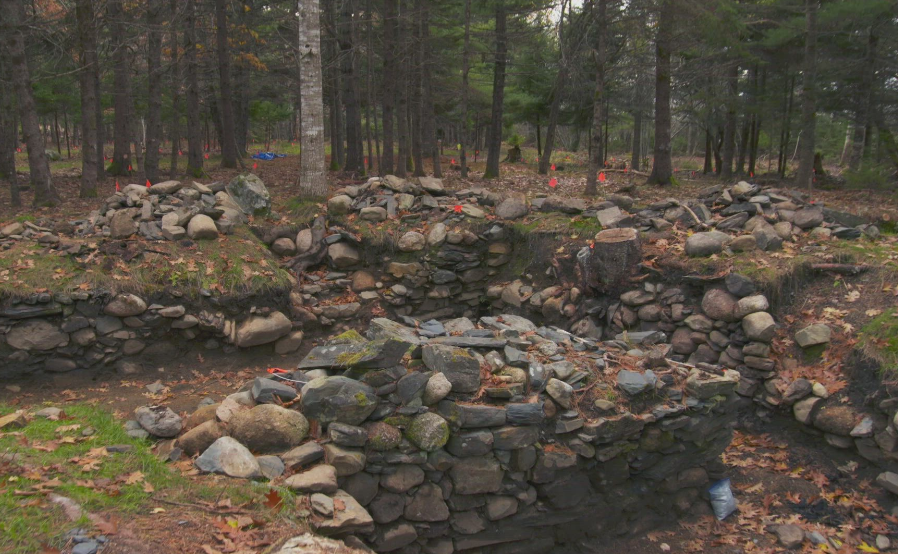
One of the most closely watched questions in The Curse of Oak Island Season 13 is not about where to dig next, but when key activity on the island truly began. As the investigation has shifted toward a system-wide understanding of Oak Island, the true age of its wooden and stone structures has become central to the story. For many viewers, carbon dating results are no longer a technical footnote—they are potentially the most decisive evidence in determining whether Oak Island predates the commonly accepted 18th-century narrative.
Why Carbon Dating Matters More Than Ever
Throughout the series, fragments of worked wood—stakes, timbers, and cut logs—have repeatedly surfaced in unexpected places: the swamp, Solution Channel, Lot 5, and other low-lying areas. Each time, the same question follows: are these remnants of early colonial industry, or traces of something far older?
Carbon dating offers one of the few objective tools capable of answering that question. Unlike theories based on geometry, symbolism, or alignment, radiocarbon analysis provides a measurable time range. That is why fans pay such close attention whenever the team discusses sending samples for testing. A single date result can reshape decades of assumptions.
Pushing Activity Earlier Than the 18th Century
Traditionally, many explanations for Oak Island have centered on activity from the late 1700s, often tied to early settlers, military engineering, or post-European colonial efforts. However, several wood samples recovered in past seasons have already challenged that framework, producing dates that fall well before the era of documented settlement on the island.
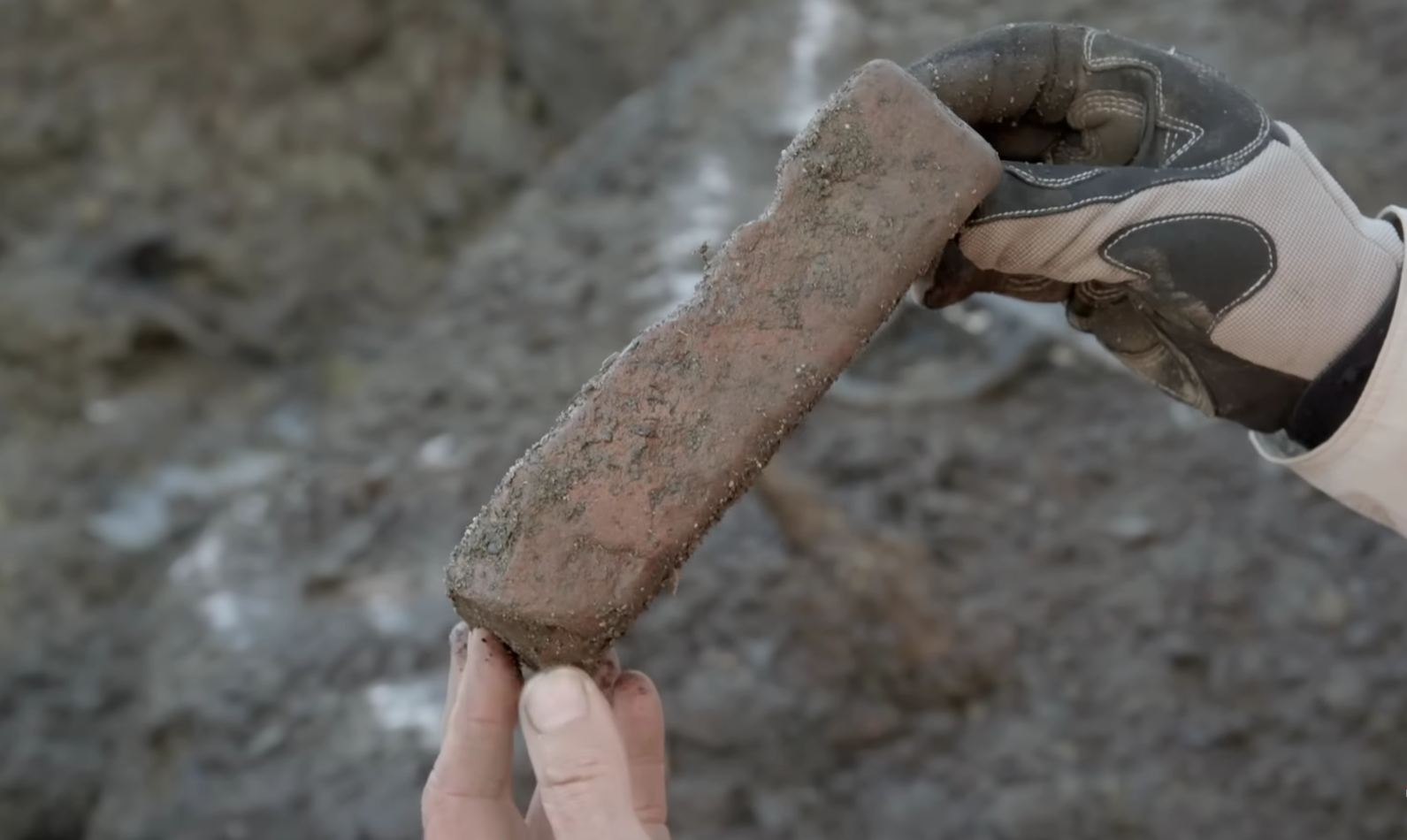
Season 13 continues to raise the stakes. Newly recovered wooden elements—some showing clear tool marks—appear in contexts that suggest intentional placement rather than natural deposition. If these samples are confirmed to predate the 1700s, it would imply that complex human activity occurred on Oak Island far earlier than historical records indicate.
For viewers, this possibility is compelling not because it proves a specific theory, but because it widens the historical window. An earlier timeline allows for multiple explanations that were previously dismissed as too early or implausible.
Wood and Stone as Part of a Single System
What makes recent discoveries especially significant is their association with stone features. Wood and stone appearing together—particularly in structured arrangements—suggest coordination. In engineering terms, that implies planning rather than improvisation.
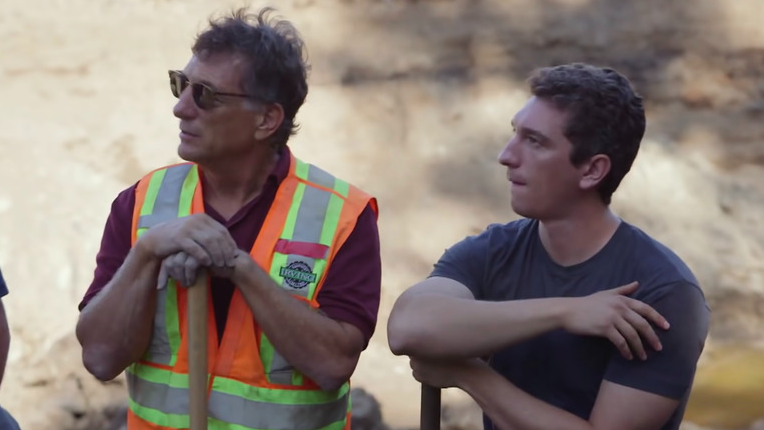
Geoscientist Dr. Ian Spooner and the team have frequently noted that some stone alignments and paved areas show signs of deliberate construction. When wooden elements are found embedded within or adjacent to these stone features, they become potential anchors for dating the entire structure.
If carbon-dated wood aligns chronologically with the stonework around it, the argument strengthens that Oak Island was shaped intentionally, not accidentally, during a defined period of sustained activity.
The European Presence Question
Perhaps the most debated implication of early dating results is what they say about European presence. If wood samples consistently date to periods before widespread British or French settlement in Nova Scotia, historians must confront uncomfortable questions.
Who was here?
Why were they here?
And why does no clear documentation exist?
Some researchers point to early European fishing operations, naval expeditions, or undocumented commercial activity. Others argue that the level of engineering implied by drainage systems, roadways, and large-scale stone placement suggests something more organized and long-term.
The show itself remains cautious, and so do most analysts. Carbon dating does not identify people—it identifies time. But time alone can be disruptive. If activity is confirmed centuries earlier than expected, it forces a reassessment of what kinds of European movement and capability existed in the North Atlantic during that period.
Rick and Marty Lagina’s Measured Approach
One of the defining traits of Season 13 has been the careful way Rick Lagina and Marty Lagina handle these implications. Rather than presenting dates as conclusions, they frame them as data points within a larger puzzle.
This restraint matters. Carbon dating often produces ranges, not exact years, and contamination or reuse of materials must always be considered. A timber cut in one century may be reused in another. That complexity is part of why fans remain engaged—each result opens discussion rather than closing it.
Why Fans See Dating Results as a Turning Point
Among the Oak Island community, carbon dating has become a benchmark of credibility. Viewers may debate theories endlessly, but laboratory results carry a different weight. When dates consistently point earlier, they build momentum.
More importantly, dating results connect separate storylines. Swamp manipulation, the Solution Channel, stone features, and Lot 5 discoveries all begin to align chronologically. That alignment suggests not random activity, but coordinated effort over time.
For many fans, this is where Oak Island transitions from a treasure hunt into a historical investigation with broader implications.
What Comes Next
As Season 13 progresses, additional samples are expected to undergo analysis. Each new result has the potential to refine—or challenge—the emerging timeline. The key question is no longer whether Oak Island activity occurred, but how early and how extensive it truly was.
If the dates continue to trend earlier, the conversation will shift decisively. The island may be viewed less as an isolated curiosity and more as evidence of overlooked chapters in North Atlantic history.
Conclusion: Time as the Most Valuable Clue
In the search for answers on Oak Island, gold has never been the most valuable resource. Time is. The true age of the island’s wooden and stone structures may ultimately determine how the mystery is understood—not as legend, but as lived history.
Carbon dating does not deliver certainty overnight. But with each sample tested, the past becomes clearer, and the story of Oak Island grows deeper, older, and far more complex than once believed.