BREAKTHROUGH: Scientific Data Points to “Concentrated Gold” as Team Pierces 200-Foot Barrier
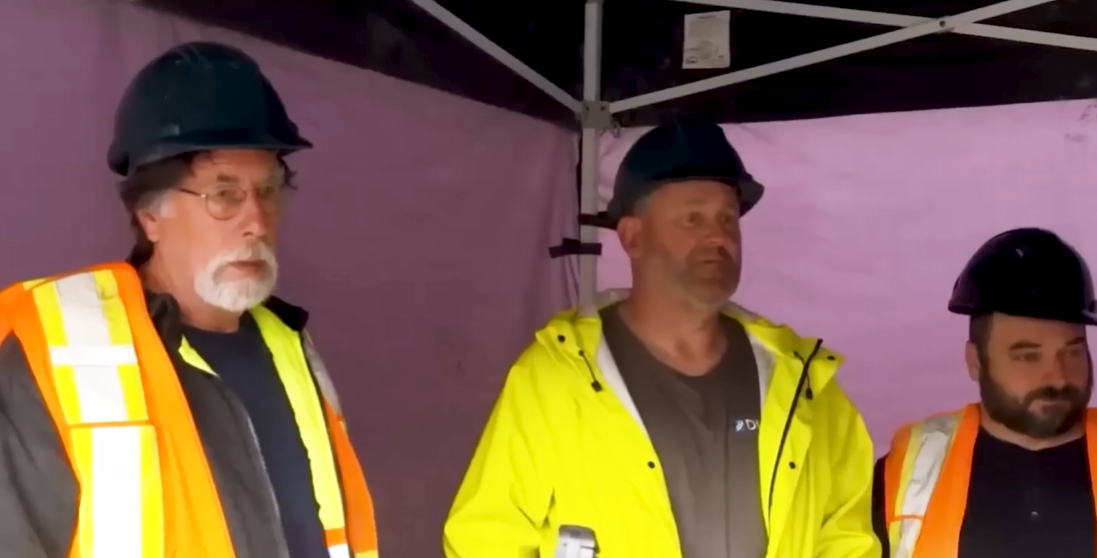
The 229-year-old mystery of Oak Island reached a fever pitch this week as Season 13, Episode 16 revealed what lead researchers are calling a “genuine breakthrough.” For the first time in the history of the modern search, the fellowship has moved beyond scattered traces, identifying concentrated gold deposits and high-level silver anomalies that align perfectly with legendary “treasure” pathways.
The Midas Touch in the Garden Shaft
The most electrifying development occurred deep within the Garden Shaft. Core samples extracted from the area revealed concentrated gold deposits at depths previously associated only with folklore. Unlike the microscopic “specs” found in prior seasons, these deposits appear in focused clusters.
Crucially, the gold was found alongside wooden fragments showing undeniable signs of human workmanship. “This wasn’t a natural mineral vein,” noted one site analyst. “The positioning suggests these items were intentionally placed or shifted into these channels during a historical structural collapse.”
The “Lot 8 Plug” and the Medieval Connection
While the heavy drills battered the Money Pit, a quieter but equally significant discovery unfolded on Lot 8. Archaeologists uncovered a massive boulder resting atop smaller, evenly spaced stones—a configuration suggesting a deliberate “plug” designed to conceal a void.

Using a snake camera, the team peered into the darkness beneath the monolith, spotting what appeared to be an iron spike and a shimmering, spherical object resembling a pearl. However, the most provocative find was a tiny fragment of red-dyed wool fabric.
Laboratory analysis confirmed the textile was hand-knit using a “weft” technique and colored with natural madder root pigment rather than synthetic dyes. This identifies the wool as potentially medieval, specifically linked to the 13th-century textile hubs of England. This find dovetails with a sheep-emblem trade seal found nearby, suggesting European trade networks may have reached Nova Scotia centuries before the official historical record.
Science Overcomes the “Sinking” Signal
In the “War Room,” Dr. Ian Spooner and Emma Culligan presented X-ray fluorescence (XRF) data that has redefined the season’s strategy. Soil samples from boreholes I 9.5 and K 9.5 showed unusually high concentrations of elemental silver.
“The silver is bound to clay particles rather than dissolved in the groundwater,” Dr. Spooner explained. “This is the smoking gun for an unnatural, human-made source nearby.”
The team is now focusing its heavy drilling equipment on the “solution channel”—an underground cavern system 200 feet below the surface. Geologists believe centuries of flooding and searcher cave-ins have acted as a funnel, washing the original Money Pit treasures deep into these natural limestone voids.
A Unified Island Design?
The episode concluded with a startling realization in the swamp. Excavations revealed a straight cobblestone pathway embedded with man-made bricks. The road doesn’t wander; it follows a precise curve that points directly toward the Lot 8 boulder and the Money Pit.
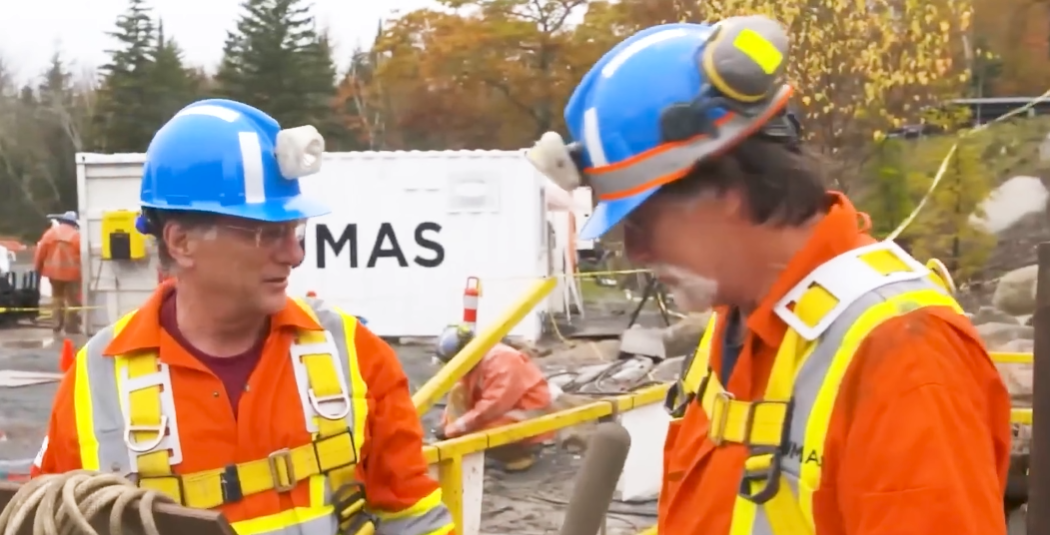
“We are no longer looking at isolated anomalies,” Rick Lagina remarked. “The swamp, the boulder, and the pit are components of a single, island-wide engineering design.” This suggests a level of coordination far beyond the capability of colonial settlers or passing pirates, pointing instead to a massive, organized historical effort.
As the team prepares to deploy heavy recovery equipment into the solution channel, the atmosphere on the island has shifted from “if” to “where.” Oak Island is finally surrendering its secrets—not in a sudden chest of doubloons, but in a mounting body of scientific evidence that is rewriting North American history.