Jeremy Clarkson was heartbroken when his puppy passed away just hours after he announced his farm was being placed under lockdown.
From the perspective of a long-time analyst of Clarkson’s Farm, the past week at Diddly Squat Farm represents one of the most testing periods Jeremy Clarkson has faced since taking on agriculture full-time. What unfolded was not a single setback, but a convergence of events that exposed the fragile balance between farming ambition, emotional resilience, and forces entirely beyond human control.
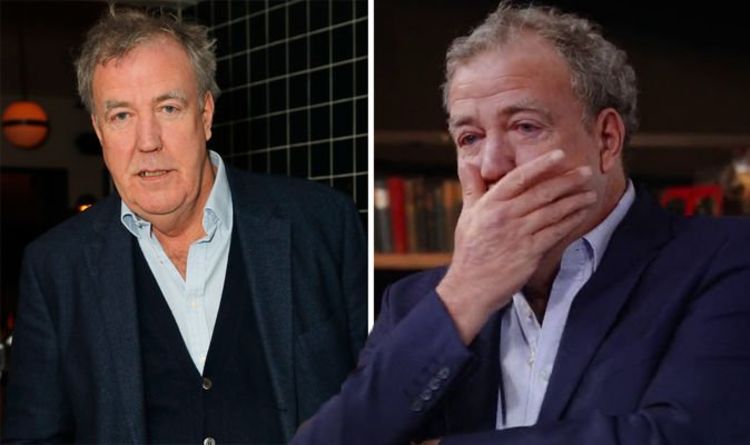
At the center of it all is Jeremy Clarkson himself, who spoke candidly on radio about the shock of a failed Bovine TB test, the immediate lockdown that followed, and the emotional strain that accompanied it. For viewers familiar with the tone of the show—often humorous, occasionally chaotic—this moment felt markedly different. It was raw, unfiltered, and revealing.
Why This TB Outbreak Hits Harder Than Before
Bovine TB is not new to British farming, and Clarkson’s Farm has previously touched on its looming presence. However, this time the impact is direct and immediate. A failed test does not simply raise concern; it triggers a mandatory lockdown that effectively freezes cattle operations for weeks. Clarkson confirmed that Diddly Squat will be shut down for at least two months while authorities wait for the next testing window.
From an analytical standpoint, this is significant. Cattle are not just livestock; they represent long-term investment, planning, and continuity. A two-month shutdown disrupts breeding cycles, cash flow, and workload distribution. Even if the farm shop remains operational, the psychological blow of losing control over core farming activities cannot be understated.
Clarkson’s admission that he had grown “blasé” about testing highlights a reality many farmers face. Repeated procedures can dull the sense of risk—until the risk materialises. When it does, the emotional impact is often sharper precisely because it was no longer expected.
Emotional Strain Beyond the Balance Sheet
What sets this week apart is that the TB diagnosis did not happen in isolation. Clarkson also revealed that one of the farm’s puppies was found unresponsive, while a young calf was described as being in a worrying condition. These events compound stress in a way numbers never can.
Farming, as Clarkson’s Farm has consistently shown, is not purely operational. It is deeply personal. Animals are not abstract assets; they are part of daily life. Losing one, especially during an already tense period, magnifies the sense of helplessness that farmers often experience during outbreaks and lockdowns.
This emotional layer is reinforced by Lisa Hogan, who shared a quiet but deeply affecting moment on social media, comforting the puppy’s mother. For fans, this kind of glimpse cuts through the spectacle and reminds them that behind the show is a household dealing with real consequences.
How This Could Shape the Next Phase of the Show
Looking ahead, these developments are likely to influence the direction of Clarkson’s Farm in several ways.
First, expect an increased focus on biosecurity, regulation, and the emotional toll of compliance. Previous seasons have highlighted Clarkson’s frustration with bureaucracy, often played for humour. This situation may shift the tone toward something more reflective, even sobering. When rules suddenly dictate daily life, they stop being abstract annoyances and become dominant forces.
Second, the enforced pause in cattle operations may push Clarkson—and the production—to spotlight alternative farm activities. Crops, land management, and diversification projects could take center stage, not by choice but by necessity. Historically, some of the show’s most compelling moments have come when plans were derailed and improvisation became essential.
Third, the personal strain shown this week could deepen Clarkson’s on-screen evolution. One of the quiet arcs of the series has been his gradual movement from ironic detachment to genuine emotional investment. Moments like this accelerate that transformation. Viewers may see a Clarkson who is more cautious, more reflective, and perhaps less willing to treat risk as entertainment.
What Fans Should Watch For
From a viewer’s perspective, several key questions now loom:
-
How will the farm cope operationally during the two-month shutdown?
-
Will the TB outbreak lead to longer-term changes in herd management?
-
How does sustained emotional pressure affect Clarkson’s decision-making style?
-
And crucially, does this period change how he views the future of farming at Diddly Squat?
The show has always thrived on unpredictability, but this moment underscores a deeper truth: some challenges cannot be solved with money, humour, or stubbornness. They must simply be endured.
A Defining Stretch, Not a Defeat
While Clarkson openly admitted he is “not enjoying farming this week,” that statement carries more honesty than despair. From an analytical standpoint, this is not a sign of withdrawal but of realism. Farming, as the series has repeatedly shown, includes weeks—sometimes months—where progress halts and morale dips.
If anything, this period may strengthen the narrative foundation of Clarkson’s Farm. It reinforces why the show resonates beyond entertainment: it captures the vulnerability behind rural life, where outcomes are dictated as much by biology and regulation as by effort.
As the lockdown unfolds, viewers should expect fewer laughs and more reflection—but also a clearer understanding of why farming, even at its most rewarding, can be emotionally relentless. And in that honesty, Clarkson’s Farm may find some of its most powerful storytelling yet.