Jeremy Clarkson confides that farming is “harder than I thought.”
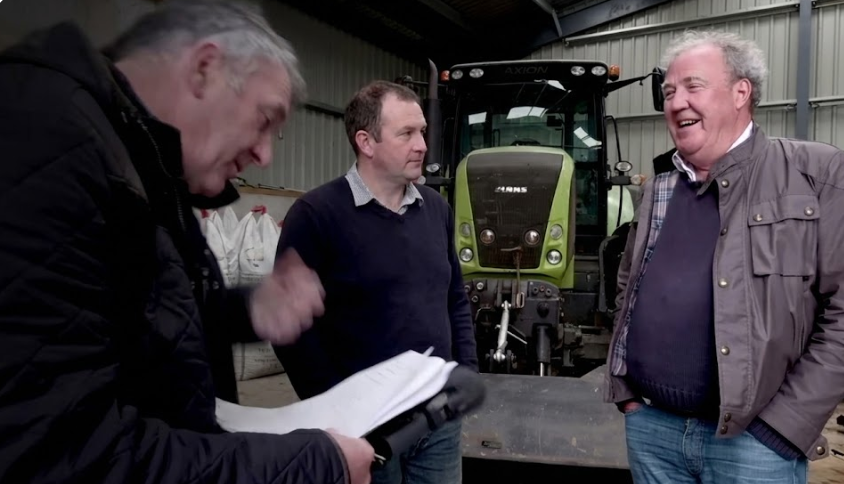
When Jeremy Clarkson first announced he was taking over the running of his Oxfordshire farm, he did so with a familiar mix of confidence and irony. Farming, he reasoned, could not be that difficult. Humans had been doing it for 12,000 years. Seeds went into the ground, food came out, and in between there was time to go skiing. What followed, as viewers of Clarkson’s Farm now know, was a slow, often painful, and unexpectedly revealing education in how modern British farming really works.
Clarkson readily admits he is not a farmer. Even after several years, he avoids using the term to describe himself. What he has become instead is something closer to a student—one learning in public, through mistakes, frustration, and occasional flashes of insight. When the previous tenant farmer retired, Clarkson chose not to hand the land to another contractor. Instead, he decided to run it himself, convinced that a straightforward operation—wheat, barley, oilseed rape across roughly a thousand acres—would be manageable. It was a decision based more on assumption than understanding, and that gap between the two would become the heart of the programme.
Crucial to the show’s credibility was Clarkson’s decision to surround himself with people who genuinely knew what they were doing. Figures like Kaleb Cooper and Charlie Ireland were not included merely as on-screen foils, but as anchors of expertise. Clarkson has been open about why this mattered. Farming, unlike cars, was not his world. On Top Gear and The Grand Tour, he and his co-hosts could afford to joke because they understood the subject deeply. On a farm, ignorance would be exposed instantly. By placing real farmers at the centre, the programme allowed experienced viewers to trust what they were seeing, even as Clarkson himself fumbled through the process.
That fumbling was not cosmetic. It was structural. Clarkson’s early purchasing decisions, particularly his choice of a vast, high-powered tractor, became a symbol of his misunderstanding. Seduced by the look of a Lamborghini-branded machine and its surprisingly competitive price, he bought equipment that was dramatically overpowered for much of the smaller machinery on his farm. Implements broke. Gateposts fell. Tasks that should have been simple became exercises in frustration. Even now, Clarkson admits he watches Kaleb attach equipment and still lacks the confidence to do it himself without help.
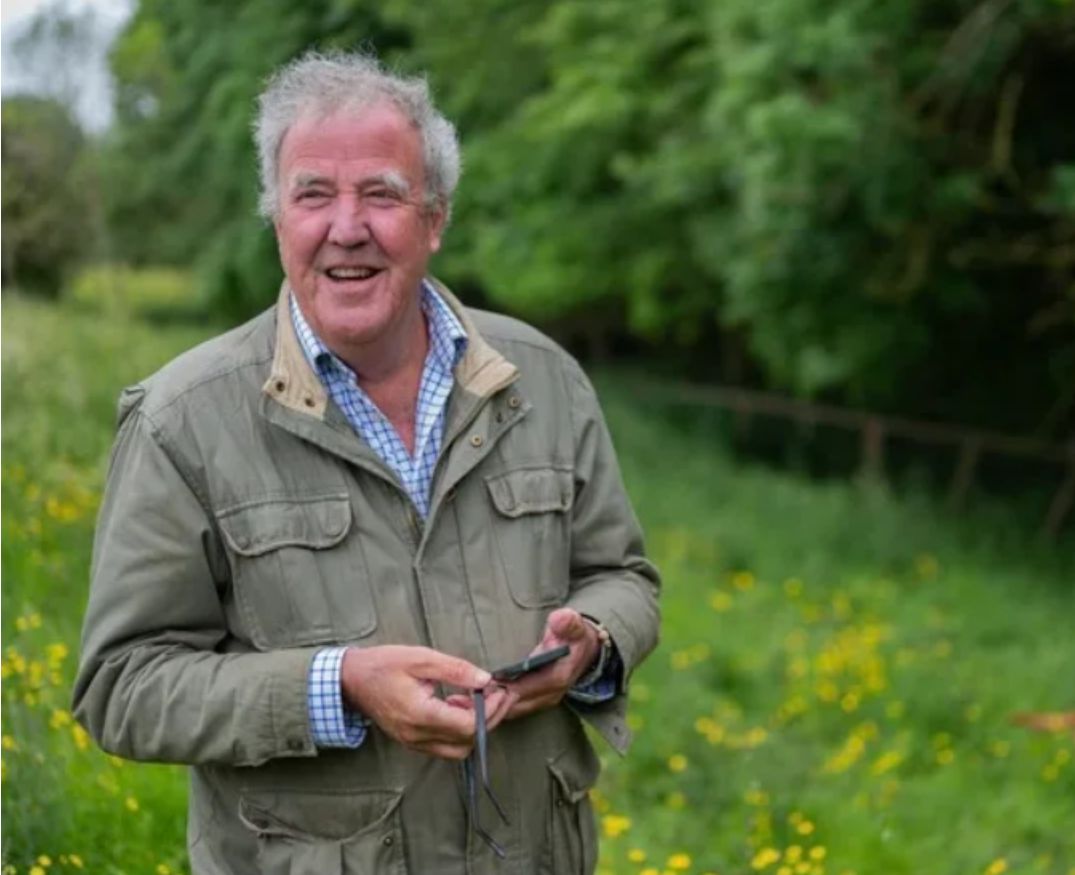
Yet the programme’s strength lies in how these missteps illuminate broader truths. Clarkson’s irritation with regulation, for example, is not simply performative rebellion. It reflects a genuine clash between policy and practice. He describes the recurring image of government officials arriving in modest cars to halt work that, from his perspective, makes no practical sense to stop. Rules designed in offices often fail to account for conditions on the ground, and Clarkson’s instinct to question—or openly defy—them echoes frustrations long voiced by working farmers.
Equally revealing is his evolving relationship with livestock. Clarkson is blunt about the emotional difficulty of sending animals to slaughter, rejecting the idea that farmers take pleasure in it. For him, the experience was unsettling and personal, underscoring the ethical weight that sits behind food production. It also exposed a wider public disconnect. Many consumers, Clarkson argues, have little understanding of where food comes from, how it is produced, or why it costs what it does.
That disconnect extends to economics. One of Clarkson’s most persistent questions is why locally produced lamb can cost more than imported meat from the other side of the world, or how supermarkets can sell flour more cheaply than he can mill and package it himself. These are not rhetorical flourishes but genuine puzzles. Despite grants, subsidies, and scale, the financial logic of farming often appears upside down. Clarkson’s temporary safety net—earning money from television work when the farm loses cash—is a luxury most farmers do not have, and he is keenly aware of that imbalance.
Over time, however, a form of clarity emerges. Clarkson begins to see farming as a closed loop rather than a series of isolated tasks. Grow the wheat, mill the flour, sell it in the farm shop. Produce barley, find a value-added use for it. The concept of circularity starts to make sense, not as an abstract environmental slogan but as a practical necessity. Profit, sustainability, and survival are intertwined, even if none of them are guaranteed.
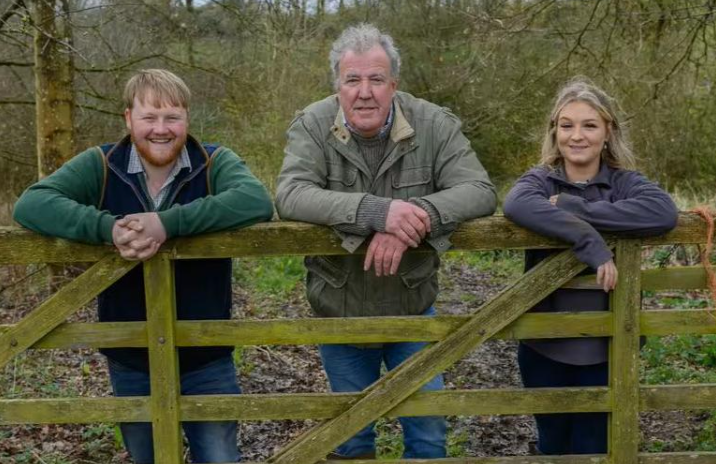
Perhaps the most striking element of Clarkson’s journey is his self-awareness. He openly admits he lacks many of the qualities traditionally associated with good farmers: patience, mechanical sympathy, business discipline. He lists the roles a farmer must play—vet, agronomist, mechanic, economist, forecaster—and concedes he is ill-suited to almost all of them. And yet, he persists.
That persistence is what gives Clarkson’s Farm its unexpected power. Beneath the humour and chaos lies a serious examination of British agriculture at a moment of profound change. Clarkson may never truly become a farmer in his own eyes, but by trying—and by failing publicly—he has given millions of viewers a clearer, more honest view of a profession that is too often misunderstood.