Is Season Five the Final Harvest? What Clarkson’s Farm’s Uncertain Future Means for British Agriculture
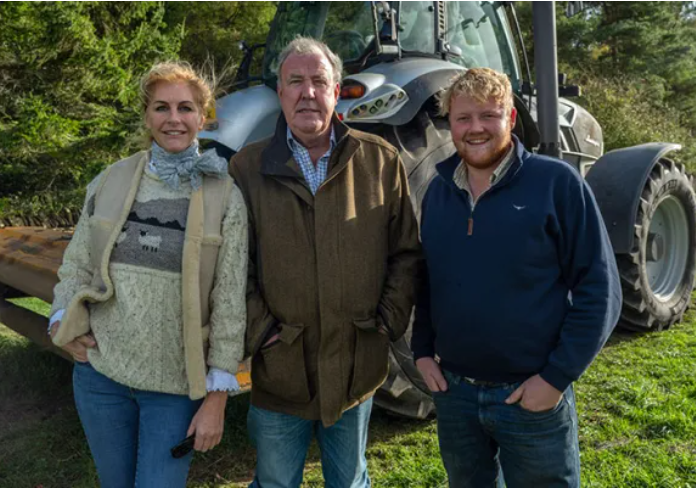
For more than four years, Clarkson’s Farm has done something few agricultural campaigns, policy briefings or industry reports have managed: it has brought the realities of British farming into living rooms across the UK and far beyond. Now, with Jeremy Clarkson suggesting that the Prime Video series may conclude after its fifth season, farmers are reflecting on what the programme has meant — and what its absence could leave behind.
Since its debut in 2021, the series has chronicled Clarkson’s attempts to run Diddly Squat Farm in Oxfordshire, alongside partner Lisa Hogan, farm manager Kaleb Cooper and land agent Charlie Ireland. What began as a fish-out-of-water experiment has evolved into a surprisingly influential platform for discussing everything from crop failures and livestock disease to planning regulations and supermarket pricing pressures.
For many within the agricultural community, the show has served as an unexpected bridge between farmers and consumers.
Cheshire dairy farmer Kelly Seaton believes the programme’s impact has extended far beyond entertainment. If the series does not continue beyond its upcoming fifth season, she says, it will mark “a sad day for the industry.”
“The show has given the industry allies across not just the UK but the world,” she explains. “People have fallen in love with the entertainment of the show whilst learning so much about how food is produced and how much farmers truly care about the work we do.”
That connection, she argues, has been particularly significant among younger audiences — a demographic often seen as disconnected from agriculture.
“Including the younger generation who have been inspired to enter the industry,” she adds. “That gives us real hope for the survivability of UK food production.”
A Cultural Shift in How Farming Is Viewed
For decades, British farming has struggled with what many producers describe as a public relations challenge. While food remains central to daily life, the process behind it is often distant from urban consumers.
Greater Manchester pig and arable farmer Lewis Clare says the public interest was always present, but the format was missing.
“I think farming was covered dreadfully on TV before,” he says. “There was a gap in the market for a farming show before Clarkson’s Farm came along.”
Clare suggests the series succeeded not because it attempted to be an instructional programme, but because it allowed viewers to witness the unpredictability, risk and bureaucracy involved in modern agriculture.
“I do think it has been a big positive for the industry in communicating the challenges to the public,” he says. “But how long-lasting that legacy will be is hard to call.”
Unlike traditional farming documentaries, Clarkson’s Farm combined humour with hard economic realities. Episodes frequently highlighted slim profit margins, weather dependency, supply chain pressures and the complexity of environmental regulation. The result was a portrayal of agriculture that felt both relatable and unscripted.
Industry observers note that the programme arrived at a time when debates around food security, sustainability and rural economics were intensifying. The COVID-19 pandemic exposed vulnerabilities in global supply chains, and geopolitical tensions have reinforced discussions about domestic production capacity.
Within that context, the show arguably amplified public understanding of farming as not just a lifestyle, but a strategic national concern.
Uncertain Future After Season Five
In a recent column in The Sunday Times, Clarkson indicated that the production team would take a break after filming the fifth season. He suggested it would “probably” be the last, unless he found a compelling reason to continue.
The prospect of a pause — or an end — has prompted concern among farmers who see the series as a rare mainstream platform advocating for rural issues.
“I am sure this will not be the last we see of Clarkson, Lisa, Kaleb and Cheerful Charlie advocating for the farming sector,” Seaton says. “They’ve done what no one else has managed to do: linking the farmer and the consumer in a way that only Clarkson can.”
Indeed, Clarkson’s celebrity status has played a significant role in the show’s reach. Known globally for his automotive broadcasting career, he brought an audience that might not otherwise have tuned into agricultural programming.
Yet it is precisely that crossover appeal that many farmers value. Viewers who may never have visited a working farm have gained insight into crop rotations, livestock care, subsidy systems and the unpredictable economics of harvest seasons.
Beyond Entertainment
While some critics initially dismissed the series as a celebrity side project, its cultural footprint has proved substantial. Social media engagement, merchandise sales, tourism to Diddly Squat Farm and increased interest in farming apprenticeships have all been cited as indicators of influence.
There is also a political dimension. Episodes exploring planning disputes, disease restrictions and inheritance tax policies have intersected with broader national debates about rural livelihoods.
For some in the industry, the show’s potential conclusion raises questions about whether another platform will emerge to sustain that level of public engagement.
Clare believes it could serve as a catalyst.
“It may be a catalyst for other, new shows,” he suggests. “There is clearly appetite for it.”
Whether broadcasters will replicate the formula remains to be seen. What is clear is that Clarkson’s Farm has reshaped how farming is portrayed on mainstream television.
If season five does mark a natural pause, many within agriculture say the impact will endure — at least in the short term. As Seaton puts it: “On behalf of all farmers, thank you Jeremy. What you have done has been amazing for the industry.”
For now, fans await confirmation of the series’ long-term future. For Britain’s farmers, however, the conversation it sparked about food, land and livelihoods may prove its most lasting harvest.