Parker’s Team Unearths Something Unexpected — Could It Change Their Entire Season?
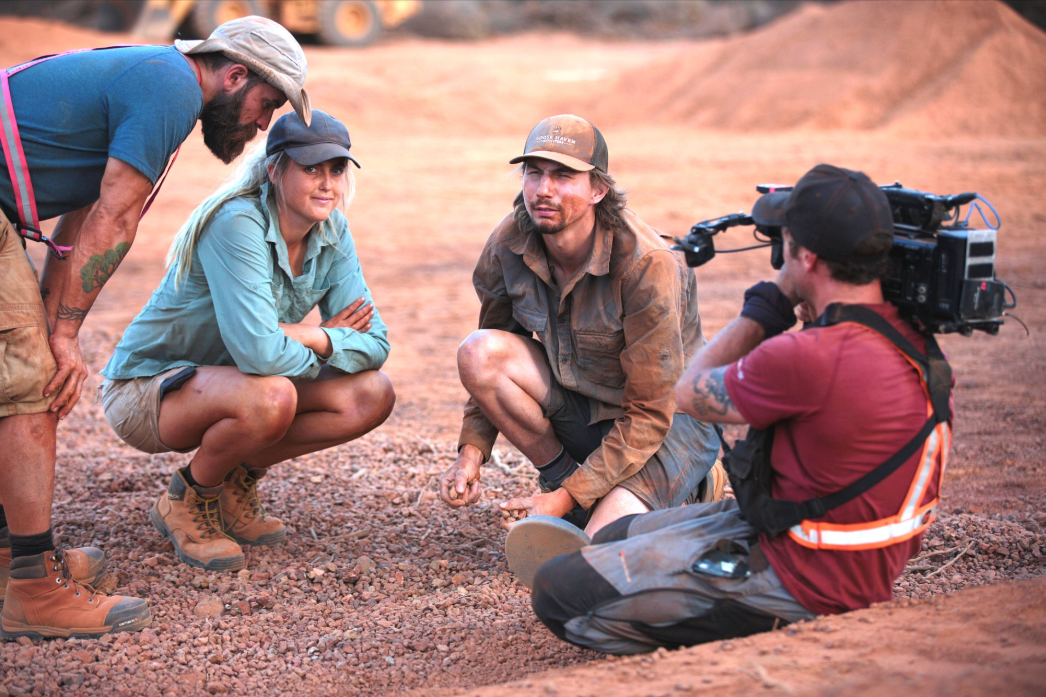
In a season when rising fuel costs, hostile weather, and relentless mechanical failures squeezed even the most established operators, expectations around Parker Schnabel were notably restrained. Yet away from the cameras of Gold Rush, the 30-year-old miner appears to have delivered one of the most consequential results of his career—one that may reshape how modern miners evaluate abandoned ground and extreme environments.
According to accounts from his recent off-camera operations, Schnabel extracted an estimated $75 million in gold from a Yukon claim long dismissed by competitors, before following it with a second, even larger discovery in Alaska. For industry observers, the scale of the finds matters less than what they reveal about a shifting philosophy in frontier mining.
Reassessing a “Written-Off” Yukon Claim
The Yukon ground at the centre of Schnabel’s first success had carried a bleak reputation for decades. Collapsed tunnels, incomplete workings, and the unresolved exit of a previous operator had turned the site into something many miners preferred to avoid. In local mining lore, it was simply regarded as ground best left untouched.
Schnabel approached it differently. Rather than focusing on surface failures, he revisited historic records—journals from early stampeders, production notes from failed attempts, and hand-drawn maps that pre-dated modern survey methods. Combined with satellite imaging and updated geological modelling, a different picture emerged. Earlier miners, he concluded, had reached the gold but lacked the tools to safely access deeper, unstable structures.
Working largely alone over a four-day push, Schnabel treated the site less as a traditional mine and more as a controlled investigation. He reinforced weakened passages, rerouted frozen sluice systems, and applied modern safety practices to tunnels originally cut with 19th-century methods. Within days, concentrates began flowing at rates well above initial expectations.
The Underground Lake That Changed Everything
The defining moment came when a section of ground gave way, exposing a sealed underground water chamber. Beneath the ice-cold surface lay dense gold concentrations, untouched since early attempts were abandoned. Nuggets and high-grade material lined the lake bed, compressed by geological forces that modern models rarely account for.
Faced with extreme conditions, Schnabel adapted. Improvised floating platforms allowed controlled access to the chamber, while samples recovered from the lake floor revealed not only gold, but remnants of earlier efforts—coins, corroded tools, and fragments of handwritten notes. Geological analysis later suggested that seismic activity had concentrated the deposit far beyond typical expectations.
By the end of the operation, the combined output from the chamber, adjacent tunnels, and surrounding veins was estimated at $75 million. In mining terms, it was not simply a strong result, but a re-evaluation of what abandoned claims might still contain when examined through a modern lens.
Glacier Canyon: Pushing the Boundary Further
Rather than consolidating his Yukon gains, Schnabel turned next to Glacier Canyon in Alaska, a site flagged through unusual satellite anomalies and ground-penetrating radar. Beneath nearly 200 feet of ice, metallic signatures hinted at something rare.
Conditions were unforgiving. Temperatures plunged well below seasonal norms, while ice movement and avalanche risk threatened equipment and access routes. Using drones, thermal imaging, and deep-core drilling, the team identified what they later described as a vast, metal-rich chamber embedded in glacial rock.
Drill cores returned thick with gold, alongside platinum and copper. Within the canyon, headlamps revealed walls veined with metal, preserved under immense pressure for centuries. Because of logistical challenges, Schnabel’s crew established a temporary underground processing site, refining material on location before airlifting secured ingots out of the region.
The estimated value of the Glacier Canyon operation reached $95 million, placing it among the most significant cold-region discoveries of recent decades. Specialists note that deposits formed under prolonged glacial pressure are exceptionally rare, often producing unusually pure and concentrated ore bodies.
A Shift in Modern Mining Thinking
For analysts, Schnabel’s twin successes are less about headline figures and more about method. His integration of historical research, satellite analysis, underground engineering, and real-time adaptation marks a departure from traditional surface-driven exploration.
“Frontier mining has entered a new phase,” noted one industry observer. “These operations show that overlooked ground, when revisited with modern tools and patience, can still deliver transformative results.”
Schnabel himself has framed the achievements as a lesson in precision rather than scale. The focus, he suggests, is not digging deeper, but digging smarter—understanding why earlier attempts failed and addressing those limitations directly.
Beyond Television Narratives
Once known primarily as a young operator stepping into a demanding industry, Schnabel now occupies a different space. These recent operations position him less as a reality-television figure and more as a benchmark for 21st-century exploration in extreme environments.
Back in the Yukon, the claim once dismissed as unworkable now stands as a case study in how technology, historical context, and disciplined execution can rewrite long-held assumptions. And in Alaska, Glacier Canyon offers a glimpse of what remains possible in regions many consider exhausted.
The figures—$75 million here, $95 million there—are striking. But the deeper story lies in frozen ground, reinforced tunnels, and a methodical refusal to accept past failure as a final verdict. For Parker Schnabel, the frontier appears far from closed. If anything, these results suggest his most ambitious phase may still lie ahead.