An Unexpected Setback: What Tony Beets’ Mine Accident Could Mean for the Rest of the Season
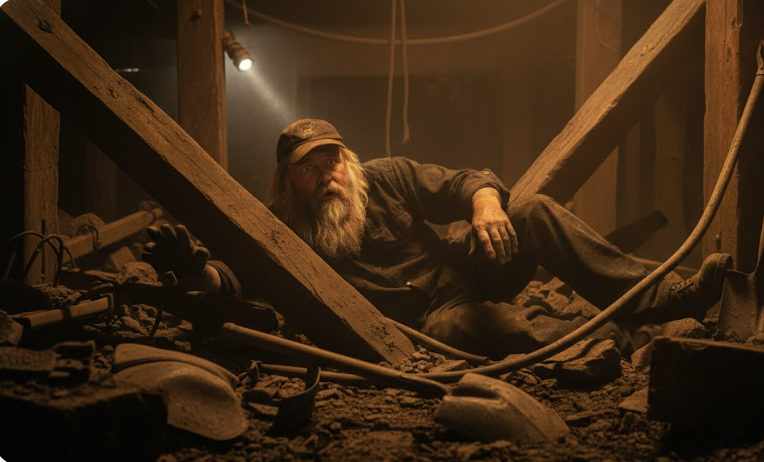
For a miner who has spent decades proving that experience and sheer persistence can overcome almost any obstacle, an unexpected accident at the mine is one of the few events capable of disrupting Tony Beets’ carefully structured season. According to sources close to the operation, the incident has forced the Klondike veteran to step away for the remainder of the mining year — a development that may quietly reshape not only his own results, but the balance of power across Gold Rush this season.
From an analytical standpoint, the significance of Tony’s absence goes well beyond personal health or lost screen time. Beets’ mining model is uniquely dependent on his presence. Unlike younger mine bosses who delegate most operational decisions, Tony remains deeply hands-on — particularly when it comes to heavy equipment coordination, dredge oversight, and rapid problem-solving under pressure. When he is not physically on site, decision-making inevitably slows, even with experienced family members stepping in.
Operational Impact: Why Timing Matters
The timing of the accident is critical. Mid-to-late season is when Tony’s operation typically makes up ground lost earlier due to setup delays, mechanical issues, or water constraints. His strategy relies on running at maximum efficiency once systems are tuned, often pushing equipment and crews harder than most rivals would attempt.
With Tony sidelined, the operation faces three immediate challenges. First, productivity may drop as risk tolerance decreases. Tony is known for green-lighting aggressive moves — extending cuts, rerouting water, or running equipment longer hours — decisions others may hesitate to approve. Second, mechanical response times could lengthen. Beets’ ability to diagnose and prioritize repairs from instinct and experience is difficult to replicate, even for seasoned operators. Third, morale can shift. While Tony’s leadership style is famously blunt, crews often perform at their peak when he is present, driven by his intensity and expectations.
The Family Factor: Who Steps Up?
One of the defining strengths of Tony Beets’ operation has always been its family structure. In his absence, responsibility is likely to fall more heavily on his children, particularly those already accustomed to supervisory roles. From a production standpoint, this could be a proving ground.
If the crew manages to maintain stable output without Tony, it strengthens the argument that the Beets operation is evolving from a founder-driven enterprise into a more sustainable, multi-leader system. Conversely, if gold totals flatten or setbacks multiply, it reinforces just how central Tony remains — even after all these years.
From a Gold Rush narrative perspective, this situation offers something rare: a genuine test of legacy. Viewers have long debated whether Tony’s empire could truly function without him at the helm. This season may provide the clearest answer yet.

Competitive Ripple Effects Across the Yukon
Tony Beets missing the remainder of the season also subtly alters the competitive landscape. Rivals like Parker Schnabel and Rick Ness do not mine in isolation; production targets, crew morale, and strategic risk-taking are often shaped by how others are performing.
Without Tony pushing extreme totals late in the season, the psychological pressure on other crews may ease slightly. That can translate into more conservative decision-making elsewhere — fewer last-minute expansions, less strain on crews, and a stronger focus on protecting what has already been mined rather than chasing record numbers.
Ironically, this could lead to a more efficient overall season for others, even if headline totals appear lower.
What the Numbers May Ultimately Show
From a purely statistical angle, Tony’s final gold total is likely to fall short of what his operation originally projected. Even a small drop in daily output compounds quickly when multiplied across weeks of peak season. However, analysts should be cautious about interpreting this as decline.
Historically, Tony Beets’ long-term success has been built not on single-season results, but on reinvestment, equipment ownership, and land control. Missing part of one season does not threaten that foundation. If anything, it may accelerate internal changes that make the operation more resilient in future years.

Looking Ahead: Short-Term Loss, Long-Term Insight
In the short term, Tony Beets’ absence is undeniably a setback. Gold left in the ground stays there until another season, and momentum is hard to regain once lost. Yet from a broader analytical view, this moment could become one of the most informative chapters of the season.
It reveals how dependent large-scale placer mining still is on individual leadership. It tests whether experience can be institutionalized or remains personal. And it raises a quiet but important question for Gold Rush fans: when legends eventually step back, what truly determines whether their empires endure?
Tony Beets has spent a lifetime proving that hard knowledge beats shortcuts. Even off-site, that legacy will continue to shape every decision his crew makes — and the outcome of this season may say more about his influence than any gold weigh-in ever could.