A Necklace Beneath the Stone: Why a 2,000-Year-Old Find Could Reframe the Oak Island Story
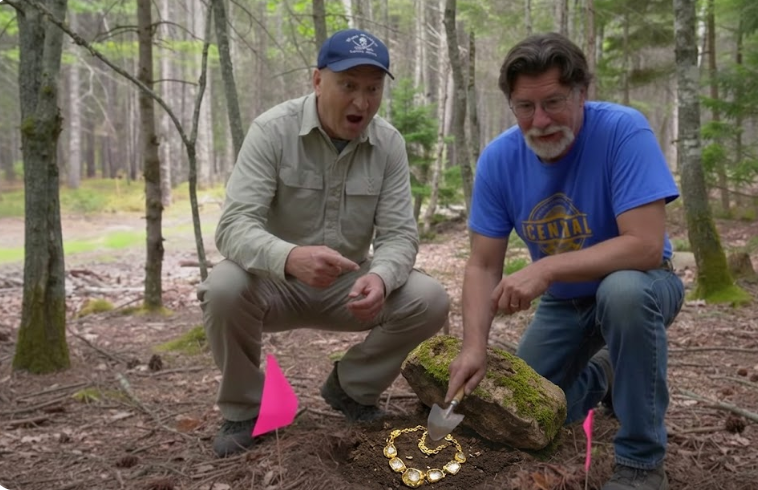
Few discoveries have the potential to quietly recalibrate the Oak Island narrative, but the reported unearthing of a pearl necklace beneath an ancient stone feature may do exactly that. If the preliminary dating—suggesting an age of up to 2,000 years—holds under scientific scrutiny, this find would not simply add another artifact to the catalogue. It would challenge some of the most basic assumptions about when, and by whom, Oak Island was first used.
For The Curse of Oak Island, chronology is everything. Over the past decade, the investigation has gradually pushed the island’s timeline further back through carbon-dated wood, European artifacts, and engineered stone features. A pearl necklace potentially predating medieval and early modern activity by centuries would introduce a far deeper layer—one that forces the team to reconsider whether Oak Island’s story began long before known transatlantic exploration.
From an analytical standpoint, the context of the discovery matters more than the object itself. Pearls are delicate, organic materials, unlikely to survive casually discarded. Finding such an item beneath a stone suggests intention: placement, concealment, or ritual. That immediately separates this from surface-level losses associated with later searchers. If the necklace was deliberately positioned under a heavy stone, it points toward a structured act rather than coincidence.
The first phase following such a discovery would almost certainly be verification. Specialists would be expected to conduct material analysis to determine whether the pearls are natural or cultured, identify their likely origin, and assess the binding materials used in the necklace. These details are critical. Natural pearls sourced from the Mediterranean, Persian Gulf, or Red Sea would imply trade networks reaching well beyond Atlantic Europe, while freshwater pearls might suggest a different cultural context altogether.
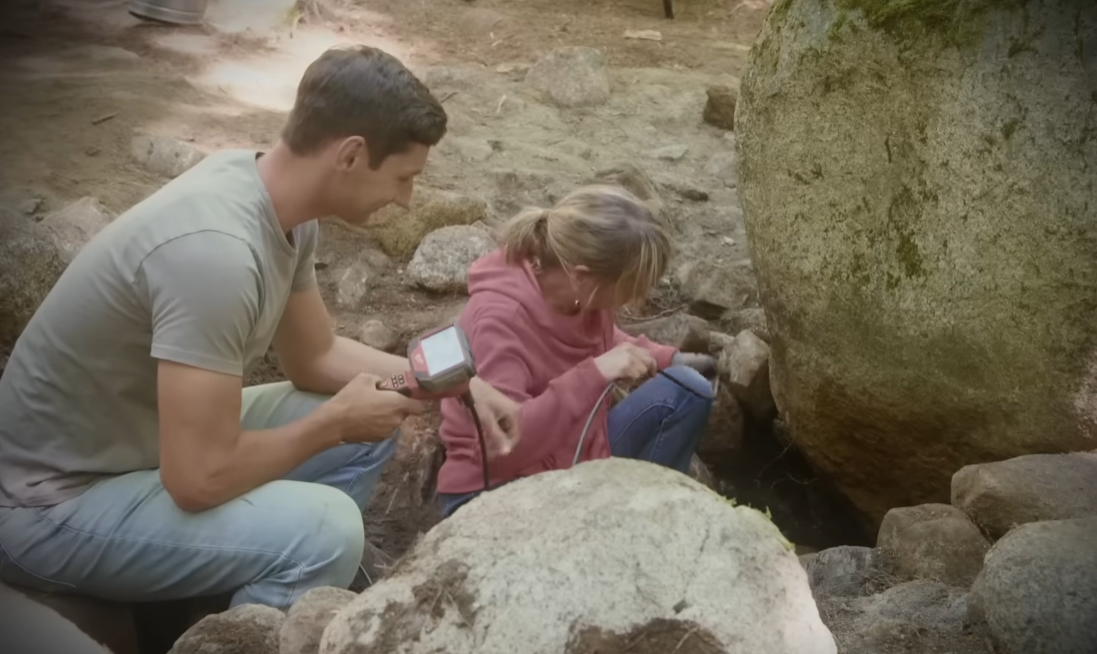
Dating would also require caution. Pearls themselves cannot be radiocarbon dated in isolation with high precision, so associated materials—string fibers, clasps, or nearby organic matter—would become essential. If the stone under which the necklace was found can be linked to other features already dated on the island, it may help anchor the object within a broader construction phase.
For Rick Lagina and Marty Lagina, this find would likely shift short-term priorities. Rather than pushing deeper immediately, the team may focus on understanding the stone feature itself. Was it part of a marker system, a platform, or a boundary? If similar stones exist nearby, careful comparison could reveal a pattern suggesting purposeful layout rather than random geology.
The cultural implications are equally significant. A 2,000-year-old necklace would place activity on Oak Island in a period typically associated with Roman-era trade and classical civilizations. While there is no mainstream historical consensus supporting direct Roman presence in Atlantic Canada, evidence of pre-medieval transoceanic contact—however limited—has been debated for decades. The necklace would not prove such contact on its own, but it would raise credible questions that demand measured investigation rather than dismissal.
Importantly, this discovery could also reshape how previous finds are interpreted. Artifacts once assumed to be isolated or out of place might gain new relevance if the island hosted activity across multiple eras. In that scenario, Oak Island becomes less a single-purpose site and more a location repeatedly reused, reinterpreted, and repurposed by different groups over time.
From a programme analysis perspective, the narrative consequences are clear. The investigation would likely pivot toward stratigraphy and context—how layers of activity overlap—rather than singular treasure-driven objectives. That approach aligns with the show’s gradual evolution toward scientific rigor, where conclusions are built through accumulation rather than leaps.

Looking ahead, the most plausible development is not an immediate breakthrough, but a widening of scope. Expect increased involvement from archaeologists, expanded testing around the stone feature, and cautious language around interpretation. The necklace would serve as a catalyst, encouraging the team to look sideways as well as downward—mapping relationships between surface features, subsurface structures, and artifact clusters.
For viewers, this would represent a subtle but important shift. The emphasis moves from what might be hidden at the end of a tunnel to why people were present on the island at all, across centuries. That reframing does not diminish the mystery; it deepens it.
In conclusion, a pearl necklace beneath an ancient stone—if verified and properly contextualised—could become one of the most consequential finds in the Oak Island investigation. Not because of its material value, but because of what it suggests about time, intention, and continuity. The island’s past may be far older, and far more layered, than previously understood—and the next phase of the search will be about learning how those layers fit together.