When the Countryside Reached Westminster: How Farmers Forced a Rethink on Inheritance Tax
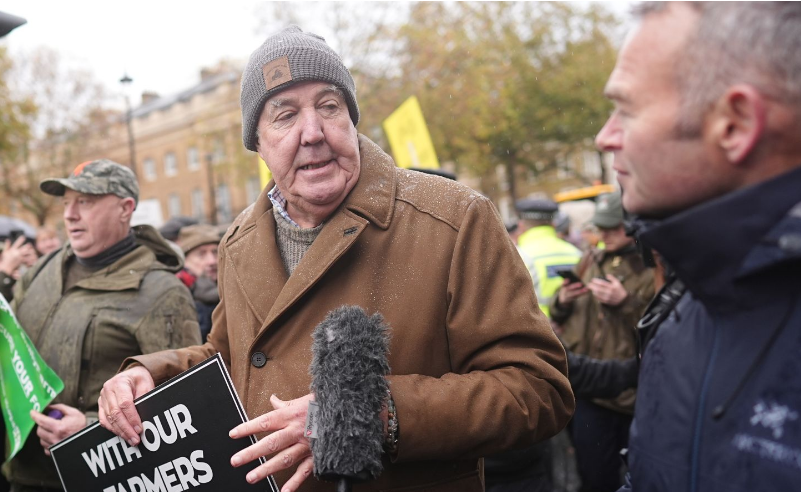
At 9:47 a.m., tractors began rolling into central London. One after another, they filled streets more accustomed to buses and black cabs. This was not a carefully choreographed demonstration. There were no matching jackets, no polished slogans, no professional organisers directing the crowd. The drivers were farmers—people more familiar with fields than flags—who had concluded that quiet conversations were no longer working.
Protests are not unusual around Westminster, but this felt different. The tractors did not arrive to make noise and leave. They arrived to stay. What brought them there was not a celebrity endorsement or a political campaign, but a policy decision that many in the countryside understood immediately as existential: the introduction of a 20% inheritance tax on agricultural land valued above £1 million.
For Jeremy Clarkson, the issue cut through any remaining distance between public debate and personal experience. Clarkson, who has spent recent years running a working farm in the Cotswolds, did not hear the announcement as abstract policy. He heard it as arithmetic. Farms, he argued, are asset-rich and cash-poor. Land values have risen sharply, but incomes have not followed. A holding worth £2–3 million on paper may generate only £30,000 a year—often less once costs are accounted for.
Inheritance tax turns that paper value into an immediate bill. Twenty per cent of £3 million is £600,000. For most family farms, that money does not exist. The choice left to heirs is stark: sell land to pay the tax, or attempt to keep the farm and collapse under the weight of debt. In either case, production shrinks. Once land leaves farming, it rarely returns.
The policy was presented as tidy and responsible. Close a loophole. Ensure fairness. On paper, it sounded reasonable. In practice, farmers recognised it as a mechanism that would force the breakup of family operations that had survived for generations. You do not need to be wealthy to cross the £1 million threshold anymore. You only need to have held onto land long enough.

Clarkson’s intervention was unpolished and direct. He did not set out to lead a movement or organise a campaign. He simply described what the policy meant in plain terms: a tax on tractors, barns, and fields worked by families for centuries. The message resonated because it translated policy language into lived reality.
Within hours, farmers began responding. Not through unions or formal channels, but through messages and informal networks. The call was simple: London, November 19th. Bring your tractor. Expectations were modest. The response was not. More than 10,000 tractors made the journey from across the UK, bringing the countryside into the capital.
The initial reaction from government circles was dismissive. Suggestions circulated that these were not “real” farmers, that wealthy landowners were manipulating the situation. That narrative collapsed as soon as the farmers themselves began speaking. In television studios and interviews, they appeared not as caricatures but as people under pressure: a dairy farmer facing an £800,000 bill; a family whose land had been worked since the 1600s now likely to be sold; a young farmer who knew he would never be able to afford to inherit his parents’ farm.
These accounts shifted the debate. The issue stopped being about loopholes and thresholds and became about fairness in practice. Public sympathy grew, not because farming is romantic, but because the logic was familiar. Many urban voters recognised the principle immediately: a family business forced to sell simply because its value had risen on paper.
The escalation that followed was inevitable. Farmers announced a one-day national strike on food deliveries to major cities. Critics called it irresponsible. Supporters called it a demonstration of reality. When deliveries paused, supermarket shelves emptied in places unused to scarcity. Milk and fresh produce disappeared quickly. For many consumers, it was the first time farming policy had a visible effect on daily life.
Polls began to move. Rural support for the government weakened sharply. More notably, urban voters began siding with the farmers. The argument was no longer theoretical. It was tangible. Food production had ceased to be invisible.
A year later, the government’s tone changed. There were no speeches acknowledging defeat, no public admissions of error. Instead came refinements: higher thresholds, extended payment terms, broader exemptions. The language suggested continuity, but the substance told a different story. The changes placed most family farms outside the scope of the tax. In practical terms, the original policy ceased to exist.
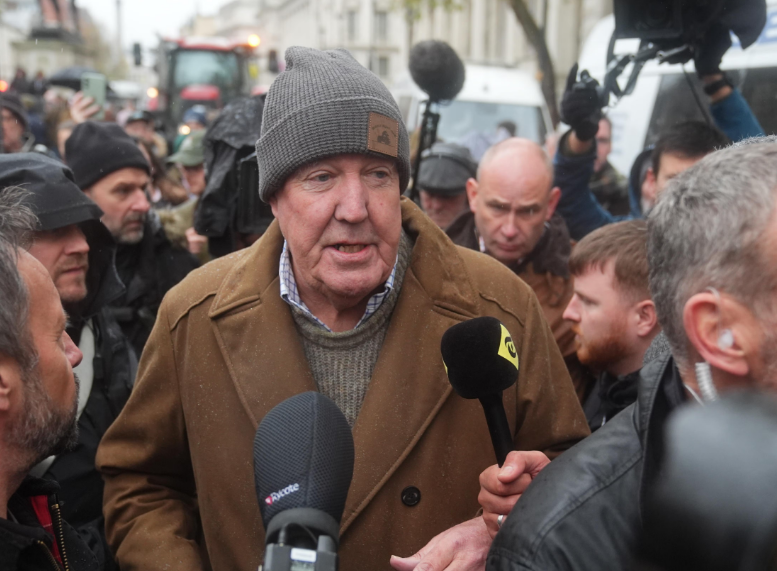
Clarkson did not frame this as a personal success. He described it as a moment when farming avoided being quietly dismantled. Yet the damage to trust remains. Many farmers believe the episode revealed a deeper problem: decisions about agriculture being made by people far removed from its realities.
The lesson is not confined to one tax or one protest. It is about how policy interacts with systems that operate on physical limits rather than theoretical models. Farming does not respond to intention. It responds to margins, weather, debt, and time. Ignore those constraints, and the consequences arrive eventually.
The tractors have gone home. Fields are being worked again. But the memory remains. Westminster learned that policies which appear neat on paper can unravel quickly when they collide with real lives. And the countryside learned something too: when quiet explanations fail, presence matters.
The question left behind is a simple one. When future decisions are made that look efficient in spreadsheets but unstable in practice, whose voice will be heard first—the people with models, or the people with dirt under their fingernails?