The “gold rush” season exploded after news broke that Tyson Lee’s girlfriend had joined Parker Schnabel’s team!

For years, Gold Rush has shown that success in the Yukon depends as much on people as it does on machinery. This season, that reality has been thrown into sharp focus at Dominion Creek, where Parker Schnabel is chasing an ambitious target: 10,000 ounces of gold, valued at roughly $35 million. With stakes that high, every decision is magnified—and one recent staffing change has drawn intense scrutiny from viewers.
What began as a routine management call quickly became one of the most debated moments of the season. The dismissal of loader operator Taven Peterson, followed almost immediately by the appointment of a newcomer with personal ties to the crew, has raised questions about leadership, consistency, and fairness inside Parker’s operation.
A firing that puzzled viewers
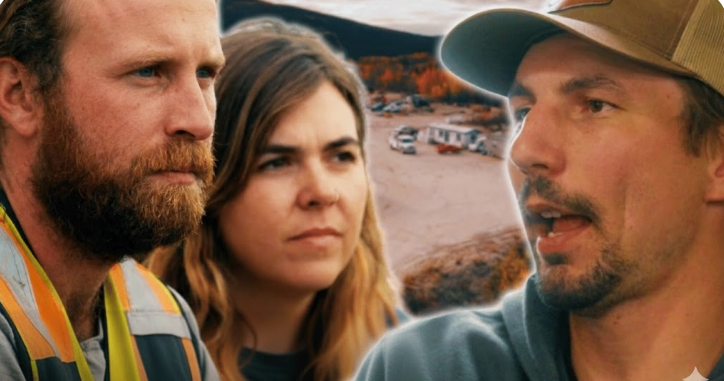
At the centre of the controversy is Taven Peterson, a second-year operator at Dominion Creek. By most on-screen measures, Taven appeared competent, engaged, and proud of his output. However, manager Nona Loveless saw deeper issues. When she confronted him, the criticism was not about damaged equipment or missed targets, but about teamwork, attitude, and communication.
According to Nona, Taven had developed a habit of operating “his own way” rather than following direction. She also took issue with his habit of discussing his hourly production numbers, interpreting it as arrogance rather than motivation. Taven, for his part, insisted he was not boasting—only taking pride in his work.
The exchange ended decisively. Nona told him he had not adjusted despite previous feedback and asked him to leave. The moment was emotionally heavy. Taven did not react with anger; instead, he appeared stunned and hurt, a response that resonated strongly with viewers.
In an industry where turnover is common, a dismissal alone is rarely notable. What made this one stand out was the reasoning behind it. Many fans questioned whether confidence and pride in performance should be framed as liabilities, especially in a season defined by aggressive production goals.
The replacement that intensified debate
If the firing raised eyebrows, the replacement amplified the conversation. With Taven gone, Dominion Creek faced an immediate operational problem. Wash plant Bob requires a steady feed of material, and without a loader operator, production risks slowing or stopping entirely.
The role was filled by India Greenhalgh, who also happens to be the partner of foreman Tyson Lee. The timing alone was enough to spark debate among viewers. To some, the sequence suggested that one person was removed to make room for another—an impression that proved difficult to shake, regardless of the realities on site.
India was open about her lack of experience. While she had spent several years working behind the scenes with the Gold Rush production crew and was familiar with mining environments, operating heavy machinery was new territory. She had only days of hands-on loader experience when she stepped into a role critical to Dominion’s output.
From a production standpoint, the choice carried risk. For a crew pursuing record numbers, introducing a learning curve at a key position seemed counterintuitive to many fans. The question repeated across social media: why replace a second-year operator with someone still learning the basics?
Pressure inside the mine
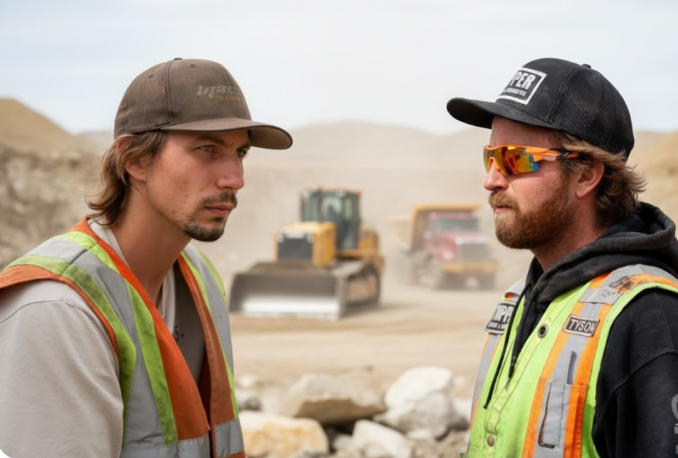
Inside the operation, however, the situation was less theoretical. The plant needed feeding, and time was not a luxury. Tyson took on the responsibility of training India, guiding her through every step—positioning the loader, controlling the bucket, monitoring the hopper, and responding quickly to blockages.
The show made clear how narrow the margin for error can be. One clog or misjudged load can bring production to a halt. When issues arose, Tyson used them as teaching moments, reinforcing that small problems can escalate quickly in mining.
India approached the role with visible nerves but determination. Each movement carried weight, not only because of the machinery involved, but because of the expectations placed on her. By the end of her first sequences, she had not mastered the job—but she had demonstrated composure under pressure, a willingness to learn, and the ability to keep the system moving.
Why the criticism persists
Despite that progress, viewer dissatisfaction has not faded. The core issue is not India’s effort or potential, but the contrast between her inexperience and the reasons given for Taven’s dismissal. Many fans argue that if teamwork and adaptability were truly the priority, clearer evidence should have been shown before such a decisive action was taken.
Others point to optics rather than intent. Even if the decision was practical, the appearance of favouritism has been difficult to overcome. In a high-pressure environment where every ounce matters, perception can be almost as powerful as performance.
A test that is still unfolding
For Parker Schnabel, the situation underscores a familiar tension. Mining rewards decisiveness, but leadership decisions are always judged in hindsight. If India grows quickly into the role and Dominion Creek maintains momentum, the controversy may recede. If production falters, questions will only intensify.
For now, Dominion Creek continues to run, and the season moves forward. Taven’s departure, India’s rapid transition, and Tyson’s dual role as trainer and foreman have combined into a storyline that speaks to the realities of large-scale mining: pressure forces choices, and not all of them are universally understood.
What remains clear is that this episode is less about one individual and more about how teams function under extreme expectations. In a season defined by record goals, Parker Schnabel’s operation is learning—once again—that managing people can be as challenging as pulling gold from frozen ground.