Parker Schnabel’s high-value discovery raises new questions about risk, leadership, and the future of modern gold mining

From the perspective of a long-time analyst of Gold Rush, few moments carry more long-term significance than Parker Schnabel’s recent discovery in a stretch of ground once considered too unpredictable to pursue. Early estimates valuing the deposit at more than $115 million have not only reframed the current season but also prompted wider reflection across the gold-mining industry.
This was not a celebrated claim with a proven record. It was ground marked in old logs as unreliable—ice-bound, uneven, and prone to sudden changes beneath the surface. For years, experienced miners avoided it, weighing the potential costs against uncertain returns. That context is what makes the discovery so consequential.
The moment the data changed
Operations were proceeding normally when equipment readings began to shift. There was no visible failure, no obvious obstacle. Instead, resistance increased underground, and density figures on the monitors began to climb beyond expected levels. Parker Schnabel halted activity immediately—a move that underscored how much modern mining depends on interpretation as much as instinct.
Repeated calibration checks confirmed the anomaly. Density readings were registering at two to three times the industry norm. When initial samples were processed, the results were unmistakable: heavier material, unusually concentrated, and increasingly rich the deeper the tests went. This was not surface gold. It suggested a layered deposit with significant depth.
Why this ground mattered
Mining records show why the site had been avoided. Crews in previous decades encountered unpredictable permafrost, water intrusion, and sections that appeared stable from above but shifted under pressure. Equipment losses and time overruns made the area economically unattractive.
Yet Parker’s decision to revisit the zone reflects a broader pattern in his career. He has repeatedly shown a willingness to reassess land others have dismissed—provided data supports the move. In this case, the data did not simply suggest opportunity; it demanded caution.
A leadership decision under pressure
As numbers continued to firm up, Parker faced a familiar but intensified choice: advance quickly or slow the process. High-value ground often tempts speed, but unstable conditions penalise haste. Rather than pushing forward aggressively, he opted to increase testing frequency, limit exposure, and expand safety checks.
For analysts, this decision is revealing. It reflects a shift in Parker’s leadership style—from the bold expansion seen in earlier seasons to a more measured approach shaped by experience. The value of the deposit heightened responsibility rather than excitement.

Understanding the valuation
The $115 million figure did not emerge casually. It was built from layered calculations: mapped dimensions of the anomaly, average density across multiple samples, estimated purity, and conservative recovery rates. Importantly, each review reinforced rather than weakened the estimate.
What stood out to industry observers was that refinements did not reduce the valuation. Instead, they stabilised it. That consistency is rare in early-stage discoveries and has contributed to why the find is being taken seriously beyond the show itself.
The theory of a multi-layer system
One of the most intriguing aspects is the uneven distribution of signals. Strong readings appeared in concentrated zones, while adjacent sections remained quiet. This pattern aligns with a multi-layer deposit rather than a single continuous seam.
If confirmed, it could mean that the upper layer is only part of a much larger system beneath. Deeper layers, however, carry increased pressure, greater water risk, and higher operational complexity. Each additional metre downward raises both potential and cost.
Impact on the crew and site dynamics
On site, the atmosphere shifted noticeably. The usual pace and noise gave way to quieter focus. Crew members understood that they were no longer working an ordinary cut. Excitement existed, but it was tempered by awareness of what could go wrong beneath unstable ground.
Parker’s role became less about directing machinery and more about managing expectations—keeping the team steady without encouraging complacency. From an analytical view, this balance is critical. Major finds are lost as often to overconfidence as to misfortune.
Industry reaction beyond the Yukon
Word of the discovery travelled quickly through mining circles. Equipment suppliers, geologists, and claim holders began revisiting old maps and reassessing land previously written off. The broader implication is clear: advances in data interpretation may be revealing value in places once considered exhausted or unsuitable.
At the same time, experts caution that not every risky zone will produce similar results. The discovery has encouraged fresh thinking, but it has also renewed discussions about safety, cost control, and responsible expansion.
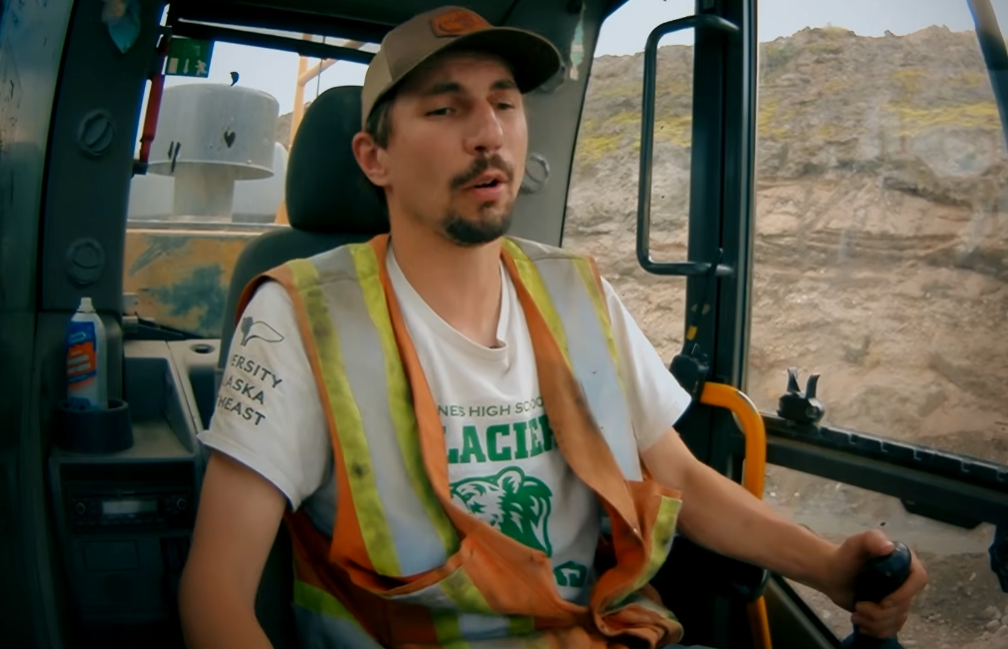
What happens next
The coming weeks will be decisive. Continued drilling, deeper sampling, and structural analysis will determine whether the lower layers are viable. If stability holds, estimates could rise further. If conditions deteriorate, Parker may need to limit extraction despite the numbers.
From a Gold Rush narrative standpoint, this discovery has the potential to reshape the season. Rather than a race for volume alone, the focus may turn to precision, patience, and judgement—qualities that define long-term success in mining.
A defining moment, still unresolved
Whether the deposit ultimately exceeds current estimates or proves more limited, its significance is already clear. It represents a moment where leadership, data, and restraint intersected. For Parker Schnabel, it is not just a question of how much gold lies underground, but how it is approached.
As an analyst, the most important takeaway is not the headline figure, but the decision-making process it triggered. In modern gold mining, the ground may hold the value—but it is judgement that determines whether that value is realised.