Parker Schnabel Corners Kevin Beats Over Unpaid Bills.

As Season 16 of Gold Rush unfolds in the Yukon, Kevin Beets finds himself confronting a stark reality: independence comes at a cost, and that cost is now due.
After striking out on his own with partner Faith, Kevin began the season determined to prove he could succeed beyond the shadow of his father, Tony Beets. The early weeks offered promise. Equipment was secured, ground was prepared and optimism ran high at Scribner Creek. But momentum quickly gave way to setbacks.
“Nothing but work, work, and work,” Kevin says of the past two weeks — a stretch defined not by gold pours, but by mounting pressure.
Crew departures have hollowed out his operation. Brennan left. Kaden followed. Most recently, mechanic Buzz stepped away for family reasons. Each exit forced Kevin to absorb additional responsibilities. Instead of focusing solely on strategy and oversight, he has been directing plans in the cut, troubleshooting machinery and stepping back into hands-on mechanical work.
“Trying to find people is kind of a nightmare,” he admits. Unlike larger operations, Kevin cannot cycle through surplus labour. “We can’t just try people out like Tony can.”
If staffing instability was not enough, financial strain has compounded the problem. Last season, Kevin and Faith purchased key pieces of equipment — including a rock truck — from Parker Schnabel. The informal deal allowed them to defer payment until the end of the season. The total tab approached $130,000.
The invoice, however, did not arrive until recently. When Parker appeared at the claim to collect, the encounter was cordial but edged with tension.
“You’re six months late,” Parker told him.
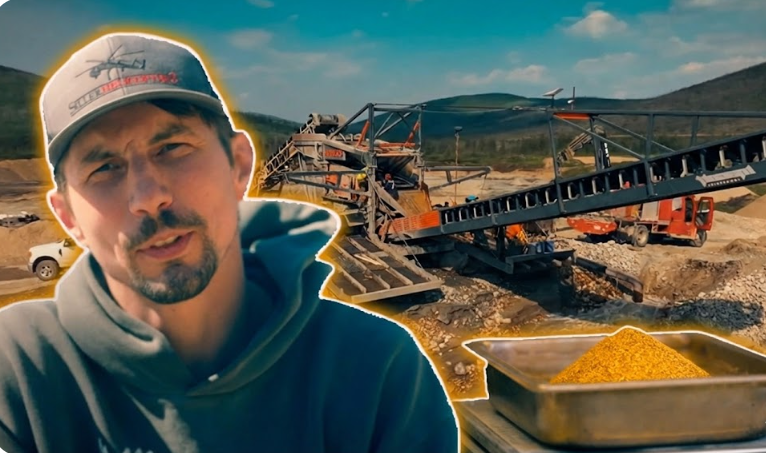
Kevin pushed back, noting that without an invoice, sending payment had not been straightforward. But Parker’s position was clear: he had extended a favour, and now he needed to settle his own accounts. Having spent $4.5 million during the spring ramp-up, chasing $130,000 felt — in his words — like “looking through the seat cushions.” Even so, the money mattered.
For Kevin, the timing could not have been worse. Gold production had slowed to a trickle. “Spending money. Not making any,” he acknowledged.
The immediate solution was simple in theory: bank enough gold to clear the debt. In practice, that required a wash plant running at full capacity — and Kevin’s plant was anything but.
A shutdown at Scribner Creek halted production at a critical moment. With Buzz away, the repair fell squarely on Kevin’s shoulders. Inspection revealed that a hopper feeder skid plate had warped upward, trapping pay dirt instead of directing it cleanly into the plant. The rubber mat beneath it had allowed material to build up, subtly altering the angle.
“You wouldn’t think it going from like this to this would make that much of a difference,” he observed. “But it is very noticeable.”
Working largely alone, Kevin lifted the plate, removed the mat and cleared compacted material. He then devised what he described as a “superficial, highly complicated engineering drawing” — a self-deprecating nod to the improvised nature of the fix. The plan was to replace the rubber with a more durable steel plate, allowing material to flow more directly into the shaker deck.
Hours later, the plant roared back to life.
“I always hate this part,” he said before restarting it — the moment of uncertainty when any repair might fail. This time, the modification held. Gold began moving through the system again.
But recovery did not immediately translate into solvency.
Kevin calculated he would need 36 ounces of gold to clear Parker’s invoice. The clean-up yielded 27.57 ounces — worth approximately $97,000. That left a shortfall of around $31,000.
Faith, who has been managing finances behind the scenes, acknowledged that money previously set aside had already been spent to keep operations afloat. Their strategy now hinges on selling the gold immediately and supplementing the remainder from existing reserves.
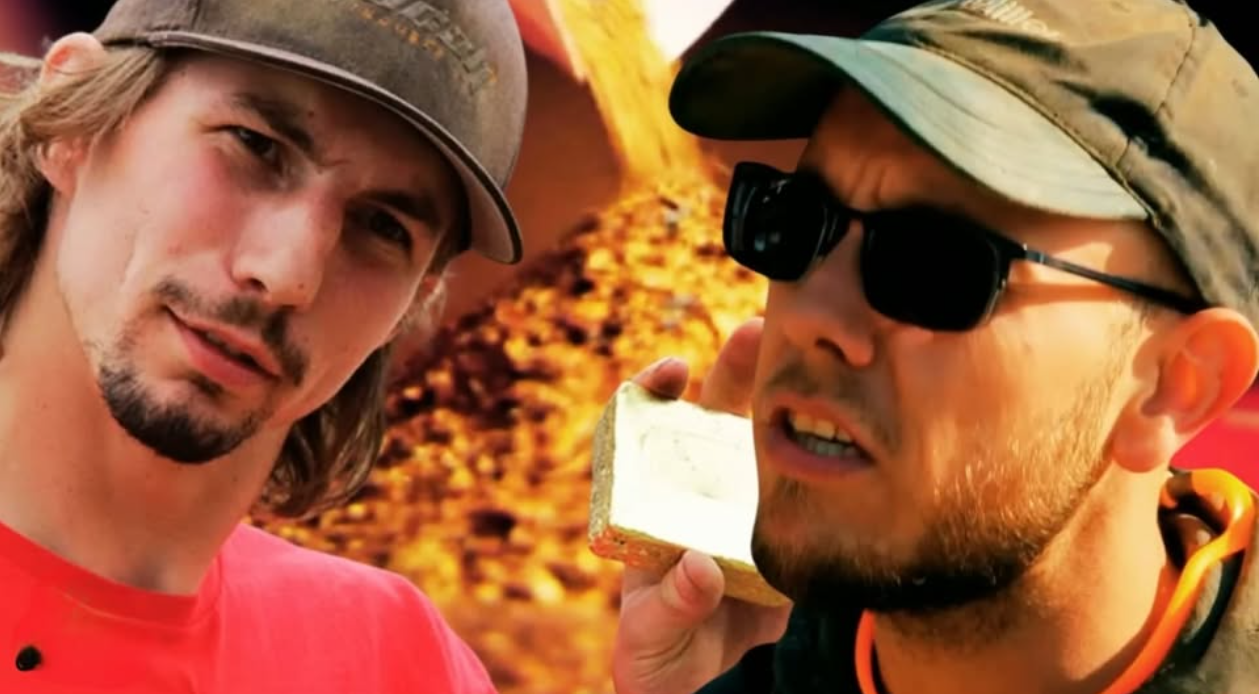
The broader picture underscores the fragile economics of small-scale mining. Fuel, equipment maintenance, wages and land costs continue regardless of production hiccups. A two-week shutdown can unravel months of planning. For Kevin, who is still building credit and credibility as an independent operator, cash flow gaps carry additional reputational risk.
Despite lingering frustration over the invoicing timeline, Kevin’s priority is pragmatic. “All that really matters is we have the gold now to pay him off and we can put the whole thing to bed,” he says.
The episode captures a defining chapter in Kevin’s evolution. No longer shielded by the scale and capital of his father’s multi-plant empire, he is learning — publicly — the unforgiving arithmetic of mining. Independence has granted autonomy, but also exposure.
The wash plant now runs. The gold is moving. The debt is nearly settled.
Whether this marks a turning point or merely a temporary reprieve will depend on what the Yukon ground yields next. For Kevin Beets, survival this season is not about record-breaking totals. It is about stability — keeping the plant running, the crew intact and the creditors satisfied.
In the relentless calculus of the Klondike, that may be victory enough.