The truth about the rumor that Jeremy Clarkson sold his $100 million ranch to billionaire Bill Gates.
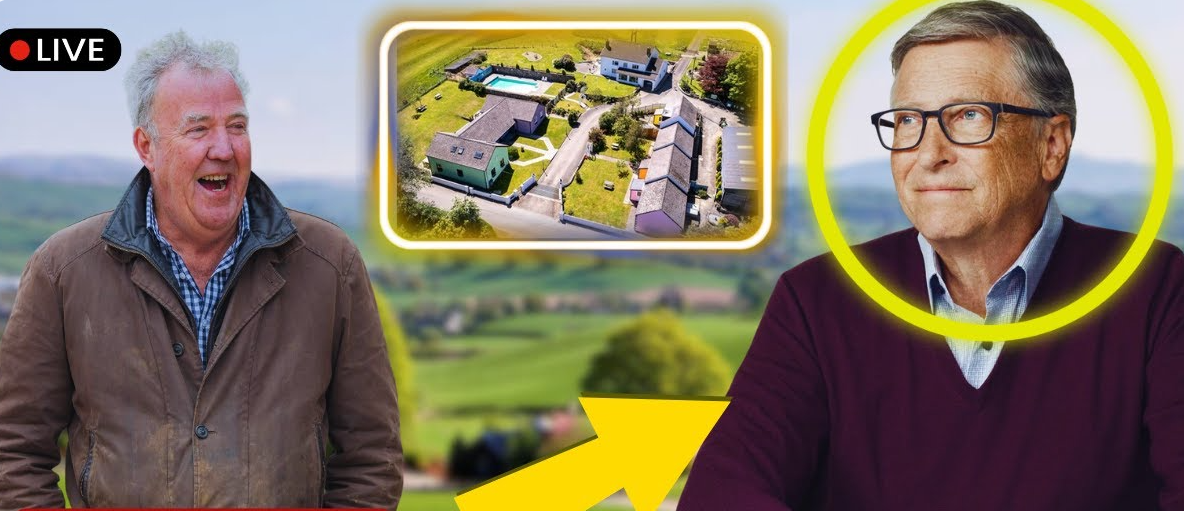
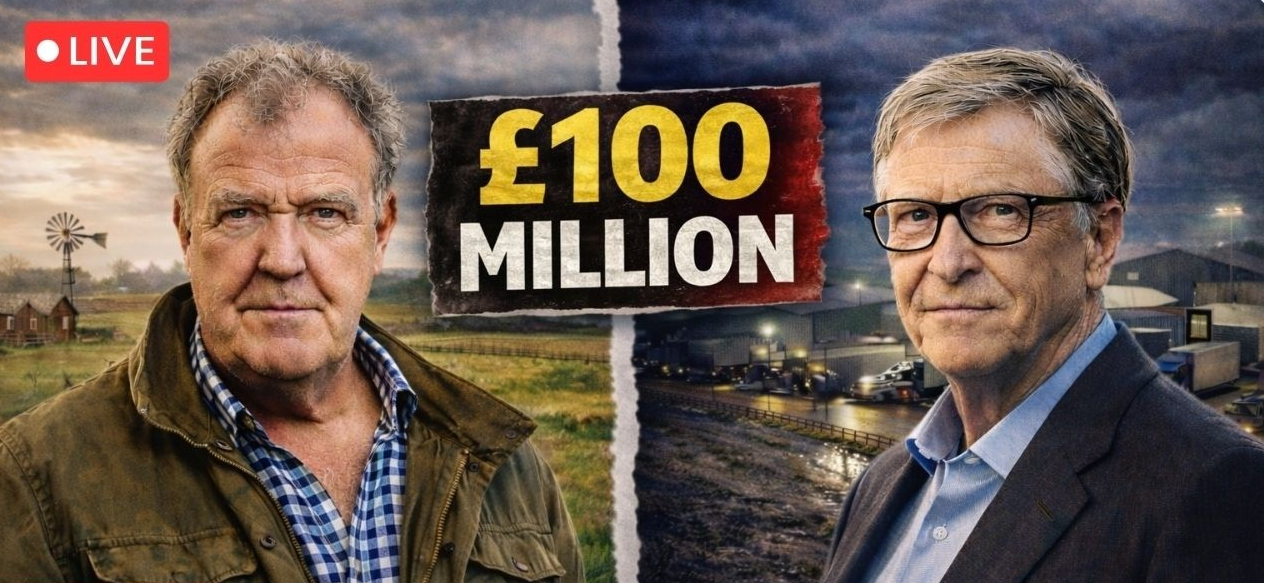
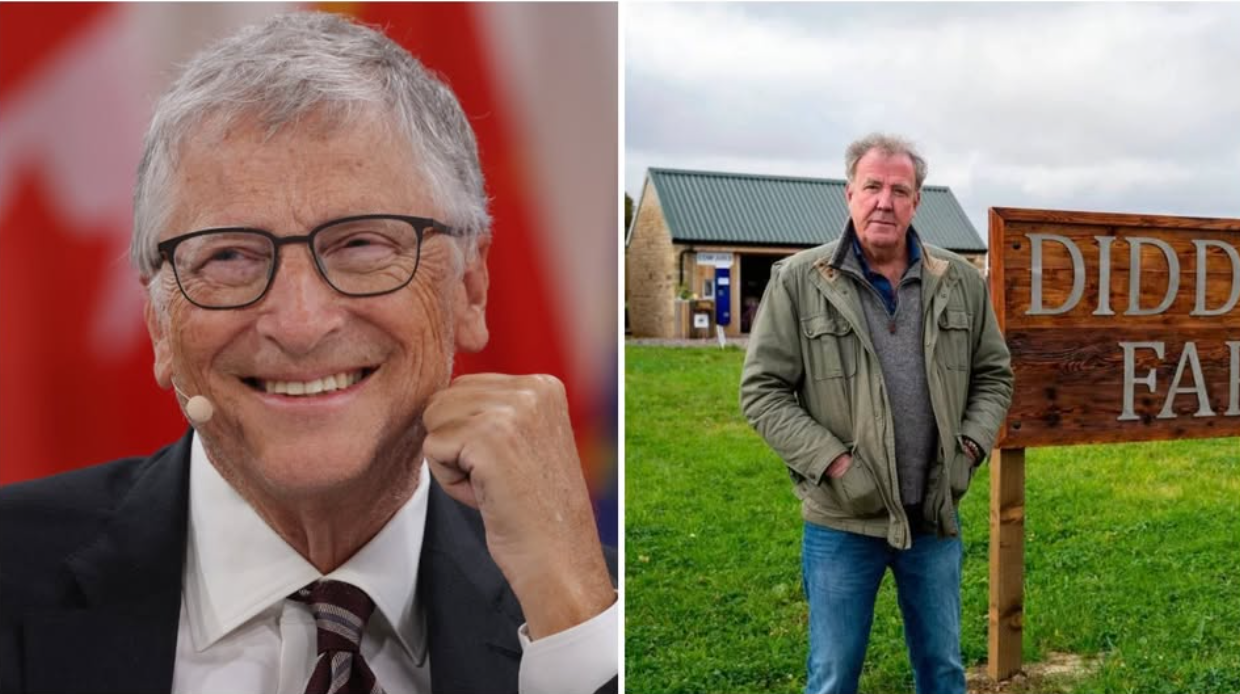
Few rumours travel faster than those involving land, money and a global billionaire. In recent weeks, speculation has surged online claiming that Jeremy Clarkson is preparing to sell his Oxfordshire property, Diddly Squat Farm, for $100 million to Bill Gates.
For followers of Clarkson’s Farm, the rumour strikes at the heart of the programme’s identity. The series is built on Clarkson’s turbulent but increasingly committed journey as a farmer navigating bureaucracy, unpredictable weather and volatile markets. A sale of that magnitude would not merely be a property transaction — it would fundamentally alter the narrative foundation of the show.
So what is really happening?
The Anatomy of the Rumour
The claim appears to have originated from viral social media posts and short-form video platforms, where a narrative of “farmer versus billionaire” gained traction. The framing is compelling: Gates, known for significant agricultural land investments in the United States, acquiring a high-profile British farm owned by one of the UK’s most outspoken public figures.
However, there has been no verified evidence of a formal offer, negotiation, or transaction process. Clarkson himself has publicly dismissed similar speculation in the past, often with characteristic bluntness.
From an analytical standpoint, the rumour functions more as cultural commentary than credible transaction reporting. It taps into wider anxieties around farmland consolidation, global investment in agriculture and the role of ultra-wealthy buyers in rural economies.
Economic Reality Check
Valuing Diddly Squat Farm at $100 million warrants scrutiny.
While farmland prices in the Cotswolds have risen significantly, and the property has gained global brand value through the show, the figure appears inflated relative to comparable agricultural land transactions in Oxfordshire. The farm’s commercial value is not purely agricultural — it is tied to media production, merchandise, visitor traffic and the on-site pub venture.
In essence, Diddly Squat operates as both farm and entertainment asset.
For Clarkson, selling the property would mean relinquishing not only land but also the central filming location that drives Amazon Prime subscriptions and international licensing revenue. That ongoing income stream arguably exceeds the benefit of a one-time land sale.
Narrative Implications for Clarkson’s Farm
From a programme analysis perspective, the rumour reveals something deeper: viewers perceive Diddly Squat as more than a setting. It is a character.
The series thrives on Clarkson’s clashes with local council regulations, farming challenges and his evolving relationship with the land. Remove the farm, and the format collapses or requires radical reinvention.
If, hypothetically, a sale were to occur, producers would face three potential pathways:
-
Relocation Format – Clarkson begins again on new land, turning the sale into a narrative pivot.
-
Partnership Structure – Gates or another investor becomes a silent stakeholder while Clarkson remains the on-screen operator.
-
Series Conclusion – The farm sale becomes the final chapter of the programme.
Of these, the second scenario is theoretically the least disruptive, but also the least consistent with Clarkson’s established persona as a fiercely independent landowner.
Clarkson’s Public Positioning
Clarkson has consistently positioned himself as a defender of British farming, frequently criticising policy frameworks he views as burdensome. Selling to an international billionaire would contradict that messaging and risk alienating a significant segment of the show’s audience.
Moreover, the brand equity of Clarkson’s Farm rests on authenticity. The appeal lies in watching Clarkson wrestle with genuine agricultural realities. A high-profile exit via a $100 million deal would reframe the series from grassroots farming experiment to financial windfall narrative.
That tonal shift would carry reputational consequences.
Why Bill Gates?
Bill Gates’ name enters the conversation because of his well-documented farmland acquisitions in the United States. However, those purchases are typically structured through investment vehicles and focus on diversified agricultural portfolios.
Acquiring a highly publicised, media-saturated farm in rural England would represent a markedly different strategic profile. It would invite scrutiny and politicisation — outcomes that institutional farmland investments generally seek to avoid.
What Is More Likely?
The most probable scenario is that the rumour remains precisely that — a rumour amplified by algorithmic momentum.
That said, the speculation highlights growing external interest in high-visibility farmland. As agricultural land becomes increasingly valuable due to food security concerns, environmental policy shifts and carbon-offset markets, properties like Diddly Squat gain hybrid value: agricultural and symbolic.
Future episodes of Clarkson’s Farm may well address the rumour directly. Clarkson has historically leaned into public controversies rather than avoiding them. If so, the storyline could evolve into commentary on land ownership, investment capital and rural identity.
Final Assessment
From a programme analyst’s viewpoint, a $100 million sale to Bill Gates is highly improbable under current conditions. The economic rationale is weak, the narrative cost to the show is substantial, and Clarkson’s personal brand alignment runs counter to such a move.
However, the rumour itself is revealing. It underscores the global profile Clarkson’s Farm has achieved and the way farmland has become a focal point of wider economic debates.
In television terms, even an unfounded rumour can serve as narrative fuel. Whether addressed directly or indirectly, the speculation reinforces what Clarkson’s Farm has always done effectively: place one farm at the centre of conversations far larger than its fields.