Jeremy Clarkson speaks out on the farm tax controversy as the inheritance debate intensifies.
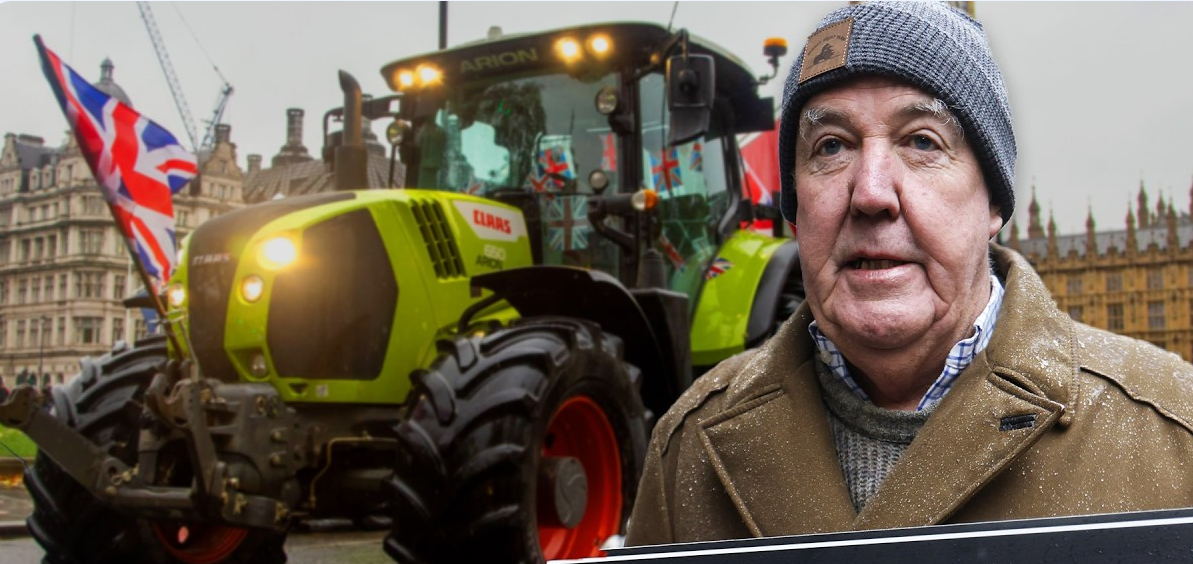
Jeremy Clarkson has reignited debate over inheritance tax and agricultural policy following a heated exchange during a live broadcast in which he defended British farmers and criticised the government’s proposed changes.
The former Top Gear presenter and current star of Clarkson’s Farm appeared at a rally supporting rural communities when he was challenged about his own financial motives for purchasing farmland. What followed was a tense back-and-forth that quickly broadened from personal tax arrangements to the wider future of British agriculture.
Clarkson, who owns Diddly Squat Farm in Oxfordshire, has been an outspoken critic of recent government proposals affecting inheritance tax on agricultural property. During the exchange, he was asked whether his involvement in the issue was personal, referencing a previous interview in which he acknowledged that tax considerations were a factor when he first bought the farm.
“Let’s start from the beginning,” Clarkson responded. “I wanted to shoot,” referring to countryside sporting rights traditionally attached to rural estates. He added that farmland ownership historically carried inheritance tax advantages, although he noted that changes to the system have altered that landscape.
The presenter rejected the suggestion that his activism was solely about protecting his own assets. Instead, he framed the issue as one of broader principle, arguing that small and medium-sized farming families would face disproportionate administrative and financial burdens.
“It’s incredibly time-consuming to restructure everything,” he said, referring to the use of trusts and long-term estate planning strategies. “Why should all these people have to do that?”
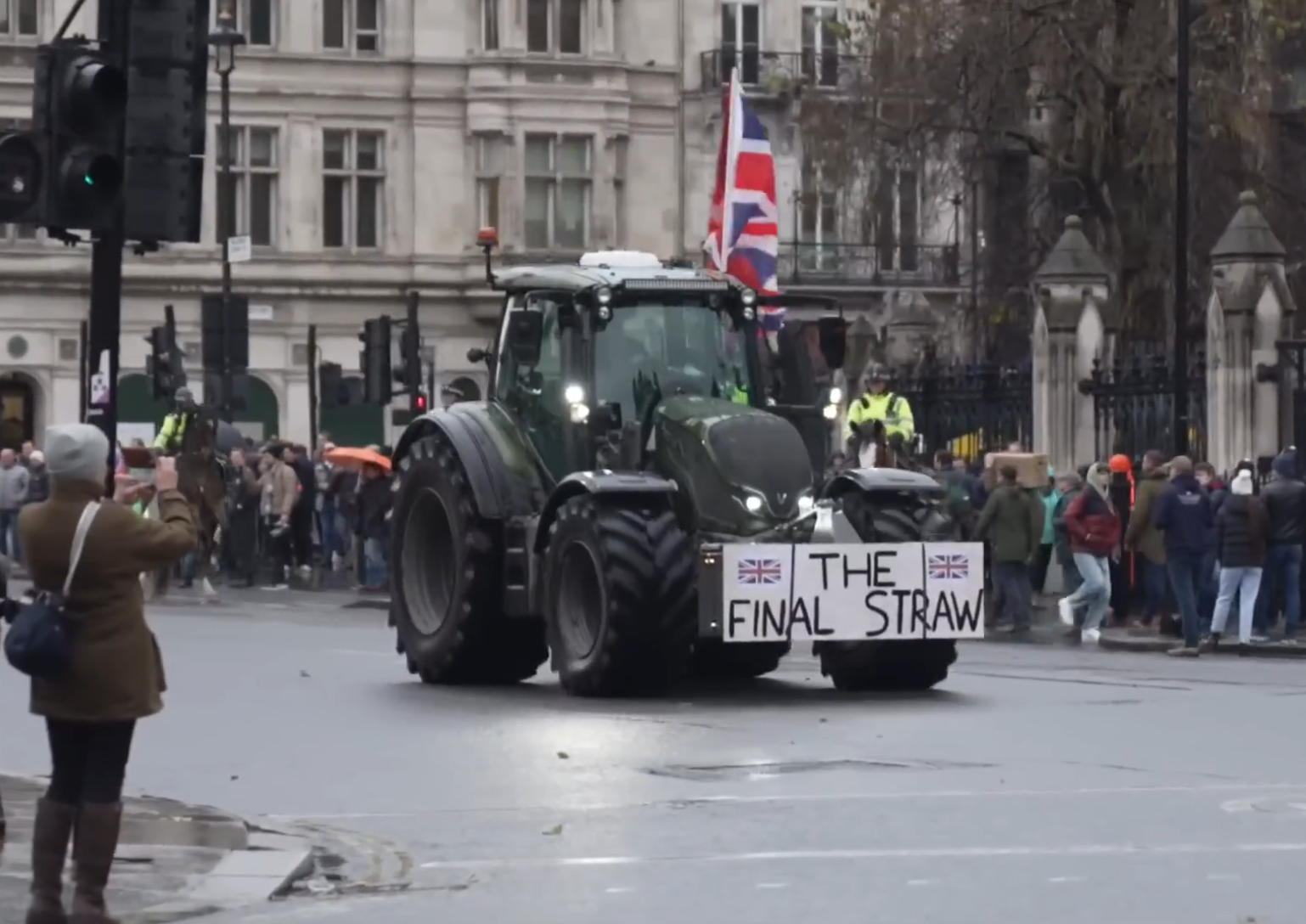
Inheritance tax currently affects a minority of estates across the UK. Official figures indicate that roughly 4% of estates pay inheritance tax under the present system. However, Clarkson suggested that the proportion of farmers affected by new rules could be significantly higher, claiming that “96% of farmers” may feel the impact once reforms are implemented. That figure was immediately challenged during the interview, with the presenter asking for clarification on its source.
Clarkson dismissed government projections, arguing that official estimates underestimate the ripple effects on working farms. “The only reason she did this,” he said, referring to Chancellor Rachel Reeves, “was to raise money.”
The government has maintained that proposed tax adjustments are necessary to fund public services, including the National Health Service, which continues to face financial and operational pressure. When asked where alternative funding should come from, Clarkson pivoted toward criticism of broader public spending.
“Walk into any office around here,” he said, referring to the civil service. “If you don’t understand what somebody’s job is, follow them.” He suggested that bureaucracy and administrative inefficiencies should be examined before targeting agricultural assets.
The exchange grew sharper when the interviewer pointed out Clarkson’s own recent reliance on the NHS after suffering a heart attack. Clarkson acknowledged the seriousness of the experience but argued that structural reform, not additional taxation on farmland, was the solution.
The debate reflects growing tension within rural communities, many of whom argue that agricultural property is fundamentally different from other forms of wealth. Farms, they note, are capital-intensive businesses tied up in land, equipment and livestock rather than liquid assets. Selling portions of land to meet inheritance obligations could fragment working operations, they warn, threatening long-term viability.
Industry groups have voiced similar concerns, highlighting that farm incomes are often volatile and dependent on weather, commodity prices and international trade conditions. According to agricultural analysts, even modest changes to tax treatment can significantly affect succession planning.
Critics of Clarkson’s position argue that inheritance tax reforms are aimed at ensuring fairness in the broader tax system, particularly when land values have risen sharply over the past decade. They contend that agricultural reliefs have sometimes been used by wealthy investors purchasing farmland primarily as a tax-efficient asset rather than as an operating farm.
Clarkson has previously acknowledged that inheritance tax was one factor in his original purchase decision, a comment that resurfaced during the broadcast. However, he insists that the current debate is about protecting generational farmers rather than shielding affluent landowners.
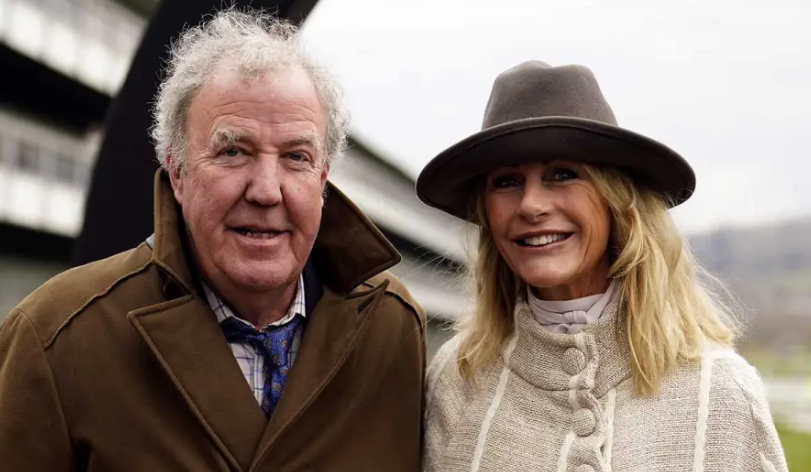
Public reaction to the exchange has been divided. Supporters praised Clarkson for using his platform to amplify rural concerns, while critics accused him of oversimplifying a complex fiscal issue. Social media discussion has mirrored that split, with hashtags related to farm taxation trending shortly after the interview aired.
The controversy arrives amid a broader recalibration of agricultural policy in post-Brexit Britain. Farmers are already navigating changes to subsidy schemes, evolving trade relationships, and rising input costs. For many in the sector, tax stability is seen as another piece of an already shifting puzzle.
Clarkson concluded the exchange with a direct appeal: “Please back down,” he said, addressing the government. “Get the money from somewhere else.”
Whether policymakers adjust course remains uncertain. What is clear is that the debate over inheritance tax, farmland ownership, and the financial structure of British agriculture is far from settled. As rural communities prepare for another season of uncertainty, voices like Clarkson’s ensure the issue will remain firmly in the national conversation.