Deepest Dig Yet: Oak Island Team Uncovers 16th-Century Pickaxe Fragment as Money Pit Mystery Intensifies

The search for answers beneath Oak Island has reached a pivotal moment. After descending deeper than any previous exploration in the Money Pit area, the team behind The Curse of Oak Island has recovered what experts believe could be a centuries-old tunneling tool — a discovery that may reshape understanding of who first worked at depth on the island.
At the center of the breakthrough is the TOT-1 shaft, a caisson installed to probe beneath 200 feet in pursuit of the elusive solution channel and the legendary vault long rumored to lie below.
Breaking Through the Chappell Layer
The TOT-1 excavation recently surpassed 160 feet — deeper than many historical searcher shafts — and is believed to be cutting through the remains of the Chappell Shaft, constructed in 1931 by treasure hunter Melbourne Chappell and his associates.
As wood fragments from earlier searcher activity surfaced, the team remained cautiously optimistic. Then came a find that shifted the tone entirely.
Metal detection expert Gary Drayton and Marty Lagina identified a heavy, handwrought iron fragment emerging from the spoil pile. The object, visibly curved and bearing distinct hammering striations, appeared to be part of a pickaxe — a tool used for breaking rock in underground excavations.
The depth of the find raised immediate questions.
“We’re well out of any searcher area at that point,” Marty Lagina noted. “So what is this metal artifact doing that deep?”
A Tool From the 1500s?
To determine its origin, the artifact was brought to blacksmithing specialist Carmen Legge and archaeometallurgist Emma Culligan for analysis.
Legge’s initial assessment was striking.
“The only time I see primitive mining tools that were this shape and this size was from the 1500s,” he explained, suggesting a possible early 16th- or even late 15th-century origin. The hand-forged iron showed clear signs of repeated impact against stone — evidence consistent with tunneling or heavy excavation work.
Culligan’s compositional analysis added further context. The impurities in the iron — including potassium, phosphorus, sulfur, and magnesium — pointed to a likely manufacturing window between the 1500s and 1700s.
If confirmed, the tool would predate the recorded discovery of the Money Pit in 1795 by nearly three centuries.
For the team, the implications are profound. The artifact suggests organized labor working at significant depth long before documented searcher efforts.
Echoes of Malta and Medieval Orders
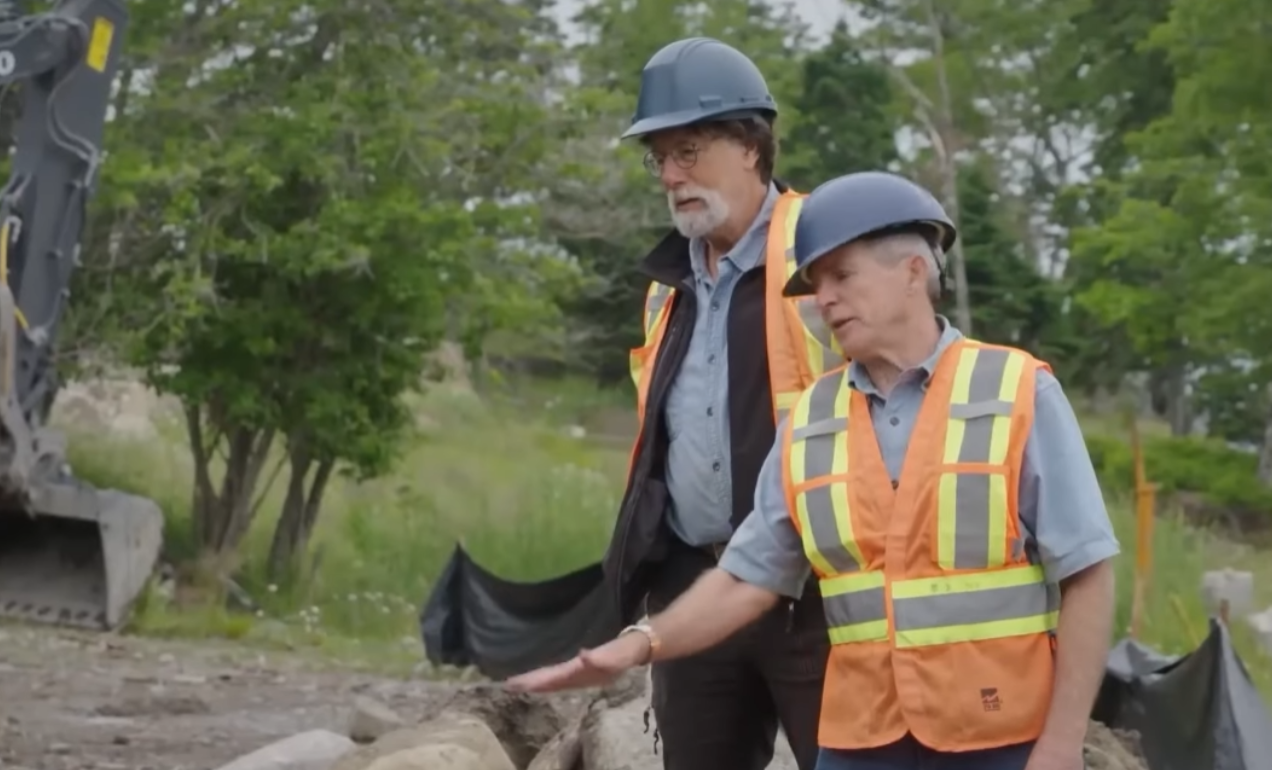
Just weeks prior, members of the Oak Island team visited Malta, where they explored a network of 16th-century tunnels constructed by the Knights of Malta. The structural similarities between those underground systems and early descriptions of the Money Pit reignited speculation about medieval involvement.
Historian Matthew Balzan had suggested that tools of similar design were used by the Knights of Malta. The pickaxe fragment recovered from TOT-1 may now provide tangible evidence that similar methods were employed at Oak Island centuries ago.
While no definitive link has been proven, the convergence of tool design, metallurgical dating, and depth location strengthens arguments that early European groups undertook large-scale excavation on the island.
Smith’s Cove: Another Chapter
Meanwhile, activity at Smith’s Cove continues to generate clues.
Gary Drayton and Alex Lagina recently uncovered a large, heavily encrusted iron object beneath shoreline rocks. Initial excitement suggested it might represent shipwreck debris or structural hardware related to the island’s original depositors.
After laboratory cleaning and analysis, archaeologist Laird Niven identified the object as a cast-iron stove door, likely dating to the mid-1800s based on manganese content.
While less dramatic than hoped, the artifact still contributes to the broader narrative of searcher activity on the island during the 19th century.
In the same region, the team uncovered modern nails and hardware believed to be connected to the Restall family’s 1961 attempt to locate a vertical shaft and associated flood tunnel. These findings suggest that the team may be closing in on the Restall Shaft — a critical reference point in mapping the Money Pit’s underground system.
Searching for the Flood Tunnel
Excavations in Smith’s Cove are aimed at identifying the vertical shaft and the legendary flood tunnel that allegedly fed seawater into the Money Pit, thwarting early treasure hunters.
As wooden planks and fasteners emerge from the dig site, the team believes they are approaching the correct depth to locate the original forms used by the Restalls when they poured concrete into the shaft in 1961.
“If you confirm the location of the vertical shaft, you can hopefully find the flood tunnel itself,” Craig Tester remarked.
The discovery of modern nails alongside older spikes underscores the layered complexity of Oak Island’s history — original depositional activity intertwined with generations of search efforts.
A Deeper Narrative
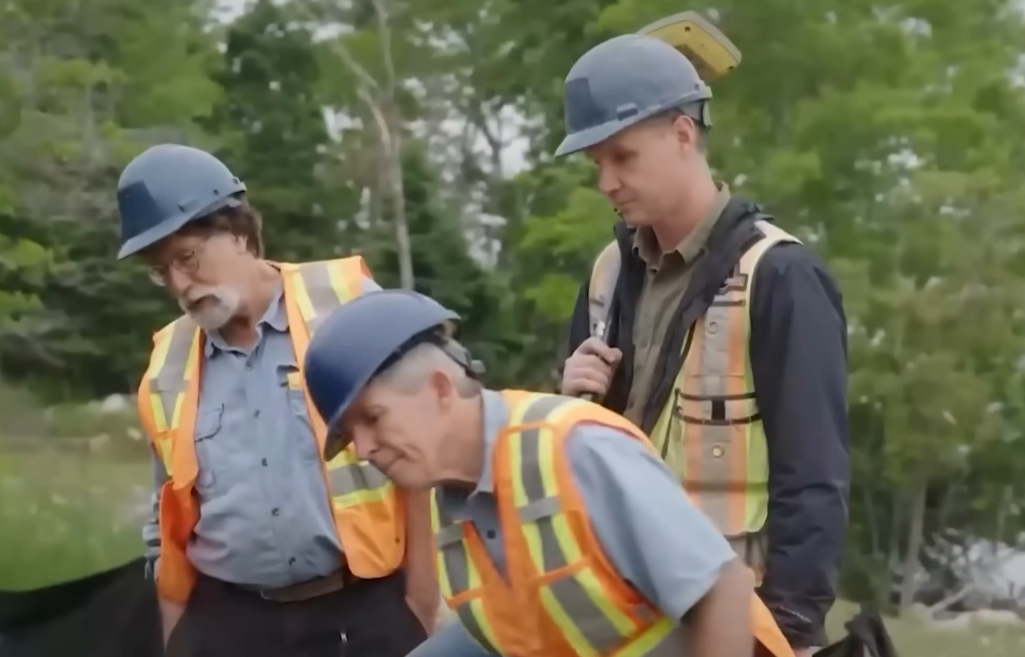
For Rick Lagina, the pickaxe fragment represents more than a tool.
“The amount of abuse that that took speaks to how much labor it took to do whatever it is they were doing,” he observed. “A long, long time ago.”
The find provides what the team has long sought: evidence of men working at significant depth in the Money Pit area before the island’s 18th-century discovery story began.
Whether the tool connects to medieval orders, early colonial ventures, or an unknown depositional group remains unresolved.
What is clear is that TOT-1 has penetrated layers untouched by previous searchers, and with each foot descended beyond 200 feet, the possibility of encountering original structures increases.
As Rick Lagina put it succinctly: “We should be hopeful.”
With the shaft continuing toward the solution channel and artifacts suggesting early excavation at depth, the Oak Island mystery may be entering one of its most consequential phases yet.