Marty Lagina confirms the existence of a hidden stash of gold worth $300 million!

For more than two centuries, Oak Island has occupied a unique place in the world of treasure hunting. Generations of searchers have arrived on the small island off the coast of Nova Scotia convinced that something valuable lies hidden beneath its layered soil and engineered tunnels. From the earliest discoveries in the late eighteenth century to the sophisticated drilling programs seen in recent seasons of The Curse of Oak Island, the island has continuously produced clues that suggest an elaborate story waiting to be fully understood.
Now, a new development has captured the attention of both researchers and viewers. Marty Lagina has confirmed that evidence uncovered during the team’s ongoing investigation points to the existence of a hidden reserve of gold that could be worth as much as $300 million. While details remain limited, the statement immediately raises an important question: what exactly has the team discovered, and how close might they be to locating it?
From an analytical perspective, the significance of Marty Lagina’s confirmation lies less in the estimated value and more in the context surrounding the discovery. Over the past several seasons, the team has focused heavily on identifying underground anomalies that appear structured rather than natural. Borehole cameras, seismic scanning, and muon tomography have revealed cavities, timber fragments, and metallic signals deep beneath the surface. When these findings are examined together, they suggest the possibility of a carefully constructed deposit system rather than random debris.
If a gold cache truly exists, it would likely be connected to the same network of shafts and flood tunnels that have defined the Oak Island mystery since the discovery of the so-called Money Pit in 1795. Historical accounts describe wooden platforms appearing at regular intervals during early excavations, along with evidence that seawater was deliberately redirected through underground channels. These features point to engineering designed either to protect or conceal something valuable.
The possibility of a hidden gold reserve also aligns with several discoveries made in recent seasons. Metal detector expert Gary Drayton has uncovered coins, metal fragments, and artifacts dating back centuries, some of which suggest European origins. Meanwhile, archaeologist Emma Culligan’s analysis of metallic traces from drilling samples has occasionally identified elements associated with precious metals. While none of these finds individually confirm a treasure deposit, together they strengthen the argument that valuable material could be present somewhere within the island’s underground system.
So what might happen next if Marty Lagina’s statement reflects a genuine breakthrough?
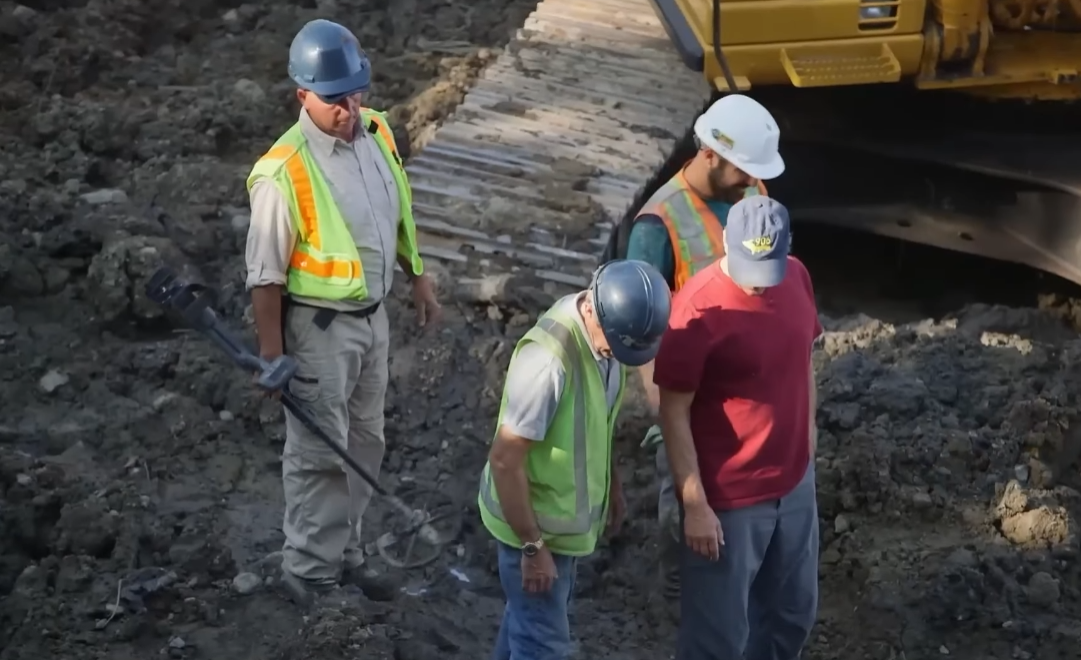
One likely scenario involves a renewed focus on high-precision drilling. In recent seasons, the team has adopted a methodical approach, drilling dozens of boreholes across the Money Pit area and surrounding lots to build a detailed underground map. If a concentration of gold has been detected through sample analysis or sensor data, the next logical step would be to narrow down the exact location of the signal. This could involve tighter drilling grids combined with real-time scanning technology to track the source of metallic readings.
Another possible development is the use of larger excavation caissons. Earlier attempts to excavate the Money Pit relied on massive steel casings designed to isolate sections of the underground structure. While those efforts faced technical setbacks, new data pointing to a specific location could justify another attempt with updated engineering methods. A carefully placed caisson might allow the team to reach deeper layers without triggering the flooding system that has historically disrupted excavations.
There is also the intriguing possibility that the gold is not located in the original Money Pit at all. Over the past several seasons, attention has shifted to areas such as Lot 5 and Smith’s Cove, where archaeological evidence suggests activity dating back to the seventeenth century or earlier. Artifacts discovered in these locations hint that Oak Island may have hosted multiple phases of activity, potentially involving different groups over time. If a gold reserve exists, it could be hidden within one of these secondary sites rather than the legendary shaft itself.
From a historical perspective, the estimated value of $300 million also raises questions about the origin of the treasure. A cache of that scale would likely have required substantial resources and planning. Some researchers have suggested connections to European trading empires, naval expeditions, or secretive organizations operating during the age of exploration. While such theories remain speculative, the presence of centuries-old artifacts on the island indicates that visitors arrived long before the first recorded treasure hunters.
Of course, caution is essential when evaluating claims related to Oak Island. The island’s history is filled with promising leads that ultimately produced more questions than answers. Geological anomalies, collapsed tunnels, and centuries of digging have created an extremely complex underground environment. Even when valuable material is detected in drilling samples, determining its exact source can be challenging.
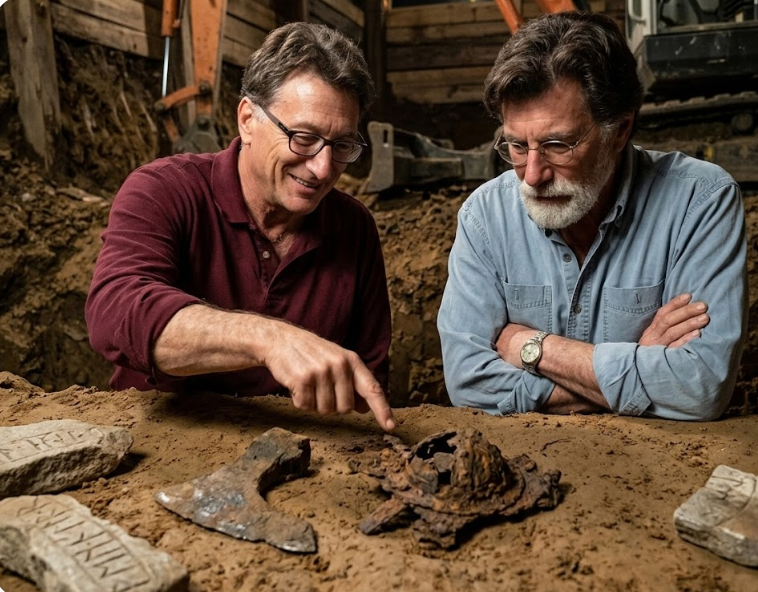
Yet what makes Marty Lagina’s confirmation particularly compelling is the timing. After more than a decade of systematic investigation on The Curse of Oak Island, the team now possesses a far clearer picture of the island’s subsurface structures than any previous search group. Advances in scanning technology and geological analysis mean that signals detected today carry far greater reliability than those recorded during earlier expeditions.
If the evidence pointing to a hidden gold reserve continues to strengthen, the coming seasons could represent the most decisive phase of the Oak Island search. Whether the treasure ultimately proves to be a massive gold deposit, a historical archive, or something entirely unexpected, the island appears to be revealing its secrets piece by piece.
For viewers who have followed the Lagina brothers’ journey since the beginning, Marty Lagina’s statement may signal that the search is approaching one of its most important turning points. The mystery of Oak Island has endured for generations, but the possibility of a $300 million discovery suggests that the long pursuit of answers may finally be entering its most revealing chapter.