Accidental Dig on Oak Island Leads to Discovery That Could Transform a 228-Year Mystery

For more than two centuries, Oak Island in Nova Scotia has stood as one of the world’s most enduring treasure mysteries. Generations of explorers, historians and engineers have searched the island’s small stretch of land for the secret believed to lie beneath its soil. Now, according to accounts from the ongoing investigation, an unexpected excavation may have revealed the most significant breakthrough in the island’s history.
Remarkably, the discovery did not begin with a carefully planned dig or a breakthrough from advanced technology. Instead, it started with an ordinary scheduling change on an active work site.
A piece of heavy equipment had been reassigned to a section of the island that had long been considered low priority. The area had been surveyed in the past but repeatedly returned inconclusive results. Because the most promising leads were believed to lie elsewhere, the ground had been largely overlooked for years.
During a routine excavation pass, however, a backhoe operator noticed something unusual in the soil brought up by the machine’s bucket.
The object was not gold or a recognizable artifact. Instead, it was a piece of timber. At first glance, timber is not uncommon on Oak Island, where earlier excavations have uncovered wooden structures associated with historical digging. But this timber was different.
The depth at which it appeared, roughly thirty feet below the surface, immediately raised questions. Even more striking was the condition of the wood. In the island’s wet and unstable ground, timber at such depth typically shows heavy deterioration. Yet the piece appeared preserved, suggesting it had been protected from moisture.
Most importantly, the wood showed clean cut marks consistent with deliberate shaping.
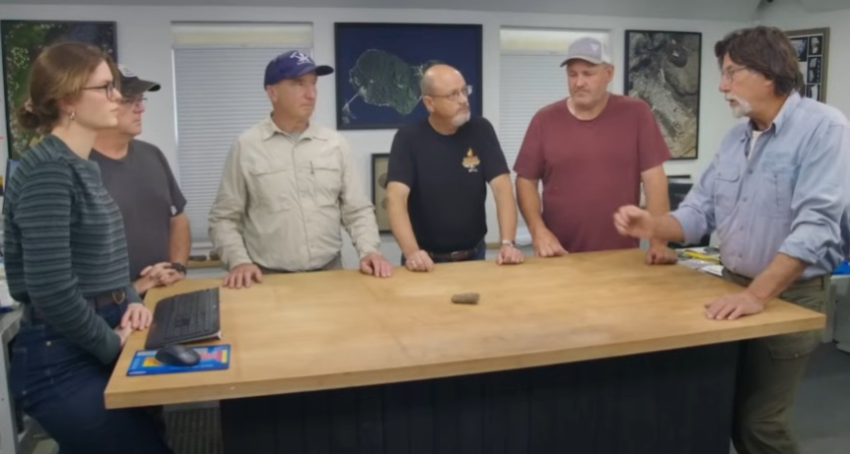
Recognizing the potential significance, the operator shut down the equipment and contacted the investigation team by radio. Within minutes, members of the project’s leadership arrived at the site, followed shortly by archaeologists and engineers tasked with evaluating the find.
What followed over the next two days would reshape the investigation.
Careful excavation around the area confirmed that the timber was part of a larger structure buried beneath the surface. Unlike many of the collapsed tunnels previously encountered on the island, this structure appeared intact and sealed.
The team quickly realised that the situation required a different approach from the large-scale digging often associated with treasure hunting. Instead of mechanical excavation, the site was treated as a controlled archaeological operation.
For more than ten hours, specialists discussed how to proceed. The primary concern was preserving the structure and any materials that might lie within it. If the chamber had remained sealed for centuries, opening it improperly could destroy valuable historical evidence.
Eventually, the team agreed on a strict protocol. Hand tools would be used to expose the chamber slowly, with every stage carefully documented. Environmental monitoring equipment would track changes in air and moisture as the structure was opened.
The process unfolded over three days.
By the evening of the third day, investigators had gained full visual access to the interior of what appeared to be a buried chamber.
According to those present, the interior revealed a carefully engineered space measuring approximately twenty-two feet long and fourteen feet wide. Oak timber beams formed the walls and ceiling, suggesting sophisticated construction methods consistent with late eighteenth-century engineering.
Even more surprising was the layout inside.
Rather than a single open vault, the chamber was divided into three separate sections.
The first section contained what appeared to be organic materials, possibly protected containers holding documents or records. Because of the chamber’s sealed and dry environment, these materials appeared unusually well preserved for their age.
The second section held metal objects arranged in an orderly manner. Early observations suggested stacks of coins and bullion stored with deliberate organization, indicating they may have been prepared for transport or later retrieval.
The third and deepest section contained what investigators described as the primary deposit. This area included gold, silver and other historical objects that specialists later began analysing in detail.
Before any material was removed, the team spent two full days documenting the chamber exactly as it had been found. Photographs, measurements and sediment samples were recorded to preserve the historical context of the discovery.
Over the following weeks, experts examined the contents more closely.
Specialists studying the coins and metal suggested that some items could be linked to British financial reserves from the late eighteenth century, a period marked by the American Revolutionary War. Historical records indicate that military funds and valuables were sometimes transported through complex trade networks across the Atlantic during that era.
If confirmed, the connection could help explain how such materials ended up buried on Oak Island.
Equally intriguing were the documents found in the chamber’s first section. Preliminary assessments suggested the papers may date from the same historical period. Researchers believe they could contain correspondence or records connected to British colonial administration.
If authenticated, the documents might fill gaps in historical archives relating to the final years of the Revolutionary War.
Financial estimates for the precious metals discovered in the chamber have placed their modern value somewhere between $140 million and $160 million. However, historians say the documentary materials could prove even more significant because they may offer new insights into a pivotal moment in North American history.
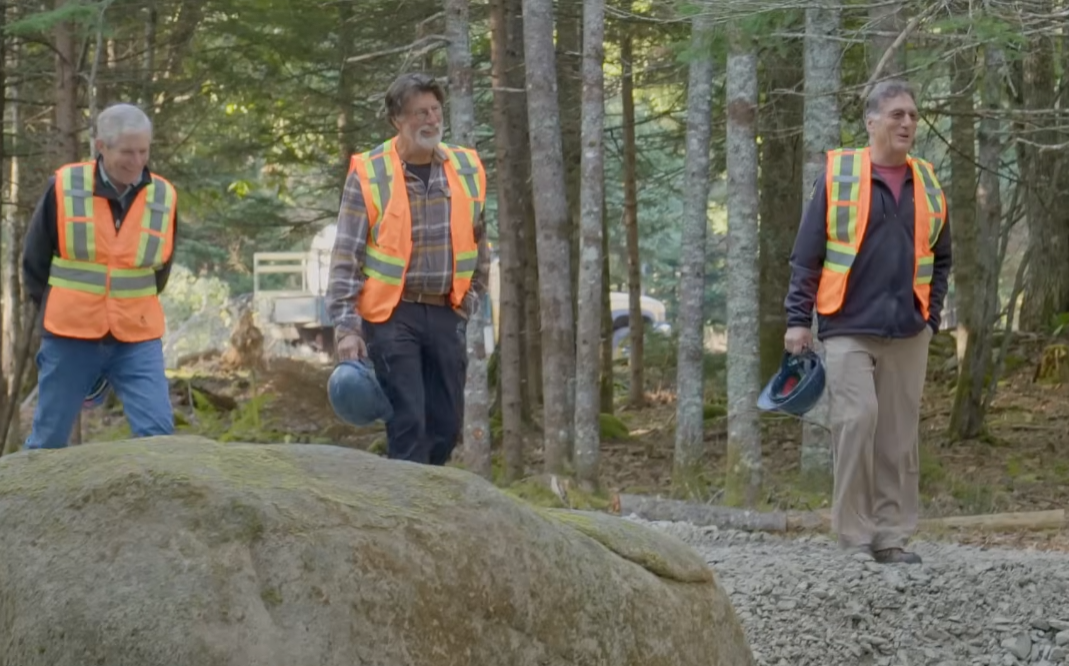
Perhaps the most remarkable aspect of the discovery is how long it remained hidden.
Oak Island has been intensively searched for more than two hundred years. The chamber’s location outside the primary target zones may have allowed it to escape detection. In addition, its sealed and dry construction likely produced weak signals in earlier geophysical surveys, causing investigators to classify the area as inconclusive.
In the end, the breakthrough did not come from a grand theory or new technology. It came from a routine dig and an operator experienced enough to recognize that a piece of timber did not belong where it appeared.
For the team that has spent years investigating Oak Island, the discovery represents the culmination of decades of persistence.
Yet it may also mark the beginning of a new chapter. As historians and archaeologists continue to analyse the materials recovered from the chamber, the island’s famous mystery may gradually shift from legend to documented history.
And after more than two centuries of speculation, Oak Island may finally be revealing why something so valuable was hidden there in the first place.