THE 210-MILLION-DOLLAR SPIKE: Sensor Anomaly at 230 Feet Points to Oak Island’s “Final Resting Place”
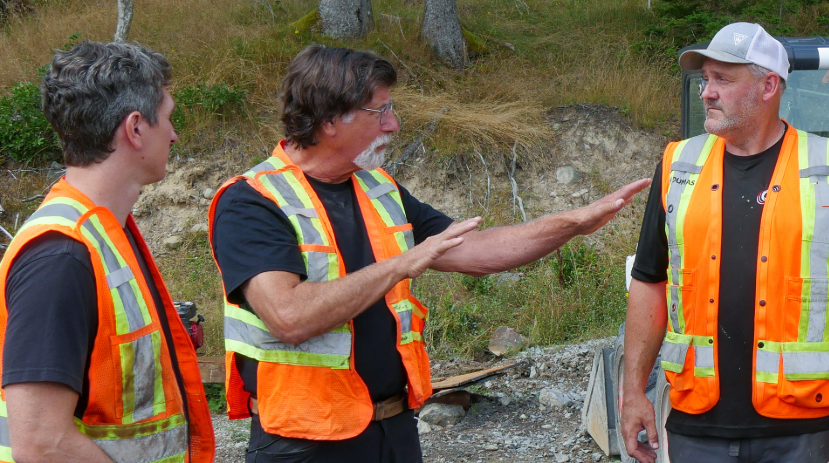
After 230 years of mechanical failure, flooded shafts, and tragic setbacks, the search for the Oak Island treasure has reached a definitive technical tipping point. In the 22nd episode of Season 13, engineers have confirmed a “pronounced and repeatable” density spike at the bottom of the Money Pit’s solution channel—a discovery that aligns with a newly appraised $210 million valuation of the potential cache.
The Density Anomaly: Metal or Chamber?
The breakthrough occurred during a systematic drilling campaign targeting the zone between 150 and 230 feet—a depth equivalent to a 23-story building descending into the limestone bedrock. Using advanced subsurface scanning technology, the team detected a hard physical abnormality in the ground’s density.
According to site engineers, the “spike” indicates material fundamentally different from the surrounding natural geology. The reading suggests one of two high-stakes possibilities: a solid concentration of dense metal (such as gold or silver bullion) or a man-made hollow chamber. This data point is bolstered by Borehole A-9.5, which recently pulled water samples showing silver concentrations far exceeding any previously recorded on the island.
The Medieval Blueprint
The $210 million figure is not merely speculative; it is a professional estimate based on the volume of the detected anomaly and the current market value of medieval artifacts. This season has already produced physical “anchors” for this valuation, including a 14th-century Portuguese silver coin and a 700-year-old English bag seal bearing a Cistercian sheepskin symbol.

Perhaps more staggering is the discovery on Lot 8. After hoisting a 40,000-pound boulder, the Fellowship uncovered a man-made stone structure and medieval wool textile fragments. Dr. Ian Spooner’s soil analysis beneath the boulder revealed lead levels of 140 parts per million—12 times the natural background concentration—consistent with long-term storage of heavy metals in a sealed space.
The Great Diversion?
However, Episode 22 introduces a “darker” complexity to the 230-year search. While the density spike in the Money Pit is undeniable, some researchers within the War Room now argue the Pit itself may be a brilliant centuries-old diversion.
Under this theory, the Money Pit—with its sophisticated flood tunnels and booby traps—was engineered to consume the lives and resources of searchers, while the true “Vault” remains hidden beneath the Lot 8 boulder or within the engineered stone pathways of the swamp. The density anomaly at the 230-foot level may not be the treasure itself, but rather the massive iron and lead-sealed “gate” of the flooding mechanism.
The Verdict of Season 13

For Rick and Marty Lagina, the investigation has shifted from chasing ghosts to deciphering a “coherent, engineered system.” Whether the $210 million target lies at the bottom of the current drill site or is a decoy leading to a secondary vault on Lot 8, the island’s landscape—from the geometric “Nolan’s Cross” to the celestial alignments of the swamp stakes—is finally being read as a single, massive blueprint.
As the giant oscillators prepare to plunge toward the density spike, the Fellowship is no longer asking if something is down there. They are asking if they are prepared for the truth once the seal is finally broken.