THE FORBIDDEN EXPANSE: JOSH GATES SEARCHES FOR THE LOST TOMB OF GENGHIS KHAN
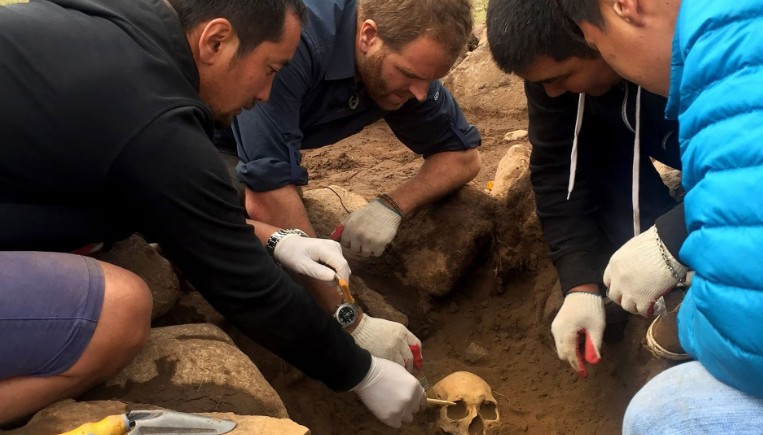
For eight centuries, the final resting place of Genghis Khan has remained the ultimate “cold case” of world history. Legend says that when the Great Khan died in 1227, his funeral cortege slaughtered anyone they encountered on the road to keep the location secret, before 1,000 horses trampled the ground to erase all traces. This week, Josh Gates and the Expedition Unknown team ventured into the heart of the Mongolian wilderness to penetrate the “Ikh Khorig”—the Great Taboo. It is a region where modern technology meets ancient superstition, and where the physical landscape is as unforgiving as the legends that guard it.
A Land Without Mercy
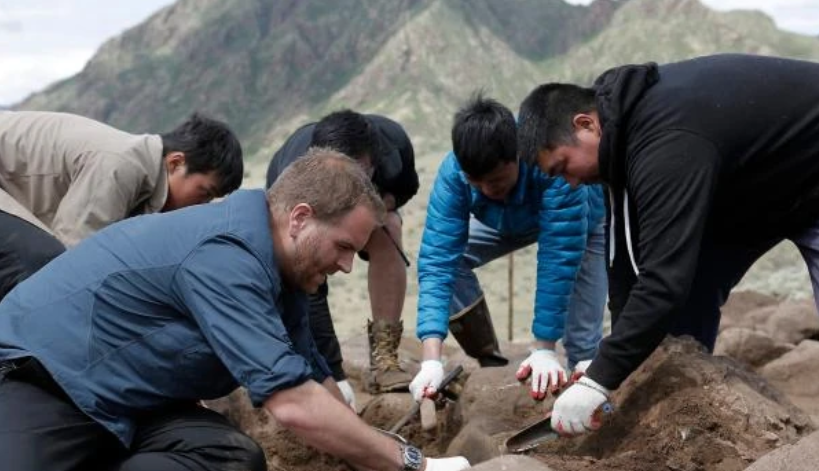
The primary challenge of the Mongolian expedition was the sheer isolation of the Khentii Mountains. This is a landscape characterized by “khangai” (mountainous forest-steppe) where the weather can swing 40 degrees in a single afternoon. Because the area is strictly controlled by the Mongolian government and designated as a protected “Strictly Protected Area,” motorized vehicles are largely forbidden.
Gates and his crew were forced to abandon their modern comforts and travel exclusively by horseback. Moving across jagged ridges and through boggy marshes, the team was days away from the nearest medical facility. In an environment where a simple horse kick or a fall could result in a life-threatening injury, the lack of immediate trauma care added a layer of psychological pressure to every mile.
“You realize very quickly that out here, you aren’t the apex predator,” Gates noted, adjusting his stirrups in the biting wind. “The steppe doesn’t care about your production schedule. If a horse goes down or a storm rolls in, you’re on your own.”
The Shadow of the Taboo
Beyond the physical dangers, the expedition faced a profound cultural barrier. For many Mongolians, searching for the Khan’s tomb is not just an archaeological pursuit; it is a spiritual violation. Local tradition holds that if the tomb is ever opened, it will trigger an apocalypse—a “curse of the conqueror” similar to the legends surrounding Tamerlane’s tomb in Samarkand.
The tension reached a peak when the team approached a series of high-altitude burial mounds. Local guides grew visibly uncomfortable, performing traditional rituals to appease the spirits of the land. Gates, usually the skeptic, admitted to feeling the “weight” of the place.
“There’s a difference between a tomb and a sanctuary,” Gates whispered into his recorder. “The people here believe the Khan chose to be lost. Every time our equipment glitched or a horse spooked for no reason, you couldn’t help but wonder if the land was telling us to turn back.”
The “Hour of Truth”
The mission’s most dramatic moment occurred near the Burkhan Khaldun—the sacred mountain believed to be the Khan’s birthplace and burial site. As the team deployed a drone to scan the perimeter for structural anomalies, the sky turned a bruised purple. A sudden, violent windstorm—known locally as a “zud”—nearly swept the crew’s equipment into a ravine.
The storm was seen by the local guides as a final warning. Respecting the cultural sensitivity of the site and the deteriorating weather, Gates made the difficult call to pull back. It was a sobering reminder that some secrets are protected not by locks and keys, but by the fierce loyalty of a nation and the raw power of the earth itself.
As Josh Gates leaves the Mongolian steppe, the tomb of Genghis Khan remains undisturbed. While he didn’t return with a golden casket, he returned with something rarer: a deep respect for a mystery that refuses to be found.