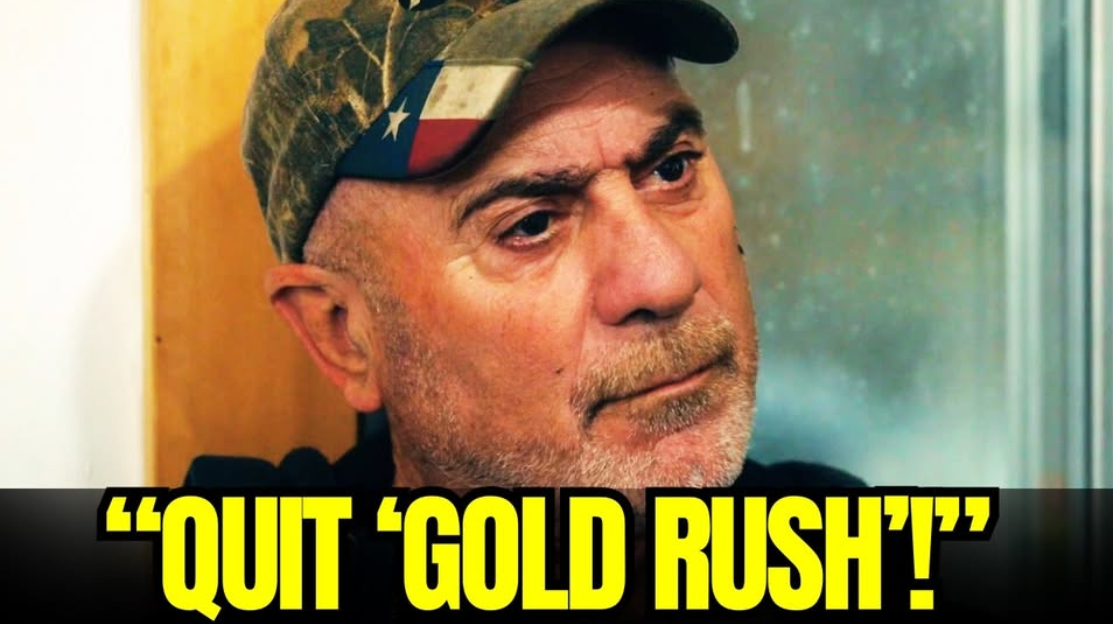
The real reason Chris Dumit left Parker Schnabel in the final days of the season: did he give up?

The departure of Chris Dumit from Gold Rush has triggered widespread debate among viewers, many of whom initially believed the explanation was straightforward: a veteran miner pushed beyond his limits by an increasingly demanding season. However, a closer analysis suggests a far more complex story—one that reflects not only operational pressure but also a deeper clash of expectations, priorities, and long-term sustainability within Parker Schnabel’s mining empire.
Dumit, long regarded as one of the most reliable figures on the show, was not simply another crew member. He was the central figure in the gold room, responsible for ensuring that every ounce extracted from the ground was properly recovered and accounted for. In an operation where margins depend on precision at the final stage, his role was both technical and financially critical. His departure, therefore, is not merely a staffing change—it is a structural shift that could have lasting consequences.
The 10,000-Ounce Target and Operational Expansion
At the centre of the situation lies Parker Schnabel’s ambitious 10,000-ounce target for the season—a figure that represents a significant escalation from previous benchmarks. Achieving such a goal required not only increased efficiency but a fundamental expansion of operations. Schnabel’s decision to run three wash plants simultaneously marked a turning point in the scale of his mining strategy.
Traditionally, managing one or two wash plants already demands tight coordination. Each plant produces gold-bearing concentrates that must be carefully processed in the gold room. With three plants—Big Red, Rock Monster, and Sluicifer—operating at full capacity, the volume of material flowing into Dumit’s domain increased dramatically.
From an operational standpoint, this created a bottleneck. While excavation and processing could be scaled with additional machinery and manpower, the gold room remained dependent on meticulous, labour-intensive work. Errors at this stage could result in substantial financial losses. In effect, Dumit became the single point of failure in an otherwise expanded system.
The Human Cost of Scaling Up
What makes Dumit’s situation particularly significant is the human dimension. Unlike heavy equipment, which can be upgraded or replaced, the expertise required in the gold room is built over years of experience. Dumit was not only skilled but also deeply trusted by Schnabel—a rare combination in high-pressure environments.
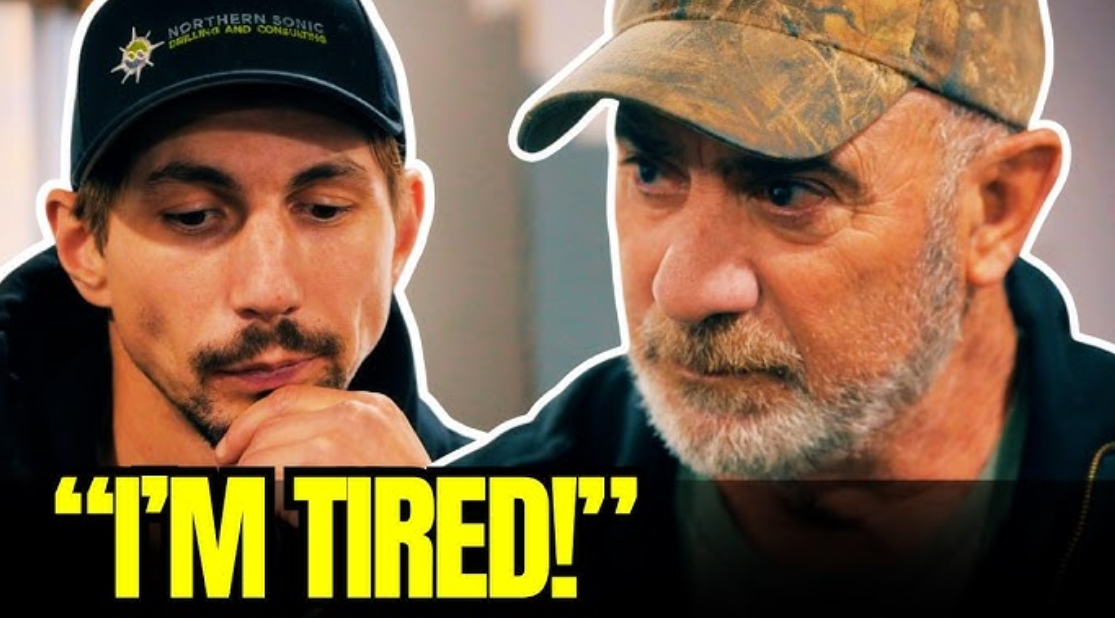
However, the workload associated with three active plants proved unsustainable. Long shifts were followed by equally demanding clean-up processes, leaving little room for recovery. For a veteran miner, this was not simply a question of effort but of physical endurance and long-term health.
Dumit’s request for assistance—eventually leading to the training of Tatiana Costa—highlighted the severity of the situation. Yet this solution also exposed internal tensions. Reassigning a top equipment operator from the field risked disrupting other parts of the operation, creating friction among foremen and crew members.
From a programme analysis perspective, this moment reveals a critical inflection point: the system had expanded beyond the capacity of its most essential specialist.
Parker Schnabel’s Leadership Model
To understand how the situation developed, it is necessary to examine Schnabel’s leadership approach. Widely recognised as one of the most successful young miners in the industry, he has built his reputation on relentless ambition and continuous scaling. Each season’s achievements become the baseline for the next, driving a cycle of constant expansion.
This model has delivered impressive results. Over the years, Schnabel’s gold totals have increased significantly, establishing him as a dominant figure in the Klondike. However, such growth comes with inherent risks—particularly when operational demands begin to outpace human capacity.
Schnabel’s focus on efficiency and output has often been portrayed as a strength. Yet Dumit’s departure suggests that this same focus can create blind spots. In high-performance environments, the balance between ambition and sustainability becomes increasingly difficult to maintain.
Beyond Burnout: A Question of Values
While fatigue played a role, it is overly simplistic to frame Dumit’s exit as a case of burnout alone. Evidence suggests a deeper issue—a divergence in values between a leader pursuing expansion and a veteran prioritising stability and respect for limits.
Dumit’s comments during the season indicate a growing awareness of this gap. His reluctance to continue under the existing conditions was not merely physical; it reflected a broader reassessment of what he was willing to accept. After years of contributing to Schnabel’s success, the expectation to operate under intensified pressure may have signalled a shift in how his role was valued.
In this context, his departure can be interpreted as a deliberate decision rather than a forced outcome. It represents a moment where professional loyalty yields to personal boundaries.
Implications for Gold Rush Moving Forward
From a programme standpoint, Dumit’s exit introduces several potential developments for future seasons. First, the operational impact: replacing his expertise in the gold room will not be straightforward. Even with additional training, replicating his level of precision and consistency will take time.
Second, the narrative impact: Dumit has long served as a stabilising presence within the team. His absence could lead to increased volatility, particularly under the pressure of ambitious targets. Viewers may see a shift in team dynamics, with greater emphasis on internal challenges rather than purely external obstacles.
Finally, there is the broader thematic implication. Gold Rush has always balanced the pursuit of wealth with the realities of labour and endurance. Dumit’s departure reinforces this tension, highlighting the cost of scaling operations beyond sustainable limits.
A Turning Point, Not an Ending
In many ways, Chris Dumit’s decision marks the end of an era for Parker Schnabel’s operation. He was not only a key contributor to its success but also a symbol of continuity and reliability. His absence will inevitably be felt both on-screen and within the operational structure.
Yet it also signals a turning point. For Schnabel, the challenge now lies in adapting his model to maintain performance without compromising the people who make it possible. For the series, it offers a new chapter—one that may explore the limits of ambition in greater depth.
Dumit’s departure is not simply a story about leaving. It is a reflection of the choices individuals make when faced with competing demands. In the high-pressure world of gold mining, those choices can redefine not only careers, but the direction of the entire operation.