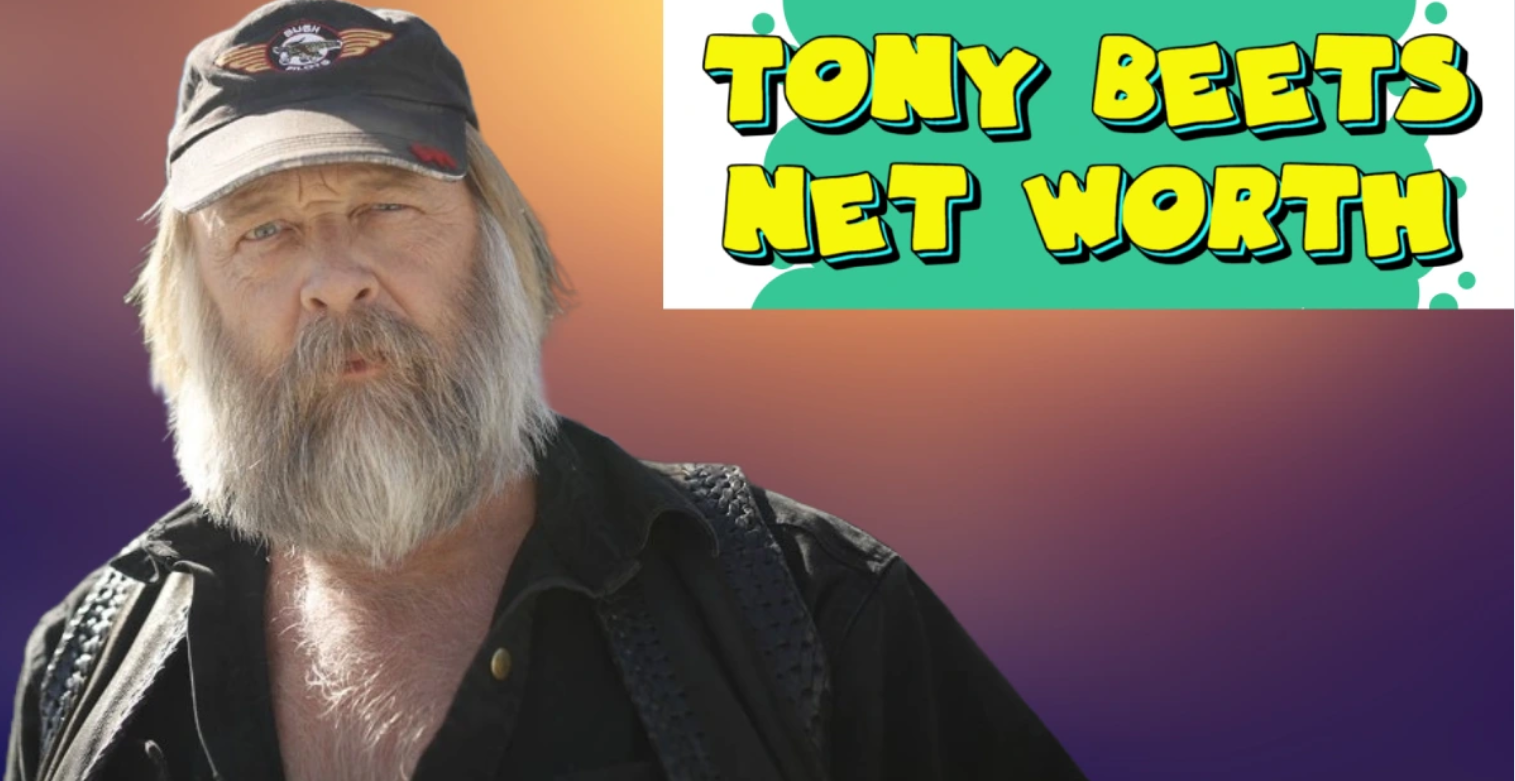
Revealing Tony Beets’ enormous net worth in 2026 — and what it means for the Klondike region.

In the hierarchy of Gold Rush, few figures command as much long-term influence as Tony Beets. By 2026, the Dutch-born miner widely known as the “King of the Klondike” is no longer simply operating profitable claims — he is managing what increasingly resembles a vertically integrated gold enterprise. The real question is no longer whether Tony is wealthy. It is how that wealth reshapes the competitive landscape of the Yukon going forward.
Estimating the 2026 Asset Position
Publicly disclosed numbers in mining television rarely reflect full financial reality, but we can build a reasonable framework.
Tony has consistently targeted seasonal gold totals in the 6,000–9,000 ounce range across Indian River and Paradise Hill. At gold prices fluctuating between $1,900 and $2,200 per ounce over recent seasons, gross seasonal revenues could land between $12 million and $18 million before costs.
However, revenue is not profit. Operating a multi-plant Klondike operation at Tony’s scale involves fuel, heavy equipment depreciation, crew wages, royalties, land leases, and maintenance overhead that can consume 50–70% of gross intake depending on efficiency and weather.
What differentiates Tony in 2026 is asset accumulation.
Unlike younger operators who lease heavily, Tony has spent decades buying equipment outright — dozers, wash plants, rock trucks, excavators — often second-hand, refurbished, and paid off long ago. Even with his recent willingness to purchase newer high-capacity machines (including D11-class dozers), much of his fleet is equity, not liability.
If we factor:
-
Multi-claim land positions in proven gold-bearing ground
-
Fully owned heavy equipment inventory valued conservatively in the tens of millions
-
Annual retained profits reinvested rather than withdrawn
Tony’s net worth by 2026 plausibly sits in the $25–40 million range, possibly higher when asset appreciation is included. More aggressive estimates among industry observers place it closer to $50 million when factoring cumulative gold recovery over two decades and real estate holdings outside the Yukon.
But wealth in mining is not static. It is leverage.

Strategic Implications for Season 17 and Beyond
If Tony’s capital position is as strong as it appears, 2026 becomes less about survival and more about expansion strategy.
There are three likely pathways:
1. Full-Scale Multi-Plant Domination
Tony has long run parallel operations at Indian River and Paradise Hill. With deeper capital reserves, he could:
-
Add another high-capacity wash plant
-
Increase stripping capacity before thaw
-
Front-load investment into ground development
The result? A 10,000-ounce season becomes plausible rather than aspirational.
If Tony pushes output toward five-figure ounce totals, it resets the competitive ceiling for everyone — particularly Parker Schnabel, whose high-efficiency model has dominated recent years.
2. Succession Acceleration
By 2026, family integration becomes increasingly relevant.
Kevin Beets has proven capable but volatile as an independent operator. Monica Beets continues expanding her operational influence. Minnie Beets remains the financial backbone.
Tony’s wealth revelation could signal a structural pivot:
-
Transitioning Kevin or Monica into majority operational control
-
Establishing clearer generational equity stakes
-
Reducing Tony’s personal field presence
The narrative arc for Gold Rush producers would be powerful: the empire builder deciding whether to protect or risk the fortune he has built.
3. Controlled Aggression — The “Calculated Risk” Model
Historically, Tony buys used and squeezes value from aging equipment. Recently, he has shown willingness to exceed budget for high-performance machinery.
In 2026, capital strength could allow him to:
-
Purchase new machines without financing risk
-
Stockpile spare parts to eliminate downtime
-
Invest in water license security years in advance
This is not flashy spending. It is structural insulation.
If Tony eliminates regulatory delays and mechanical bottlenecks, he becomes the most resilient operator in the Klondike.
The Psychological Shift
Wealth changes decision-making.
Early in his career, Tony’s approach was necessity-driven: maximize output to survive winter. In 2026, the pressure dynamic shifts. He does not need a record season to stay afloat. That allows for:
-
More aggressive stripping ahead of projected rich cuts
-
Greater tolerance for exploratory risk
-
Strategic patience in negotiations
It also reduces emotional volatility. Ironically, financial security may make Tony more dangerous competitively because he can afford to wait while others must push.
How Parker and Rick Respond
If Tony’s capital dominance becomes widely recognized, expect reactions from rivals.
Parker Schnabel thrives on scaling efficiency. If Tony expands capacity, Parker may counter by:
-
Further increasing wash plant throughput
-
Pursuing deeper geological modeling
-
Acquiring adjacent claims to prevent encroachment
Rick Ness, meanwhile, operates at a smaller scale. Tony’s wealth exposure reinforces Rick’s challenge: capital depth matters. Rick may need partnership, investor backing, or higher-risk ground to remain relevant.
The 2026 Prediction
Here is the most likely outcome if Tony’s financial base is indeed as strong as suggested:
-
He will attempt a season exceeding 9,000 ounces.
-
He will overbuild stripping capacity early.
-
He will invest in redundancy to avoid mid-season collapse.
-
He will push family leadership transitions subtly on-screen.
What he will not do is retreat.
Tony Beets in 2026 is no longer chasing security. He is defending legacy.
The Klondike has always rewarded boldness — but it punishes overreach. The balance between those two forces will define whether Tony’s massive asset base becomes a springboard to another record or a comfort zone that slows him down.
One thing is certain: in Gold Rush’s evolving hierarchy, wealth is no longer just about how much gold you pull from the ground.
It is about how much control you hold over the next season before the first bucket of dirt is even moved.