Ancient French records and maps – do they lead to real treasure?
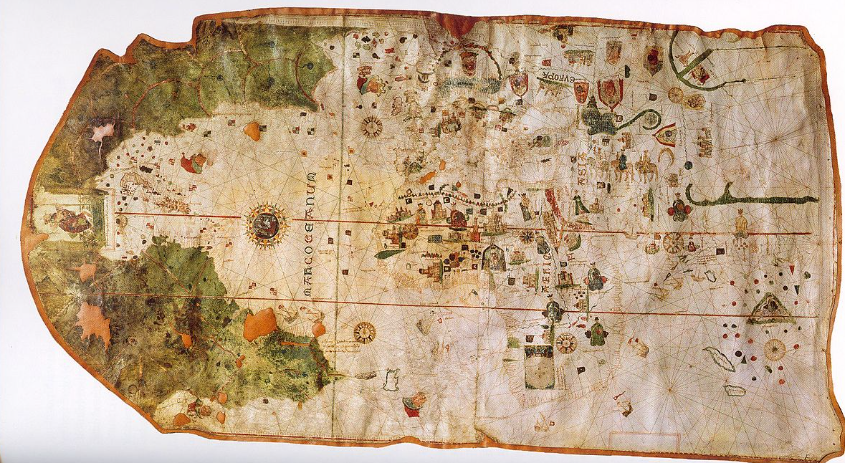
For more than two centuries, Oak Island has been a landscape of theories, legends and unending curiosity. But in Season 13 of The Curse of Oak Island, a new line of investigation has emerged—one that may be the most historically grounded the team has ever pursued. It centres on a set of French records and maps connected to the Atlantic port of La Rochelle and a series of markings that appear to align with the iconography of the Knights Templar.
Together, these discoveries are raising a question that cuts to the heart of the mystery:
Do these documents point to the origins—and location—of the long-rumoured Oak Island treasure?
This season, the Lagina brothers and their team shift from geological clues to documentary evidence, exploring the possibility that Oak Island’s story is tied not just to colonial-era settlers but to a much deeper, older European legacy.
A Map from La Rochelle That Should Not Exist
The most intriguing element so far is a fragile, centuries-old chart reportedly originating from La Rochelle, a major Templar port before the order fell in 1307. The map’s details have astonished researchers for one reason: its contours bear a striking resemblance to Oak Island’s coastline, despite being drawn long before the region appeared in official European cartographic records.
More curious still are notations along the margins—cryptic symbols, faded French annotations and geometric lines that appear to mirror known features on the island today. Among the markings is an unmistakable symbol associated with the Templar cross. While not definitive proof, its presence on a pre-modern map has sparked serious discussion among historians working with the team.
If authentic, the map would represent one of the earliest European references to Oak Island—and potentially its earliest connection to a European group known for transporting valuables, manuscripts and religious relics during periods of upheaval.
Symbols that Echo Across Centuries
Team members have also highlighted a series of symbols present on both the French documents and physical artifacts found on the island. In Season 13, these recurring shapes—cross pattées, star-like engravings and geometric alignments—have emerged as a central theme.
Curiously, several of these designs align with markings found on:
-
the lead cross discovered on Smith’s Cove,
-
metal artifacts from earlier seasons,
-
the stone road believed to be part of an engineered platform,
-
and new finds near Lot 5, an increasingly critical site for understanding early activity.
The consistency of these symbols across time and geography has encouraged the team to revisit the Templar hypothesis—not as speculative theory, but as a working model that could explain the European links now appearing in both archives and archaeology.

Why La Rochelle Matters
If Oak Island has a European connection predating the 17th century, La Rochelle is perhaps the most plausible origin. Historically, the port served as a stronghold and maritime hub for Templar ships fleeing persecution. Records show that several vessels disappeared from French ports as the order collapsed—ships that were believed to be carrying valuables intended to remain out of royal reach.
Some historians note that La Rochelle ships were known to travel far into the Atlantic, and a few accounts describe voyages beyond the boundaries of charted waters. While none mention Oak Island directly, the convergence of:
-
a La Rochelle–linked map,
-
symbols akin to Templar iconography,
-
and engineering evidence beneath the island’s swamp
has prompted researchers to reconsider the possibility of a purposeful voyage.
If a Templar fleet sailed west carrying assets that required concealment, Oak Island—with its natural cover, remote location and network of ancient workings—would have been a strategic place to safeguard them.
Could the Documents Be Genuine?
Authenticity remains the central issue. Experts consulted on the show urge caution. Age alone does not confirm intent, and symbols used by the Templars also appeared in other medieval contexts. The handwriting, ink composition and paper fibres must be analysed thoroughly before any firm conclusions can be drawn.
However, several points strengthen the case:
-
Geographical Accuracy
Even with its stylised appearance, the map’s layout suggests knowledge of a landmass remarkably similar to Oak Island. -
Symbology Consistency
The cross and geometric patterns found on the map match those on artifacts pulled from Oak Island stratigraphy. -
Historical Plausibility
La Rochelle’s maritime history includes vessels that vanished without recorded destinations. -
Technical Alignment
When digitally overlaying the map’s geometry with modern imaging of the island, certain points align closely with documented dig sites.
While none of this constitutes a definitive answer, the convergence of clues is more cohesive than many earlier theories investigated on the show.

A Turning Point for Season 13?
For fans, the shift from mechanical digging to historical analysis has made Season 13 particularly gripping. Rather than chasing isolated signals underground, the team is now working through a broader narrative—one that extends across continents, centuries and cultural traditions.
If the La Rochelle documents are validated, they could represent:
-
the earliest roadmap to Oak Island activity,
-
a record of intentions behind the engineered works,
-
and perhaps the first documentary evidence linking the island to a known historical group.
Such a link would be transformative. It would move Oak Island from folklore into the realm of traceable maritime history.
Conclusion: A New Chapter, or Another Dead End?
After decades of speculation, no single discovery has carried as much interpretive potential as the French records introduced in Season 13. Fans are watching closely, sensing that this might be the breakthrough that gives purpose to the countless shafts, tunnels and platforms constructed centuries ago.
Whether these documents ultimately unlock the truth—or simply open another chapter of speculation—remains to be seen. But for the first time in years, the team appears to be following a trail that does not begin with a rumour, but with ink on paper.
And if maps and symbols from medieval France truly point toward Oak Island, the treasure story could be far larger—and far older—than anyone expected.