THE BOOBY TRAP REVEALED? Scientific Breakthrough Links “Wooden Pandora’s Box” to Oak Island’s Original Work
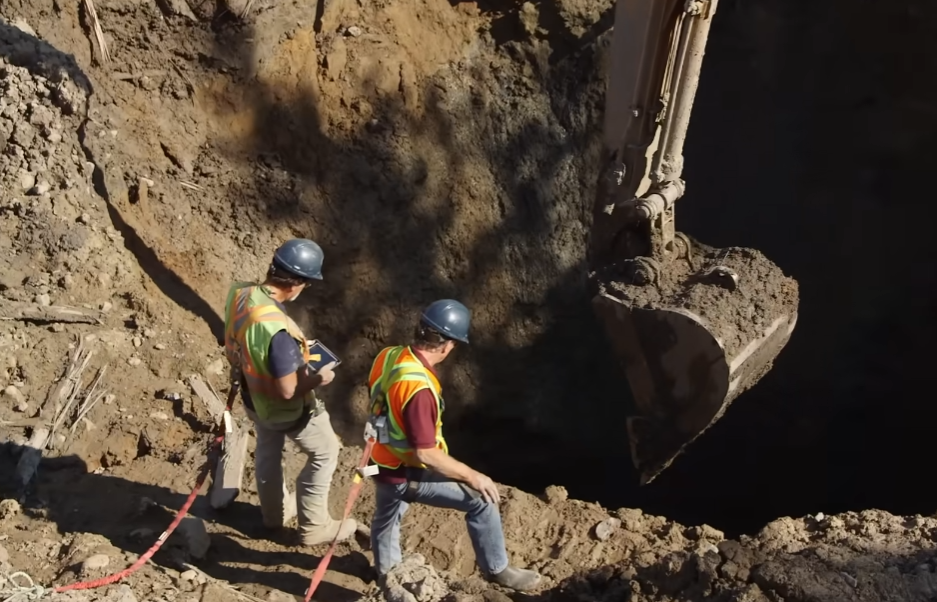
The search for the fabled Money Pit treasure has reached a fever pitch this week as the Lagina brothers and their team uncovered what they believe to be the island’s legendary “flood tunnel” booby trap. The discovery, bolstered by a landmark scientific confirmation of coconut fiber, has provided the most substantial evidence to date of a sophisticated 18th-century engineering project designed to protect the island’s secrets.
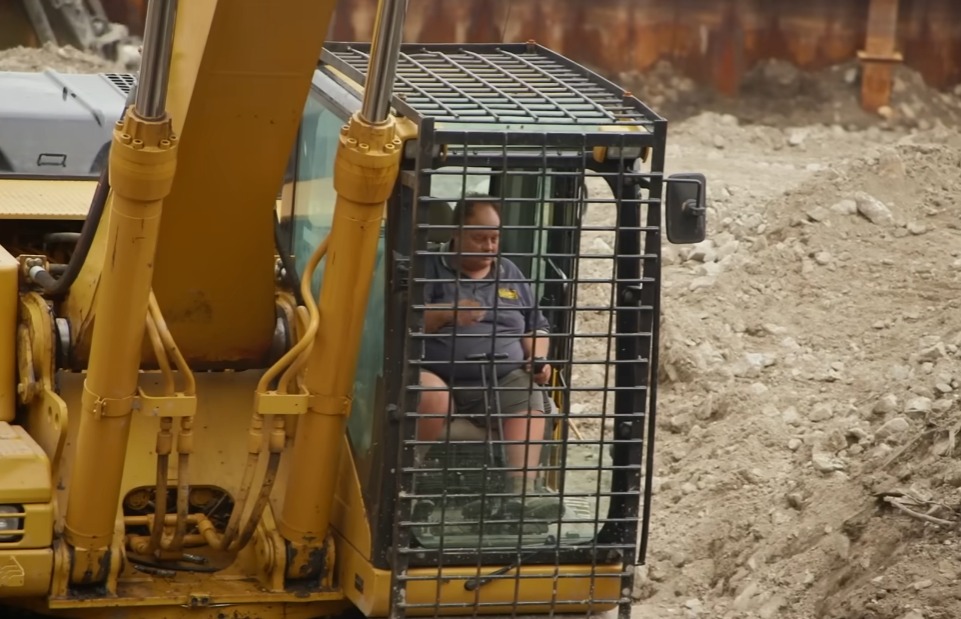
The breakthrough occurred in the “uplands” area near Smith’s Cove, where a long-reach excavator, operated by Billy Gerhardt, struck a massive, linear wooden feature at a depth of 30 feet. Despite the unstable nature of the dig site, the team successfully lowered a camera via the excavator arm to reveal a “double-walled” wooden structure braced with two-inch-thick beams.
The “Smoking Gun” of Smith’s Cove
While the wooden structure itself was a significant find, it was the material packed around the timbers that sent shockwaves through the War Room. Team members Rick Lagina and Jack Begley unearthed large, hair-like clumps of organic material that Rick immediately suspected was coconut fiber—a material central to the island’s 227-year-old lore.
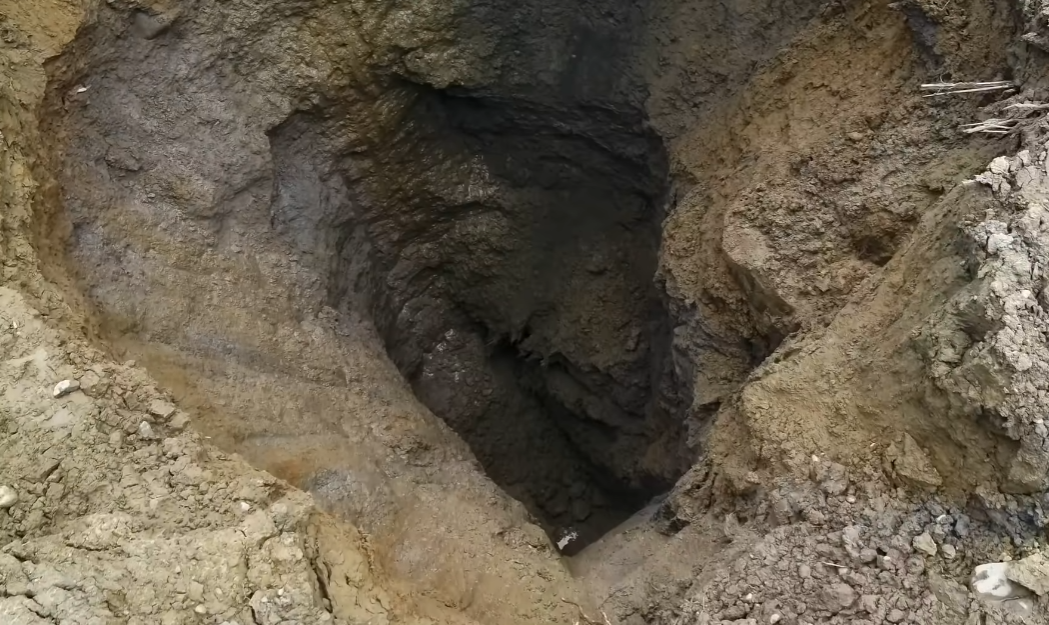
Geoscientist Dr. Ian Spooner provided the definitive proof via a teleconference from Acadia University. “It is, in fact, coconut fiber,” Spooner confirmed, noting that the material is entirely alien to the North American climate.
The presence of this fiber is historically significant for several reasons:
-
The 1804 Connection: Original searcher Daniel McGinnis reportedly found coconut fiber 60 feet deep in the Money Pit.
-
The Filtration Theory: In 1850, the Truro Company discovered massive layers of the fiber at Smith’s Cove, where it allegedly served as a filter for five stone box drains.
-
Non-Local Origin: With the nearest indigenous coconut trees over 1,500 miles away, the material represents a massive, intentional importation by the island’s original “depositors.”
A Race Against the Clock
Despite the excitement, the team is currently facing a “disappointing and unfortunate reality.” Just as they reached the structure, a strict permit timeline forced a suspension of activities in the Smith’s Cove area.
Irving Equipment Limited has been contracted to begin the removal of the massive steel cofferdam that has protected the site from the Atlantic tides. This necessary operational shift means the team must wait until next season to fully excavate what Marty Lagina has called a “wooden Pandora’s Box.”
The “Original Work” Verdict
For the Fellowship of the Dig, the confirmation of the fiber serves as a powerful validation of the “old stories.”
“Nobody else put a bunch of coconut fiber down while they were doing anything in Smith’s Cove,” Marty Lagina noted during the project’s debrief. “It represents original work.”
While the cofferdam removal marks a temporary end to the excavation, the team is now turning its focus to dendrochronology results. If the wood used to brace the “question mark shaft” dates back to the mid-1700s, it will prove once and for all that a massive, pre-colonial operation took place on Oak Island—and that the flood tunnel trap is more than just a legend.