GOLD IN THE SPOILS: High-Tech Drilling and “Eyes on the Ground” Push Oak Island Toward Resolution
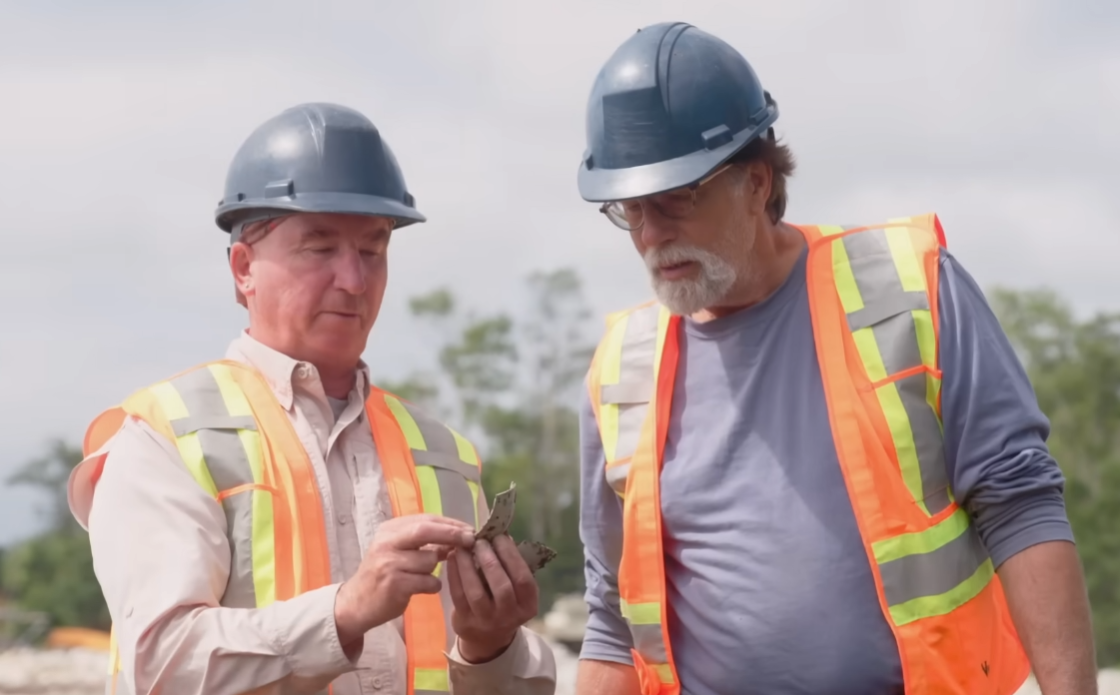
The quest to solve the 227-year-old Oak Island mystery has shifted into a high-intensity phase this week as the Lagina brothers confirmed the presence of gold in borehole samples and finalized plans for a massive, human-accessible excavation of the “Garden Shaft.”
With high-tech elemental analysis providing “packages under the tree” and new archaeological finds surfacing near the swamp, the team believes they are no longer just chasing rumors, but are closing in on the actual “depositional phase” of the island’s history.
Gold on the Steel
The most electrifying news came from geoscientist Dr. Ian Spooner, who performed X-ray fluorescence (XRF) analysis on a piece of metal recovered from borehole D2 at a depth of 88 feet. The results were staggering: a gold concentration of 700 parts per million.
“Gold—not just gold. The percentage is extremely high,” Rick Lagina noted during the reveal.
Crucially, the metal was found in the “C1 cluster,” an area where recent water testing has consistently shown high silver and gold levels. The presence of gold on a piece of metal—rather than as a natural mineral—suggests the team has struck a man-made object that was either plated in or in close contact with high-value treasure. Borehole B4 has now been targeted just 14 feet away to trace the extent of this “gold-rich” tunnel system.
The Garden Shaft Rehabilitation
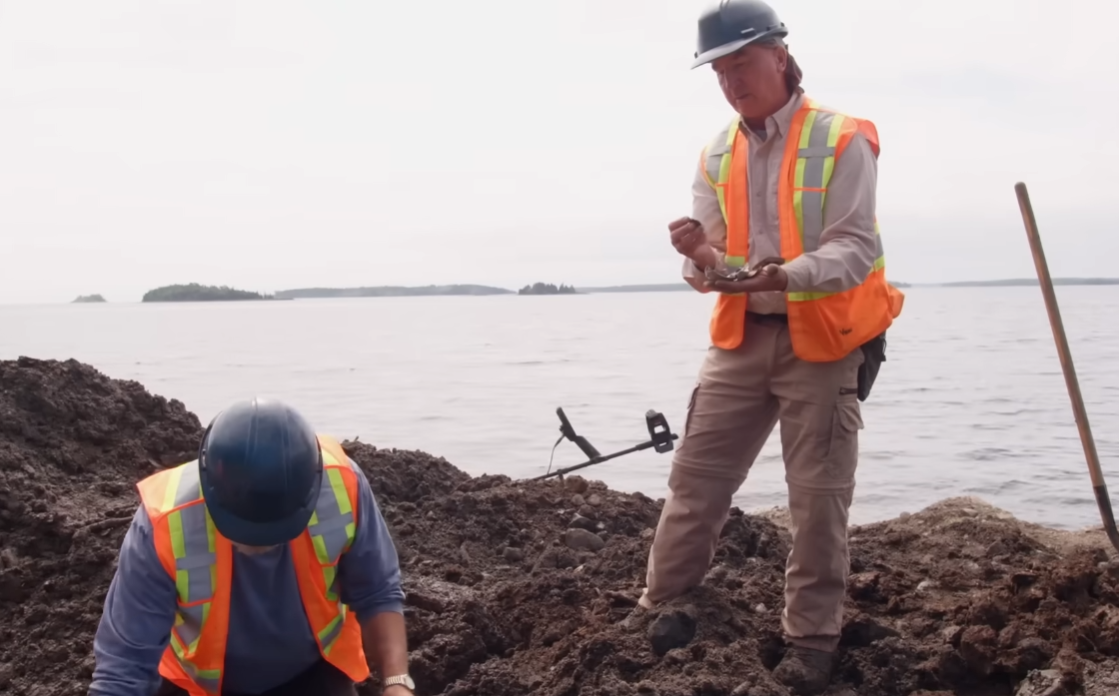
While drilling continues, the team has officially greenlit a massive engineering project to put “eyes and boots” underground. Dumas Contracting Limited, a leading North American mine construction firm, has been hired to rehabilitate the 77.5-foot “Garden Shaft.”
The 50-day project will involve:
-
Reinforcement: Constructing a concrete foundation and injecting grout to waterproof the surrounding soil.
-
Excavation: Mucking out backfill from the existing 10×10 wood-cribbed shaft.
-
Exploration: Creating a safe “manway” for the Fellowship to descend and probe-drill for tunnels or offset chambers at any depth.
“We can go in any direction at any elevation,” explained Dumas VP Cameron Carter. For the first time in the history of the modern search, the team will be able to physically enter the Money Pit environment to investigate the “voids” and “air bubbles” recently detected at 108 feet.
“Gary Potter” and the Porcelain Trail
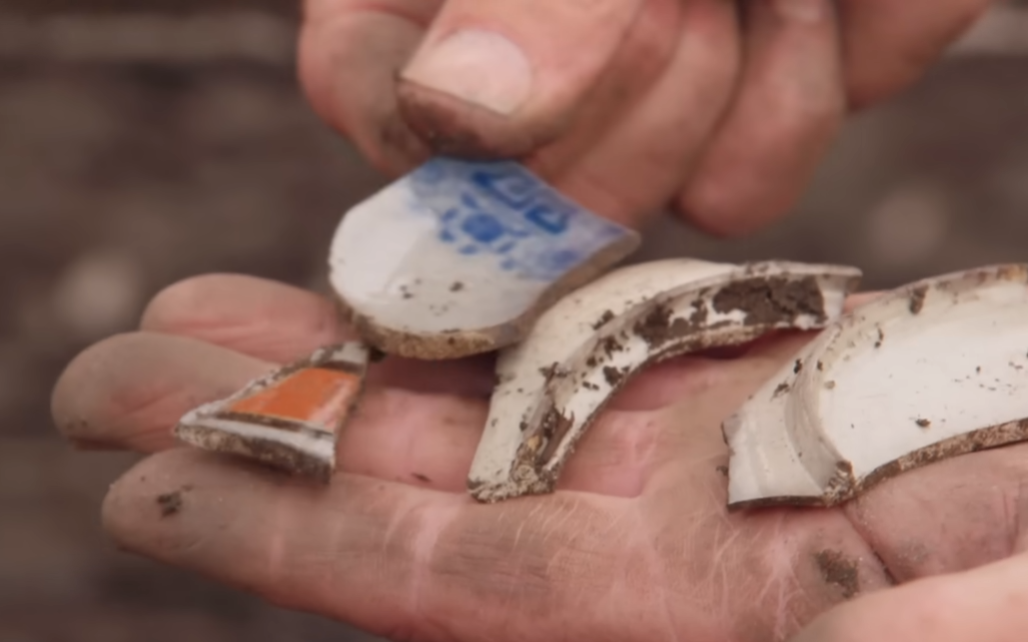
On the surface, the discovery of a “Chinese design” porcelain collection near the swamp’s stone road has provided a new cultural dimension to the mystery. Metal detectorist Gary Drayton and Billy Gerhardt unearthed several pieces of fine blue-and-white china, which were often traded by Portuguese fleets in the 16th century.
Archaeometallurgist Emma Culligan also confirmed that a coin found on Lot 5 is an early George III “Rex” penny, dating between 1770 and 1820.
The recovery of a leather boot heel, fastened with hand-forged square hobnails, further suggests that the stone road was used by laborers centuries before the Money Pit was “officially” discovered in 1795.
As the Dumas crew moves their heavy equipment onto the island to begin the shaft rehabilitation, the Laginas remain focused on the singular goal: tracing the gold in the water to its source. “I think we need to get down under the ground,” Rick Lagina concluded. “That’s where the answers are.”